What is a CQC inspection?
The Care Quality Commission (CQC) Inspection is a regular check to ensure that health and social care services across England are safe, effective, caring, responsive, and well-led. The CQC regulates activities in and assigns ratings to hospitals, care homes, and home-care agencies based on the Health and Social Care Act 2008. Failing CQC Inspections may lead to costly fines and litigation, especially when people are harmed or put in danger.
CQC inspections come in three types: routine (scheduled, regular checks), focused (targeting a specific concern or key question), and themed (examining a particular issue across multiple providers). Inspections can be either announced in advance or unannounced, most often when CQC has concerns about a service.
What is a CQC inspection checklist?
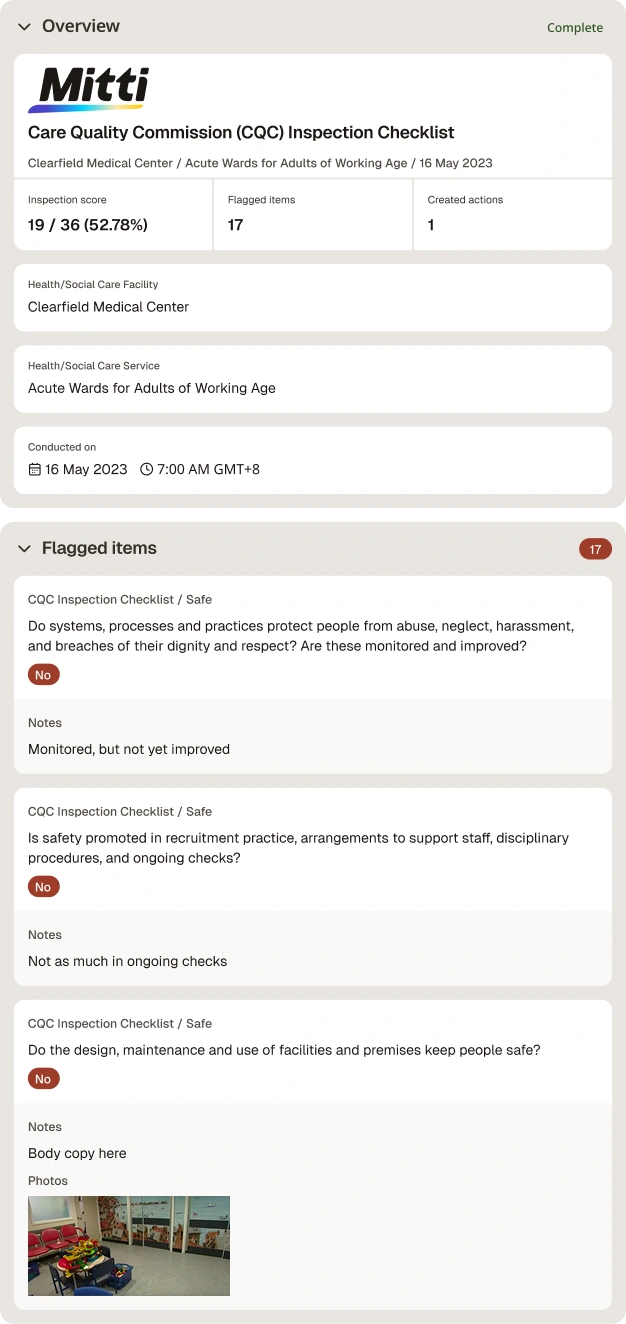
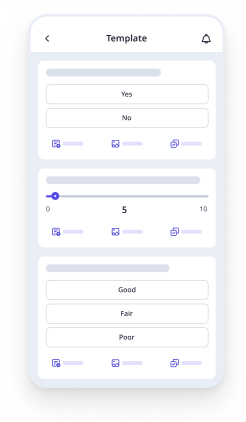
A CQC inspection checklist helps you and your team prepare for announced or unannounced regulatory checks every 6-12 months. By running it on a workplace operations platform, you can better identify gaps, improve the quality of care you deliver, and raise your rating. Often, this checklist is used alongside broader healthcare compliance software you already use to manage related documentation.
During an inspection, CQC inspectors will look for evidence that matches what you've documented, checking your care plans, training records, and staff practice against the 5 key questions below. For an unannounced visit, make sure your checklist already covers safeguarding records, medicines management, staff rotas and training logs, and up-to-date care plans, so you're never caught scrambling.
With this checklist, you can:
See at a glance where your service stands across all 5 key questions
Capture photo evidence the moment you spot non-compliance
Close gaps faster by assigning corrective actions in real-time
Sign off inspections digitally, with no paperwork to chase
Share a finished CQC report the moment your inspection ends
The 5 key questions CQC assesses
CQC organizes every inspection around 5 key questions: is the service safe, effective, caring, responsive, and well-led? Since January 2024, CQC assesses these through its Single Assessment Framework, using 34 Quality Statements rather than the older Key Lines of Enquiry (KLOE) model this page may have referenced previously. A further framework revision is in consultation as of mid-2026, with rollout expected toward the end of the year — worth revisiting this section again once that's confirmed.
Safe: “Are people protected from abuse and avoidable harm?”
Effective: “Do people’s care, treatment, and support achieve good outcomes; promote a good quality of life; and is based on the best available evidence?”
Caring: “Does the service involve and treat people with compassion, kindness, dignity, and respect?”
Responsive:"Do services meet people’s needs?”
Well-led: “Do the leadership, management, and governance of the organization assure the delivery of high-quality and person-centered care, support learning and innovation, and promote an open and fair culture?”
Your ratings and next steps
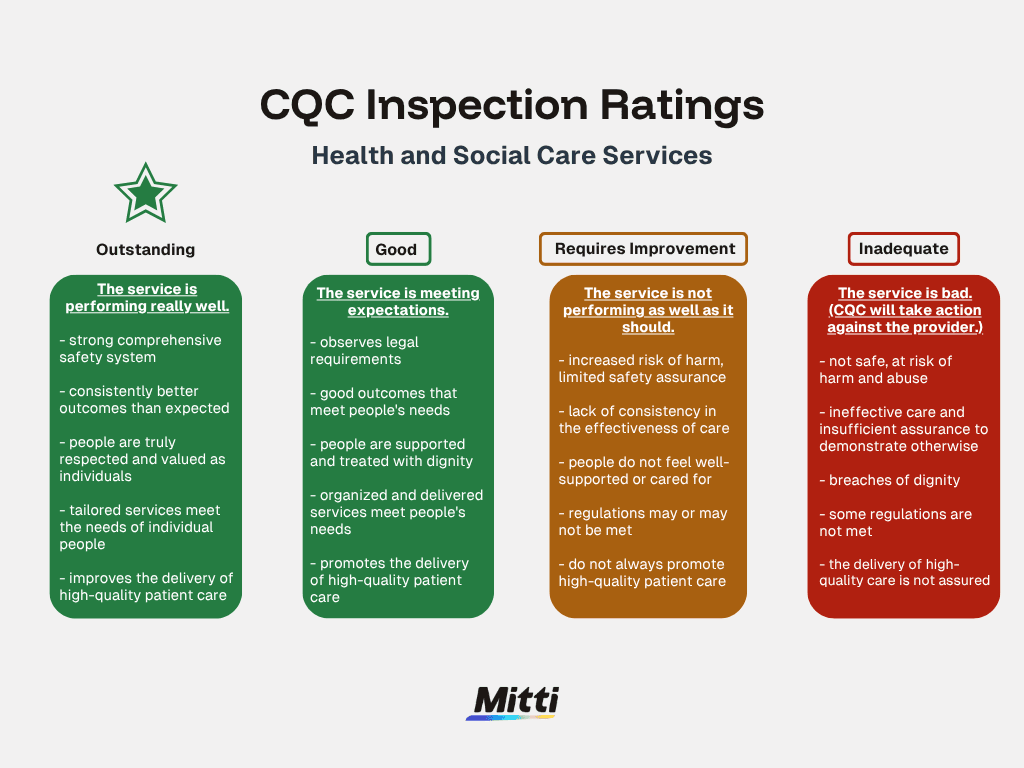
CQC inspectors rate each of the 5 key questions and give an overall rating for the service. Their report explains what they found, what's working well, and what needs to improve.
Good and outstanding
A Good or Outstanding rating means the service meets, or exceeds, CQC's standards across most or all of the 5 key questions. Providers rated Outstanding are recognized for innovative, high-quality care that goes beyond compliance. CQC highlights these examples publicly as sector-wide best practice.
Requires improvement
A Requires Improvement rating means the service falls short of one or more regulations. Common triggers include gaps in staff training records, inconsistent care planning, or incomplete safeguarding documentation.
The care provider must submit a report detailing how they'll improve, identifying who's responsible and by when. This report is due within 7-28 days. CQC inspectors may follow up with a visit or phone call to confirm the fix.
Inadequate
If the breach of a regulation is more serious or a compliance action has not been effective, CQC inspectors will take enforcement action. According to CQC's current guidance on enforcement and regulations, the care provider can appeal or make written representations about any enforcement action. However, they must provide evidence that the health and social service meets regulations during follow-up inspections within 6 months.
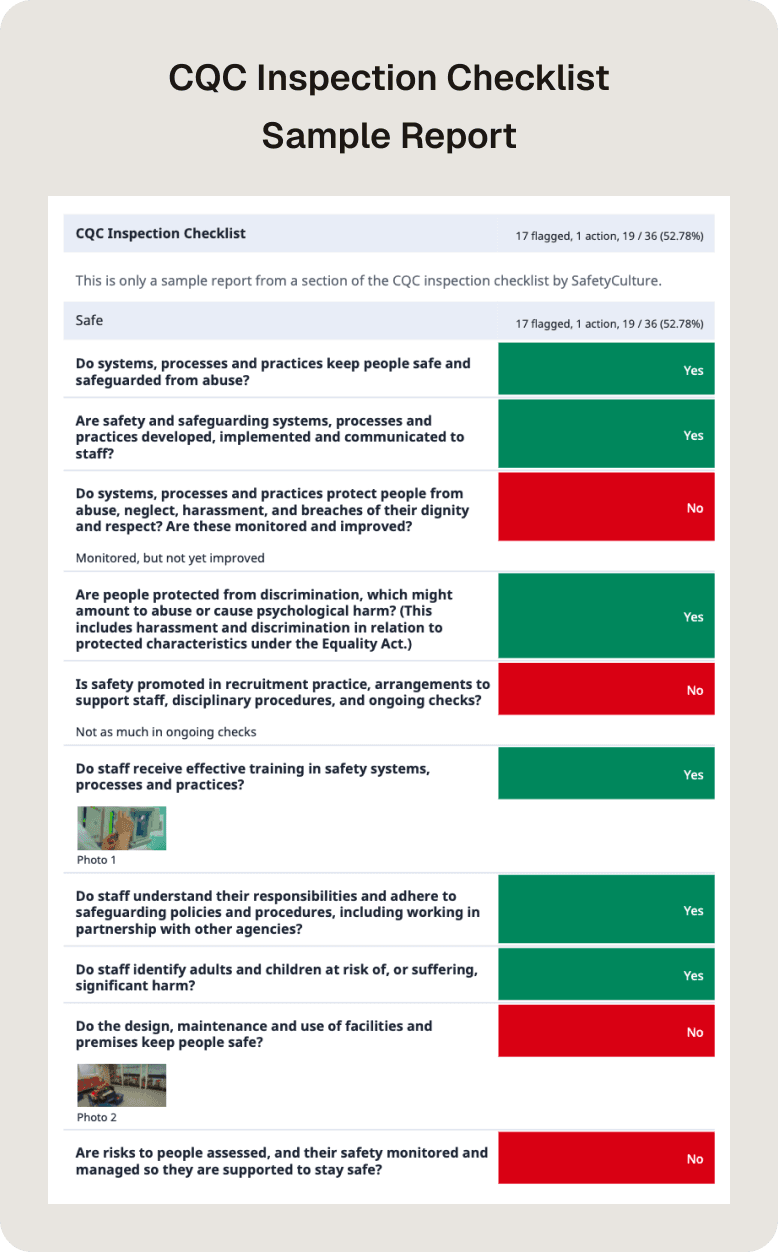
Sample PDF report
Here is a templated CQC inspection report in use for your reference:

Still looking for a checklist?
Search, filter, and customize 60,000+ templates across industries and use cases.