Types of aerial lift equipment
Scissor Lift – a widely used type of aerial lift that goes only straight up vertically
Man Lift – also known as personnel/personal lift, has a similar function as a Scissor Lift but can only accommodate one person at a time
Boom Lift – this aerial lift equipment extends the platform both vertically and horizontally; this offers flexibility and makes hard-to-reach areas a little more accessible
What is an aerial lift inspection?
Aerial Lift Inspection is a pre-use maintenance procedure that helps ensure that the equipment is functioning properly before workers perform a task. This inspection is also essential for determining whether there are any hazard-prone areas or hazardous items nearby that could interfere with its safe operation.
According to the Center for Construction Research and Training, also known as CPWR, on average, about 26 workers die yearly while using aerial lifts. The common causes of aerial lift accidents listed by the Occupational Safety and Health Administration (OSHA) are as follows:
Touching power lines/electrocutions
Lifts tipping over
Falling from the lift
Being trapped between the lift and another object
Other accidents caused by not following safety guidelines
Fortunately, these workplace mishaps can be prevented if aerial lift inspections are done correctly and regularly.
OSHA aerial lift inspection requirements
Following the average annual fatalities involving aerial lifts, OSHA released a hazard alert that emphasized the importance of proper training for personnel and compliance with inspection requirements when using aerial lifts.
One of the initial requirements from OSHA is that lift controls shall be tested each day before use to determine that they are in safe operating condition, and that only authorized persons shall operate the lift.
They also suggest following the equipment manufacturer’s recommendations and including a check of the following components for vehicles;
Vehicle components
Leaks of fluids
Wheels and tires
Battery and charger
Lower-level controls
Horn, gauges, lights, and backup alarms
Steering and brakes
Proper fluid levels
Checking the lift itself is also part of the general aerial lift safety inspection. If any of the below components are defective, it should immediately be reported;
Lift components
Operating and emergency controls
Personal protective devices
Hydraulic, air, pneumatic, fuel, and electrical systems
Fiberglass and other insulating components
Missing or unreadable placards, warnings, or operational, instructional, and control markings
Mechanical fasteners and locking pins
Cable and wiring harnesses
Outriggers, stabilizers, and other structures
Loose or missing parts
Guardrail systems
Work zone inspections
Employers should also look for any work zone hazards and remove them from the vicinity before operating an aerial lift. Some of the items to look for include drop-off holes or unstable surfaces, inadequate ceiling heights, slopes and bumps, debris or floor obstructions, and any other items that could disrupt the smooth operation of the equipment.
It should also be noted that these inspections aren’t just suggestions—OSHA requires all aerial lifts to be inspected before use or else, as mentioned, they can result in workplace accidents and expensive fines for employers.
How to conduct an aerial lift inspection
As a pre-use requirement, workplaces that utilize any aerial lift device can benefit from having a guide on how to efficiently conduct an inspection. Below is a step-by-step guide on how to conduct a daily aerial lift inspection before equipment use:
Execute a visual inspection of all of the parts of the equipment, check for missing pieces, torn or loose hoses, and replace as necessary.
Check for fluid leaks and ensure proper fluid levels for oil, hydraulic, coolant, and fuel.
Check for any tire damage.
Check wheel lugs for tightness or looseness.
Inspect cables and hoses for worn parts.
Check for cracked welds.
Check for platform rails and safety gauge damage.
Check for bent or broken structural elements.
Check pivot pins for security.
All warnings and labels should be legible and in place.
Inspect the platform control. Ensure the load capacity is clearly marked.
Ensure that platforms are not slippery.
Check the hydraulic system pressure. If it’s not at the ideal level of pressure, determine the reason and repair accordingly.
Check base controls, platform controls, all switches, and buttons for proper operation.
Ensure that the drive controller returns to neutral.
Inspect horn, gauges, lights, and back-up alarms and ensure that they are in safe working order.
Clear the workplace zone as well as the following hazards;
Drop-offs or holes
Any debris, bumps & floor obstructions
Overhead obstructions
Live wires or energized power lines
Pedestrian or vehicle traffic
Wind or weather conditions that may affect operation
Any other hazardous locations
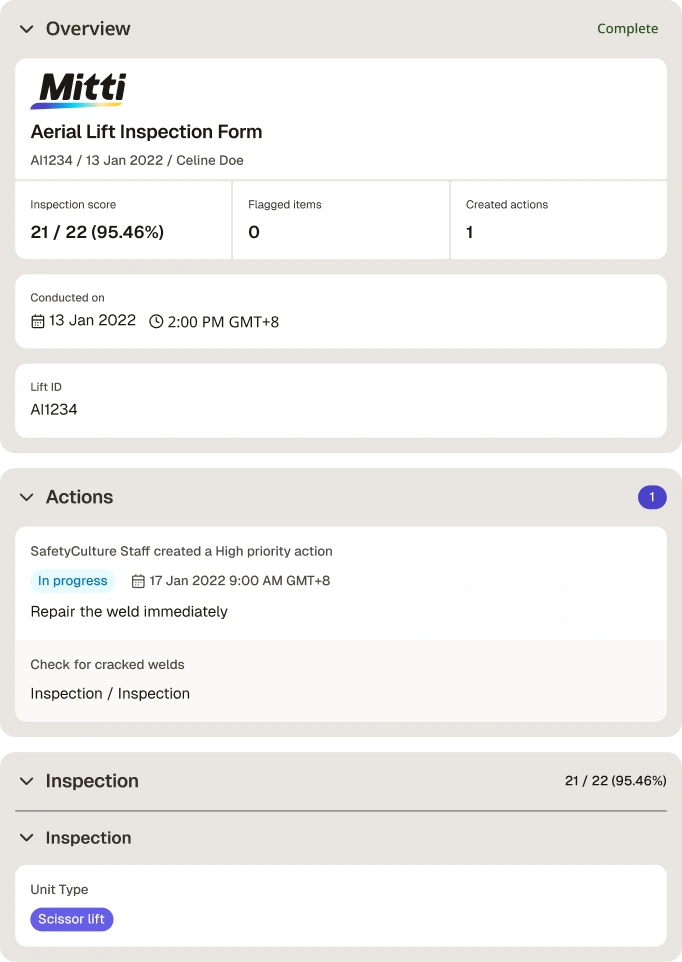
An aerial lift inspection form or checklist, or sometimes referred to as an aerial lift pre-use inspection checklist, is a tool that workplaces use to manually carry out inspections before operating aerial lift equipment. A good aerial lift inspection form, whether in PDF or digital form, is crucial in successfully determining what to check and look for while conducting the inspection.
Sample aerial lift inspection report
Aerial lift inspection form sample report