What is a calibration form?
A calibration form is used by technical services teams in the maintenance of functionality, quality, and accuracy of measuring equipment. It helps ensure that workers adhere to calibration standards set by the organization to meet ISO 9001 quality audit requirements.
Importance
Calibration records include critical information such as reference design, tolerance limits, and calibration date and results. This information is used by technical services to ensure workers’ compliance and assign immediate actions to mitigate quality risks. Regular equipment calibration helps the organization prevent accidents and damage that can lead to legal action and profit loss.
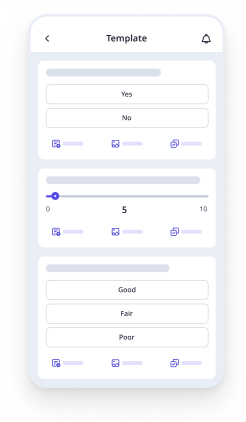
As calibration records are often lengthy, templating them and related forms help speed up the recordkeeping and logging processes. By documenting how decisions or ratings should be made with set fields and questions, a calibration form can improve the accuracy of results. Whether it’s for performance reviews, quality checks, or compliance audits, the templated form serves as a benchmark that reduces errors and discrepancies.
Templated calibration forms also promote fairness by making the equipment or instrument evaluation process more transparent. It helps employers, employees, and stakeholders can clearly see how judgments and corrective actions are made, which builds trust and reduces potential conflicts or misunderstandings. Calibration forms also help leaders better identify trends, spot problem areas, and implement improvements based on reliable insights rather than inconsistent opinions.
What to include in a calibration form
A calibration form template may differ per industry or need. However, a typical one often contains fields for the following:
Equipment tag or label details
Date and time of calibration
Technical person in charge
Reference design details and photo
Tolerance limits
Equipment manufacturer
Equipment model number
Proof of equipment being calibrated
Overall recommendations
Next calibration date
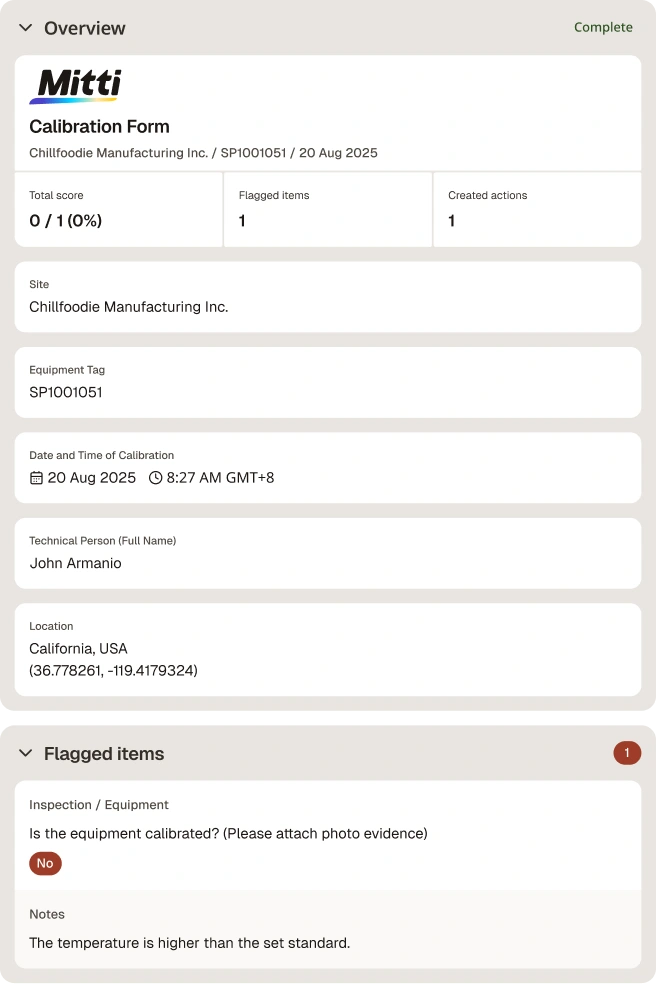
Example report
For clarity, here is an example of a filled-out calibration form for reference:

Use cases
Calibration forms can be used for different industries, and can be tailored to each one. Some of the most common uses for calibration forms include the following:
Retail
In retail environments, especially where measurement instruments like scales, scanners, or Point-of-Sale (POS) devices are used, calibration forms ensure measurement accuracy, which affects pricing, business hours, and inventory management. These forms, alongside a dedicated equipment calibration program, help maintain trust with customers by ensuring that products are weighed correctly and prices are accurate. Additionally, these forms, especially when templated, help retailers comply with international industry standards such as ISO 9001, ISO 45001, and local government safety regulations.
Manufacturing
Using calibration forms helps manufacturing organizations better document processes like pressure, temperature, flow, electrical, mechanical, and dimensional calibrations critical to manufacturing machinery and measurement tools. Regular calibration recorded in these forms helps in achieving accuracy, product consistency, quality control, and compliance with safety and regulatory standards. These forms also supports adherence to quality standards like ISO 9001 and industry-specific regulations.
Food and beverage
For those in the food and beverage industry, calibration forms and programs, alongside Hazard Analysis Critical Control Point (HACCP) plans, are essential before preparing and serving food. These forms document the calibration of key equipment and instruments such as temperature probes, scales, moisture analyzers, pH meters, and flow meters, all of which are critical for process and quality control. Using these helps ensure that food products meet quality standards and safety guidelines before distribution, and that all equipments are in good working order.
Best practices to comply with calibration standards
Calibration standards are specific guidelines set by quality managers depending on the products and needs of the company. These specific standards will act as a reference guide with the existing measurement equipment and help identify equipment function and condition.
Non-compliance with calibration standards can put businesses at risk. Using uncalibrated measuring equipment often results in the production of low-quality goods, which can lead to safety violations, damage costs, or possible business closure.
Below are best practices you can follow to help comply with these standards:
Establish a comprehensive equipment maintenance schedule: Any piece of equipment, if not maintained, can lose its reliability over time. Scheduled maintenance and calibration checks help ensure equipment performance is at the highest level, while also preventing unnecessary incidents and any dangerous consequences for both the business and its customers.
Document all maintenance and calibration activities: All gathered calibration results and maintenance records should be kept in an easily accessible location, such as a cloud storage usable on both mobile and laptop devices. Past calibration results can be used as a reference for checking previous issues, malfunctions, damage, and the repair history of the equipment.
Implement a calibration program: To ensure proper calibration practices, it’s important to create and implement a calibration program easily understandable by all. A calibration program for measuring and monitoring equipment health is essential in ensuring their accuracy and quality.
Conduct regular performance checks and testing: Organizations should perform regular performance checks and tests to verify that equipment meets operational specifications and accuracy requirements. A calibration form can help ensure standardized processes for both inspections and tests, while also detecting potential equipment faults early before they cause more significant problems or downtime.
Provide calibration training: Staff should be properly trained on how to inspect equipment, how to use a calibration form, how to report issues, and how to address possible problems on the job. Being properly equipped with the necessary knowledge about equipment use and health ensures proper calibration practices are followed.

Get started with ready-to-use retail equipment performance assets
A curated collection of retail equipment performance courses and templates that help roll out equipment checks quickly and get teams up and running