What is a Car Fluids Checklist?
A car fluids checklist is a vital tool used to ensure that all essential automotive fluids are well-maintained for optimal performance and longevity. Regularly reviewing, updating, and using this document helps prevent mechanical issues, supports fuel efficiency, and enhances overall safety by ensuring vehicle fluid levels and systems function reliably.
Benefits of a Vehicle Fluids Checklist
Following a car fluids checklist isn’t just a maintenance best practice. It’s a strategic move for maximizing fleet performance, safety, and cost efficiency. Here’s how this simple but powerful tool can make a measurable impact:
Prevents Costly Repairs
Sticking to a vehicle fluids checklist helps identify fluid-related issues (like low oil levels or contaminated coolant) before they cause engine or system damage. Early detection of such problems allows timely maintenance, preventing high-cost breakdowns or part replacements. Over time, this proactive approach significantly reduces unscheduled downtime and major repair expenses.
Extends Vehicle Lifespan
Routine fluid checks and changes keep vital systems like the engine, transmission, and brakes operating efficiently. Clean, well-maintained fluids reduce friction, wear, and overheating, which are key contributors to early component failure. By using a standardized car fluids checklist, organizations can extend the service life of fleet vehicles and get more return on their investment.
Enhances Operational Safety
Regularly checking brake and power steering fluids ensures that critical safety systems remain responsive during daily operations. Overlooking these fluids can lead to performance failures that put drivers at risk. A detailed car fluids checklist promotes safety compliance and helps organizations align with workplace safety regulations.
Increases Fuel Efficiency
Keeping engine oil and transmission fluid at proper levels and conditions reduces internal resistance and heat generation. This improves fuel economy, especially in high-use vehicles or long-haul operations. Better fuel efficiency lowers fuel costs and supports sustainable fleet operations.
Minimizes Downtime Through Preventive Maintenance
According to the US Department of Energy, regular maintenance such as checking and replacing vehicle fluids can improve fuel economy and help avoid breakdowns. By incorporating a car fluids checklist into preventive maintenance schedules, organizations reduce the risk of sudden failures and keep vehicles on the road longer. This translates into improved service delivery, customer satisfaction, and operational continuity.

“When we acquire new vehicles, it’s over 100 pieces of new equipment. That’s much easier to do digitally versus on a paper checklist. It saves us tons of time to do it on a mobile device.”

What Car Fluids Need to be Checked Using a Checklist
Using this tool as part of routine vehicle maintenance allows drivers to stay proactive about their car’s health. It serves as a structured reminder to check fluid levels, look for signs of contamination or leaks, and schedule timely replacements. Here are the car fluids to check regularly:
Engine oil
Coolant
Break fluid
Transmission fluid
Power steering fluid
Windshield washer fluid
Car Fluids Checklist Sample Report
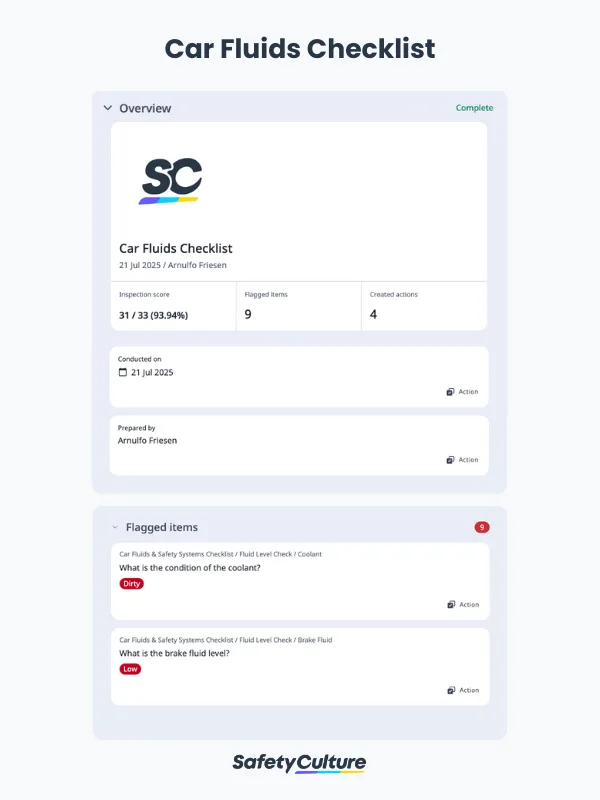
Below is a car fluids checklist example provided as a downloadable PDF report for easy reference and recordkeeping. This sample outlines essential fluid types, recommended levels, and inspection intervals to help ensure vehicle safety and performance:

Preview Sample Car Fluids PDF Report
How to Use a Car Fluids Checklist
Using a car fluids checklist is a simple yet essential routine that supports vehicle performance, reduces breakdowns, and ensures regulatory compliance. Follow this structured process to complete your car fluids inspection effectively:
Park the vehicle on a level surface – Before beginning the inspection, ensure the vehicle is parked on a flat surface and the engine is turned off and cooled down. This prevents inaccurate fluid level readings and ensures safety when checking under the hood.
Gather the checklist and other tools – Have your digital vehicle fluids checklist ready along with basic tools: gloves, flashlight, clean rag, and top-up fluids (oil, coolant, etc.). If using a digital checklist, ensure your device is charged and can upload photos and notes.
Check engine oil level and condition – Take out the dipstick, wipe it off, slide it back in fully, then pull it out again to see how much oil is there. Record the oil level (Full/Half/Low) and color (Clean/Dirty) on the checklist. Top up if needed and log the action.
Inspect coolant reservoir – Find the coolant reservoir and ensure that the fluid level is between the minimum and maximum marks. Look for any discoloration or debris. Note your findings in the checklist and take corrective maintenance if the coolant is low or contaminated.
Examine brake fluid – Open the brake fluid reservoir and inspect the fluid level and clarity. Brake fluid should be light yellow and should stay above the low mark. If it’s dark or low, log the issue on your car fluids checklist and mark it for follow-up maintenance.
Check transmission and power steering fluids – For automatic vehicles, use the transmission dipstick to check the fluid’s color and level (if accessible). Inspect the power steering reservoir in a similar manner. Record the status of each on the checklist with any actions taken.
Review windshield washer fluid – Make sure the washer fluid is filled and clear. Though not critical for performance, low washer fluid can decrease visibility and impair safety. Note the condition and top up if necessary.
Upload photos and add notes – Attach photo evidence for any concerns, such as leaks, dirty fluids, or abnormal levels. Add notes to help your team track maintenance trends or repeated issues.
Complete the checklist and escalate issues – Once all sections are complete, submit the checklist to your supervisor or fleet maintenance system. Any high-risk defects—like low brake fluid or dirty engine oil—should be escalated for immediate attention.
Schedule next inspection – Set a reminder for the next routine inspection based on your organization’s maintenance schedule. Consistency is key to maximizing the value of a car fluids checklist and extending vehicle life.

Stay on top of vehicle maintenance with prepared resources
Practical vehicle maintenance courses and templates to keep fleets reliable and reduce breakdowns