Mitti by SafetyCulture
Pricing
Log inSign up for free
  1. Home
  2. Checklist guides
  3. Maintenance
  1. Home
  2. Checklist guides
  3. Maintenance
Mitti by SafetyCulture

The way the world works

Follow us

App Store
Google Play

Product

  • Pricing
  • Book a demo
  • Product updates
  • Mitti (by SafetyCulture)

Support

  • Help center
  • Contact us
  • API developer documentation
  • Digitize your checklist

Resources

  • Content library
  • App & software guides
  • Checklist guides
  • Topic guides
  • eBooks
  • Blog

Company

  • About
  • Careers
  • News room
  • Meet the leadership team
  • Events & webinars
Copyright © 2026 Mitti
StatusLegalPrivacyTerms & ConditionsSecurity

SafetyCulture has a new name. Say hello to Mitti. Learn More.

Powered by

Property Damage Report Template

Clearly describe and document damage to the property using free property damage report templates.

Rated 4.6/5 stars on Capterra | 3k+ app store reviews
Use templatePreview template
property-damage-report digital report
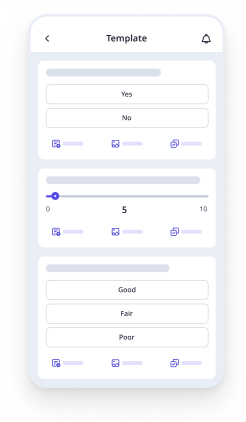
Mobile Preview
See the template in action (opens in new tab)

Download this free template to report the details of damages to property. Record a detailed description of what happened, what caused the damage, and if there were people involved during the incident. Using this report template, you can also do the following:

  1. Fill in details about the property, witnesses, and injuries or accidents that happened during the incident.

  2. Add notes and attach annotated photos and other files that help you provide more context on the property damage.

  3. Before completing the report, include the digital signatures of relevant personnel for verification and acknowledgment.

  4. Export it into a property damage report PDF, Excel, or Word file for recordkeeping and store it securely on the cloud.

property-damage-report digital report
Mobile Preview
See the template in action (opens in new tab)

Why Mitti digital checklists?

  • Free to use for up to 10 users

  • Eliminate paperwork with digital checklists

  • Generate reports from completed checklists

Use template
  • What is a Property Damage Report?
  • What is Classified as Property Damage?
  • Why Create an Incident Report for Property Damage?
  • What Should be Included in a Property Damage Incident Report?
  • How Do You Write a Property Damage Report?
  • Property Damage Report PDF
  • FAQs About Property Damage Reports

In this article

  • What is a Property Damage Report?
  • What is Classified as Property Damage?
  • Why Create an Incident Report for Property Damage?
  • What Should be Included in a Property Damage Incident Report?
  • How Do You Write a Property Damage Report?
  • Property Damage Report PDF
  • FAQs About Property Damage Reports

Eliminate paperwork with digital checklists

Skip the setup and get to work in seconds.

Use template

Article by

Patricia Guevara

|

4 min read

|

30 Jul 2025

What is a Property Damage Report?

A property damage report is a formal document that provides a detailed account of the damage sustained by a property. It serves as a comprehensive record of the incident, describing the extent of the damage, the cause or event that led to it, and any other pertinent information related to the incident.

They are essential for assessing the severity of the damage, determining liability, and facilitating the process of repairs, insurance claims, or legal actions.

What is Classified as Property Damage?

Property damage refers to any harm, destruction, or loss incurred by physical assets or property of an organization. It includes damage caused by various factors, such as the following:

  • Accidental Damage – vehicle crashes or collisions, falls, fires, water leaks

  • Natural Disasters – earthquakes, floods, hurricanes, tornadoes, wildfires

  • Vandalism – graffiti, broken windows, property destruction

  • Theft or Burglary – broken locks, damaged doors, stolen belongings

  • Fire Damage – structural damage, burnt belongings, smoke damage

  • Water Damage – structural deterioration, mold growth, damaged possessions

  • Storm Damage – high winds, hail, fallen trees, damage from flying debris

  • Environmental Factors – resulting from environmental factors

  • Equipment Failure – caused by equipment malfunctions or failures

  • Wear and Tear – leading to structural issues or functional problems

Why Create an Incident Report for Property Damage?

As part of property management, filing an incident report for property damages and even early signs of potential damages is important to help prevent them from occurring or happening again.

Aside from that, creating a report for property damage is essential for the following reasons:

  • Documentation – serves as an official and comprehensive document that records the details of the damage and an accurate account of the incident

  • Insurance Claims – provides evidence of the damage, helps determine the value of the claim, and assists in establishing the cause of the damage

  • Assessing Liability – helps determine liability for the damage

  • Repairs and Restoration – provides a detailed understanding of the damage sustained

  • Historical Reference – acts as a historical reference, capturing the property’s condition before and after an incident

  • Communication and Transparency – facilitates clear and transparent communication between all parties involved

What Should be Included in a Property Damage Incident Report?

To ensure the accuracy and completeness of your report, it’s helpful to use a property damage incident report form with organized sections and fields. This way, you can document every key detail, including the following:

  • Date and Time of the Damage

  • Reporter’s Contact Information

  • Property and Property Owner Information

  • Description of Damage

  • Cause of Damage

  • Injury/Accident Report

  • Visual Documentation/Evidence

  • Witness Information

  • Insurance Details

  • Repair Costs/Estimates

  • Other Relevant Documents (e.g., Police or Incident Report)

How Do You Write a Property Damage Report?

To guide you in writing a property damage report, it’s best to use a report form template. Carefully account for every important detail by following these steps:

  1. Include your full name, address, phone number, and email address as the one reporting the property damage. This allows the recipient (e.g., insurance company or law enforcement agency) to quickly contact you for further communication.

  2. Specify the date and time when the damage occurred or was discovered.

  3. Describe the property, including its address, relevant identifiers (such as apartment number or unit), and any additional details that help identify its location.

  4. Provide a clear and detailed description of the damage, including the affected areas, the extent of the damage, and any visible signs of destruction.

  5. Explain what caused the damage, whether it was a specific incident (e.g., fire, flood, vandalism) or a gradual occurrence (e.g., water leakage, structural issues). If the cause is unknown, state that it is under investigation.

  6. Attach photos or any other visual documentation that captures the damage.

  7. If applicable, include the names and contact information of witnesses along with a summary of their statements, and provide details of the insurance policy to be used for your claim processing.

  8. Obtain repair estimates from qualified professionals experienced in addressing the specific type of damage.

  9. Attach relevant supporting files (e.g., police reports, incident reports, invoices for temporary repairs, or correspondence with appropriate parties) to provide further context or evidence to support your claim.

  10. Sign the report to confirm its authenticity and completeness.

Property Damage Report PDF

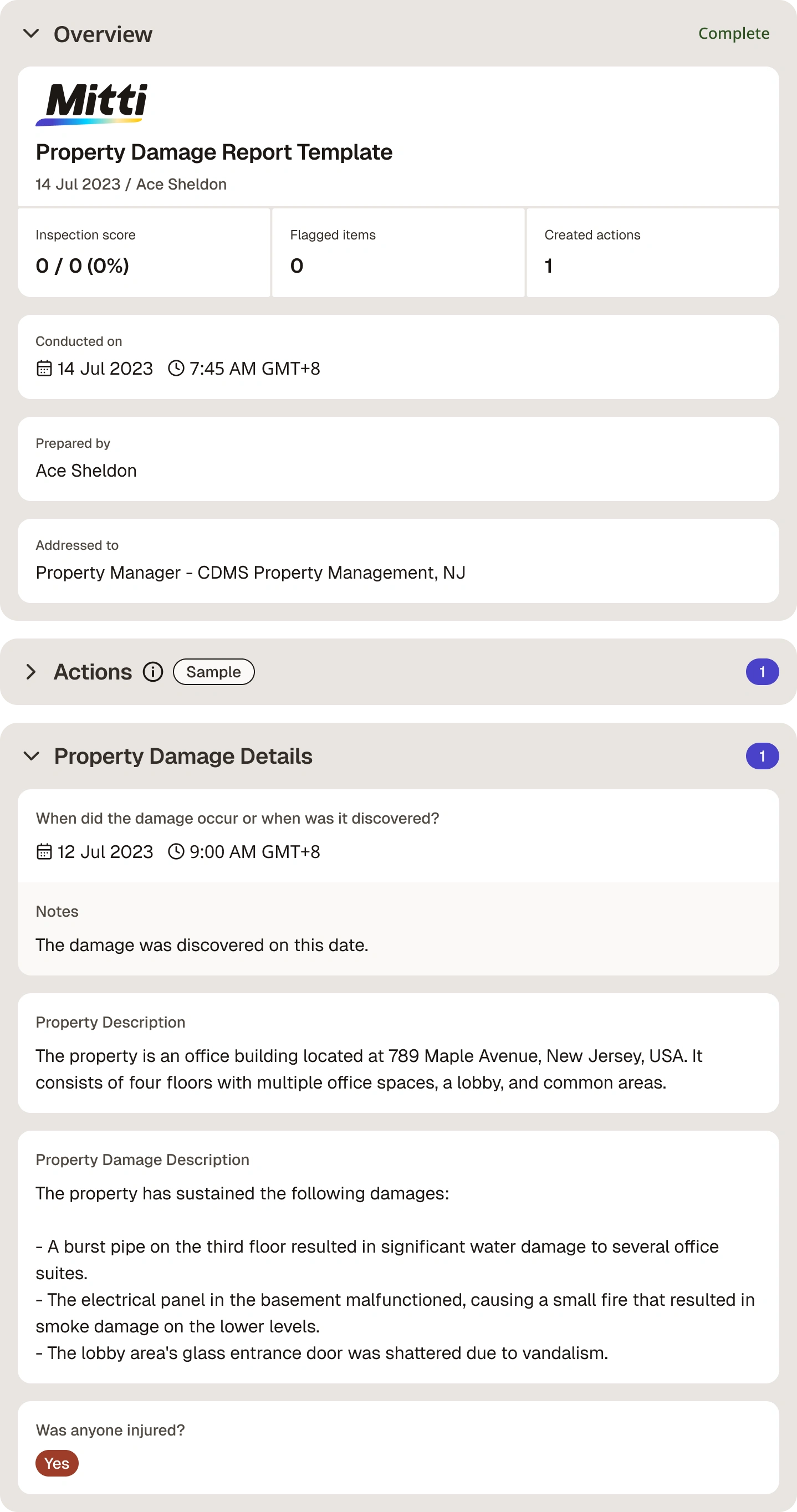
Here’s a look at an accomplished sample report using a damage report form.

property-damage-report PDF Image

Property Damage Report Example | Mitti (by SafetyCulture)

Remember to keep a copy of the property damage report for your records and provide the original to the appropriate recipient, such as your insurance company, property manager, or legal advisor, depending on the circumstances.

ArcelorMittal Construction Customer Logo

Using Mitti (by SafetyCulture), the team saves 5,000 hours annually on audits, with average audit time cut by 50% and 5S audits by 70%. Hazard reporting now takes just one minute instead of ten.

ArcelorMittal3
Read success story

Content library templates

Still looking for a checklist?

Search, filter, and customize 60,000+ templates across industries and use cases.

Browse Library

FAQs About Property Damage Reports

PG

Article by

Patricia Guevara

Mitti (by SafetyCulture) Content Specialist

View author profile

Related resources you might like

Templates

Powered by

Equipment or Property Damage Report

Using this free template, report equipment or property damage and attach media documentation to visually describe the incident. Record if there are people involved, to what extent the damage is, and how it occurred.

View template in library

Powered by

Property Damage Incident Report Template

Use this report template to specify property damage incidents that took place within the premises. Create analysis along with the personnel involved and apply corrective action to prevent these from happening in the future.

View template in library

Articles

Top 10 Preventive Maintenance Software

Discover 10 of the best preventive maintenance software. Use Mitti (by SafetyCulture) as a free preventive maintenance software for scheduling, PMs, and more.

Learn more

Cleaning Validation

Cleaning validation is the process of ensuring that the cleaning process done to eliminate chemical and microbial contaminants indeed worked.

Learn more

HVAC Installation Checklist

Download and use this free HVAC installation checklist and safely mount HVAC systems according to applicable laws.

Learn more