Mitti by SafetyCulture
Pricing
Log inSign up for free
  1. Home
  2. Checklist guides
  3. Maintenance
  1. Home
  2. Checklist guides
  3. Maintenance
Mitti by SafetyCulture

The way the world works

Follow us

App Store
Google Play

Product

  • Pricing
  • Book a demo
  • Product updates
  • Mitti (by SafetyCulture)

Support

  • Help center
  • Contact us
  • API developer documentation
  • Digitize your checklist

Resources

  • Content library
  • App & software guides
  • Checklist guides
  • Topic guides
  • eBooks
  • Blog

Company

  • About
  • Careers
  • News room
  • Meet the leadership team
  • Events & webinars
Copyright © 2026 Mitti
StatusLegalPrivacyTerms & ConditionsSecurity

SafetyCulture has a new name. Say hello to Mitti. Learn More.

Powered by

Underground Storage Tank Inspection Checklist

Comply with regulations, prevent releases, and ensure the good working condition of underground storage tanks

Rated 4.6/5 stars on Capterra | 3k+ app store reviews
Use templatePreview template
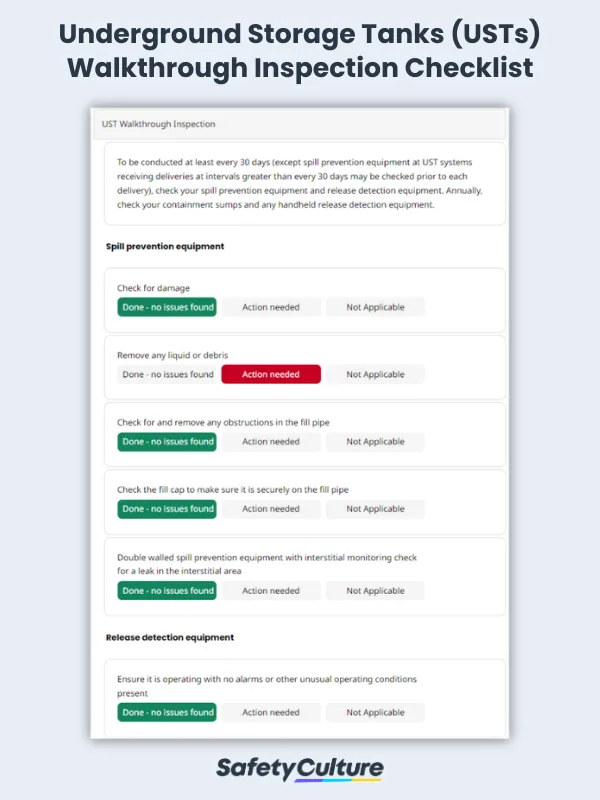
Underground Storage Tanks (USTs) Walkthrough Inspection Checklist
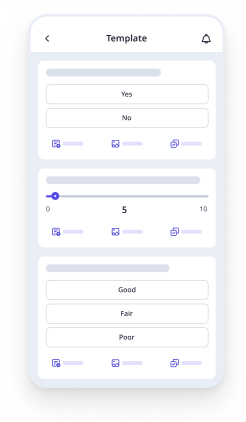
Mobile Preview
See the template in action (opens in new tab)

Operators and owners of UST sites can use this underground storage tank walkthrough inspection checklist and capture the following information as required by regulations: exact date and time of inspections, area inspected, inspection results, and description of actions taken. With the Mitti (by SafetyCulture) app, inspectors can:

  • Capture photo evidence of findings during inspections

  • Take immediate action to prevent or mitigate release

  • Conveniently save and submit inspection reports

  • Assign and schedule inspections within the app

  • Just like this adapted checklist from the EPA, create and edit your underground storage tank inspection checklists as required

Underground Storage Tanks (USTs) Walkthrough Inspection Checklist
Mobile Preview
See the template in action (opens in new tab)

Why Mitti digital checklists?

  • Free to use for up to 10 users

  • Eliminate paperwork with digital checklists

  • Generate reports from completed checklists

Use template
  • What are Underground Storage Tanks (UST)?
  • Importance of Maintaining Underground Storage Tanks
  • How to Prevent Releases From Underground Storage Tank Systems
  • What to Include in an Underground Storage Tank Inspection Checklist
  • Frequently Asked Questions (FAQs)

In this article

  • What are Underground Storage Tanks (UST)?
  • Importance of Maintaining Underground Storage Tanks
  • How to Prevent Releases From Underground Storage Tank Systems
  • What to Include in an Underground Storage Tank Inspection Checklist
  • Frequently Asked Questions (FAQs)

Eliminate paperwork with digital checklists

Skip the setup and get to work in seconds.

Use template

Article by

Mitti (by SafetyCulture) Content Team

|

3 min read

|

15 Jul 2025

What are Underground Storage Tanks (UST)?

Underground storage tanks are tanks that store 10% or more of their combined volume below ground level. An underground storage tank system includes the tank, connected piping, ancillary equipment, and any existing containment system. Operating and maintaining underground storage tank systems that store petroleum and other hazardous materials are regulated by federal and local laws.

Importance of Maintaining Underground Storage Tanks

Petroleum products and any of the 1,200 considered hazardous substances are stored in 552,000 underground storage tanks in the US. Of these more than half a million USTs, there were 550,897 confirmed releases as of September 2019 according to the Environmental Protection Agency (EPA). A release is when leaks, spills, or overfills take place from USTs. Substances from releases can contaminate the environment and reach groundwater, endangering a vital source of drinking water for approximately half of the US population.

How to Prevent Releases From Underground Storage Tank Systems

Keeping UST systems in good working condition and monitoring activities at UST sites can help owners and operators prevent or mitigate leaks and spills and stay compliant with regulations. Here are some practical tips from the EPA.

Utilize and maintain monthly release detection methods

Not only is release detection a must for all regulated tanks according to the EPA, release detection needs to be done at least once a month to be compliant with regulations. Release detection is a proactive approach to help mitigate the further spread and prevent contamination in case of an actual release of petroleum or hazardous materials.

Use UST walkthrough inspections checklists to ensure that nothing is overlooked among all equipment and UST systems at the site.

Watch out for warning signs during walkthrough inspections

As of October 2018, a walkthrough inspection of the UST facility every 30 days is a required step for maintaining and operating USTs. During a walkthrough, the inspector must check the following: spill prevention equipment, release detection equipment, and containment sumps.

Leak detection equipment needs to be properly calibrated in order to ensure that they function as early warning devices for leaks. Test or inspect USTs after repairs to ensure that they work as expected.

Practice efficient recordkeeping

Inspection records must be properly maintained and should contain the following information according to the EPA: area inspected, including inspection results that show acceptable or required action and description of actions taken, and records of delivery in case the interval between inspections of spill prevention is more than 30 days due to longer delivery interval.

What to Include in an Underground Storage Tank Inspection Checklist

A comprehensive UST Inspection checklist streamlines the inspection process and targets critical components to ensure safety and regulatory compliance. When creating an underground storage tank inspection checklist, here are the important items to include:

  • Spill Prevention Equipment: Inspect spill buckets and containment areas to ensure they are free of liquids, debris, and damage, maintaining their integrity to contain spills effectively.

  • Release Detection Equipment: Verify that automatic and manual leak detection devices are operational, calibrated, and alarms are functioning properly.

  • Containment Sumps: Check containment sumps for cracks, water, and debris to ensure they are liquid-tight and sensors are working correctly.

  • Hand-Held Release Detection Equipment: Confirm hand-held leak detection tools are calibrated, functional, and maintained according to manufacturer guidelines.

Underground Storage Tank Inspection Checklist Sample Report

Underground Storage Tank Inspection Checklist Sample Report | Mitti (by SafetyCulture)

Content library templates

Still looking for a checklist?

Search, filter, and customize 60,000+ templates across industries and use cases.

Browse Library

Frequently Asked Questions (FAQs)

MT

Article by

Mitti (by SafetyCulture) Content Team

Mitti (by SafetyCulture) Content Contributor

View author profile

Related resources you might like

Templates

Powered by

Monthly UST Inspection Checklist

Use this version of a UST inspection checklist during monthly checks. Feel free to download and edit to fit your underground storage tank inspection needs.

View template in library

Articles

Top 10 Preventive Maintenance Software

Discover 10 of the best preventive maintenance software. Use Mitti (by SafetyCulture) as a free preventive maintenance software for scheduling, PMs, and more.

Learn more

Cleaning Validation

Cleaning validation is the process of ensuring that the cleaning process done to eliminate chemical and microbial contaminants indeed worked.

Learn more

Hotel Housekeeping Checklist

Download a free hotel housekeeping checklist to keep every room guest-ready. Track tasks and prove compliance with Mitti (by SafetyCulture).

Learn more