What is a Visual inspection Checklist?
A visual inspection checklist is a valuable tool for organizations to carry out comprehensive visual inspections and audits. It enables assessors to identify any defects, issues, or other observations to note during the product inspection.
This kind of checklist is typically customizable, as there are different kinds of products or processes to be inspected, and its contents should be relevant to the specific inspection being performed. Visual inspection checklists also facilitate the easy documentation of key information and reporting of inspection results.
Importance
According to the British Institute of Non-Destructive Testing (BINDT), many defects are surface-breaking and can be detected by careful direct visual inspection. In some cases, quality assurance inspectors come up with inconsistent visual inspection results because they either do not completely understand defect specifications or have no references to compare the product with.
Using a visual inspection checklist is crucial for maintaining high standards of quality control and quality assurance in any production or operational process. This tool ensures that each product or component is carefully examined for defects, inconsistencies, or damage before moving to the next stage of production. By standardizing what needs to be checked, a visual inspection checklist helps prevent defective products from reaching customers, reducing costly rework and returns.
How to Perform Visual Inspection with a Checklist
As one of the easiest and most cost-effective non-destructive testing and quality assurance methods, visual inspection procedures vary per industry. However, here are 4 of the most common steps taken to effectively perform visual inspections:
Step 1: Clearly define defect criteria
Key stakeholders such as quality engineers, production personnel, and customers should reach a consensus on defect specifications to enable inspectors to accurately make pass or fail decisions for products. It is important to list down these defect criteria in the checklist to serve as a point of reference during inspections.
Step 2: Standardize inspection performance
Quality managers should regularly assess the performance of the current inspection process to confirm the consistency of inspectors’ pass or fail decisions. Determine how well the inspectors’ decisions match the established defect criteria to standardize visual inspection performance in the organization.
Step 3: Analyze visual defects
When the inspectors’ decisions on the same products contradict across visual inspections, address the issue by analyzing the most significant visual defects. Evaluate the cost of quality by frequency and defect count to identify which defect type has the greatest impact on daily operations. Quality managers should also consider the cost, time to repair, and importance to the customer to create and implement effective action plans.
Step 4: Use the checklist to record inspection findings
Inspectors and quality managers should use the visual inspection checklist as a structured document to communicate identified defects and improvement measures. The checklist template can be used as a structured document to provide actionable insights. After, it can also be easily shared with other stakeholders for accountability and ownership of continuous improvement efforts.
How to Use a Visual Inspection Checklist
In order to maximize the features of this kind of checklist, it is important to know how to properly use it. Here is a short, step-by-step guide:
Provide the information needed in the title page. This usually requires the name of the company where the inspection is taking place, the department handling the inspection, and the name of the inspector.
Read the instructions included in the checklist. This can be customized depending on the type of product being inspected and usually includes the defect criteria to be followed.
Assess the quality of the product being inspected and note any visual defects observed. Attach photo annotations to provide accurate evidence as needed.
Determine whether the product passes or fails the inspection. If it fails, note down the specific defects that need to be corrected.
Complete the checklist report with any additional observations and a sign-off.
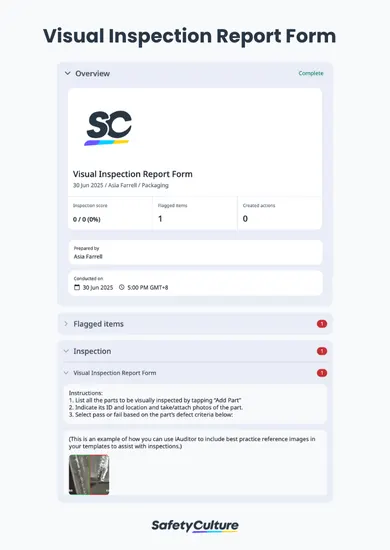
To give you a better understanding of what a completed visual inspection checklist looks like, here is a sample report:

Visual Inspection Report Form Sample Report | Mitti (by SafetyCulture)
How Mowi Transformed Visual Inspections

Mitti (by SafetyCulture) has been essential in cutting down on manual, labor-intensive storage and archiving. We went from sending 30 boxes of paperwork into storage each month to only 8.


Start product inspections with proven resources
Curated product inspection courses and templates so you can standardize checks fast and reduce rework