What is an Agile Transformation Checklist?
An Agile transformation checklist is a set of key items or steps that organizations use to guide them through the process of adopting and implementing Agile methodologies. Agile is an approach that emphasizes flexibility, collaboration, and iterative progress. The checklist serves as a roadmap to help organizations navigate the complexities of Agile transformation toward business adaptability and efficiency.
Benefits of Using This Checklist
Agile transformation through various agile methodologies is a complex process that requires careful planning and execution. This is usually applicable to product development, marketing, human resources, and project management.
One effective way to ensure this smooth and successful transition is by utilizing a comprehensive checklist. The main benefit of using this checklist is providing a structured approach that fosters efficiency and accountability. Apart from that, organizations can also achieve the following advantages:
Guidance Through Phases and Activities
A checklist acts as a roadmap, guiding teams through the various phases and activities involved in Agile transformation. It breaks down the process into manageable tasks, ensuring that each aspect is addressed systematically.
From initial assessments and team training to implementing Agile practices and refining processes, a checklist serves as a navigational tool, preventing crucial steps from being overlooked.
Improved Communication and Collaboration
Using an agile transformation checklist also promotes transparency and a shared understanding of each team member’s role in the transformation process. This fosters a collaborative environment where individuals work cohesively towards common goals, reducing the likelihood of miscommunication and building a culture of openness.
Continuous Monitoring and Adaptation
Agile is founded on the principles of continuous improvement, and a checklist facilitates ongoing monitoring and adaptation. Regularly revisiting an agile checklist allows teams to assess their progress, identify bottlenecks, and make necessary adjustments.
This approach ensures that the transformation remains flexible and responsive to changing times, promoting a culture of continuous learning and adaptation within the organization, while ensuring business agility.
What to Include in an Agile Transformation Checklist
An agile transformation checklist should encompass key elements to ensure a systematic and structured approach. Generally, here’s what you must include in it:
Title Page
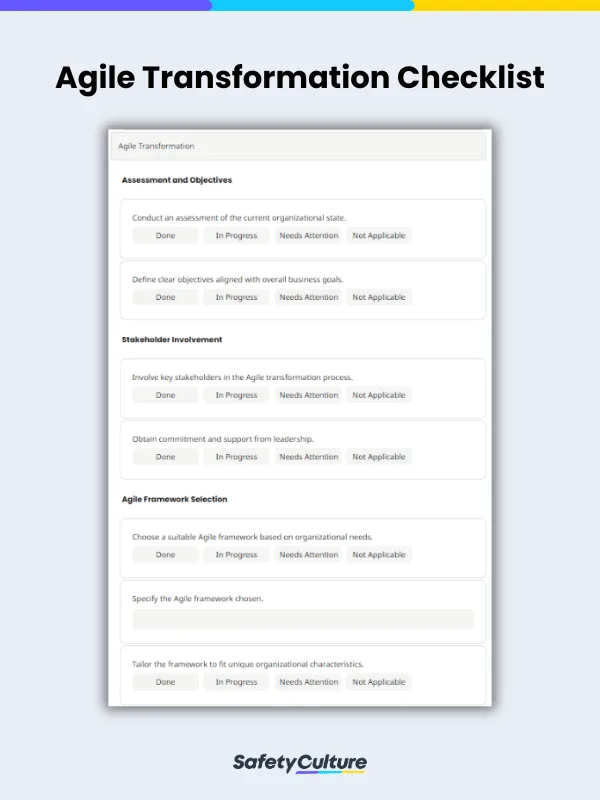
Assessment and Objectives
Stakeholder Involvement
Agile Framework Selection
Metrics and Key Performance Indicators (KPIs)
Training Programs
Communication Plans
Iterative Implementation
Tool Integration
Kickoff and Orientation
Regular Team Check-ins
Leadership Alignment Meetings
Feedback Loops
Metrics Review
Adaptive Leadership
Tool Utilization
Celebrate Achievements
Ongoing Training
Completion Page
How to Use This Checklist
Implementing an Agile transformation checklist is not a one-time effort but an ongoing process that requires active engagement and adaptability. Effectively utilizing the checklist in an organizational or business setting ensures that the Agile transformation progresses smoothly, with continuous improvement at its core. Here’s a step-by-step guide you can follow as you utilize this checklist:
Initiate the Agile transformation by conducting a kickoff meeting to introduce the checklist and its purpose to all stakeholders.
Schedule regular team check-ins to review progress against the checklist, using these sessions to address challenges, share successes, and discuss any necessary adjustments to the Agile processes. This ensures transparency and accountability throughout the transformation.
Coordinate periodic leadership alignment meetings to discuss the broader organizational impact of the Agile transformation to assess executive support, address any leadership challenges, and reinforce the importance of Agile principles in decision-making.
Encourage an open and constructive dialogue where team members can share insights, challenges, and suggestions for improvement to refine the Agile transformation checklist and adapt strategies for better alignment with organizational goals.
Regularly review and assess the defined metrics and KPIs to gauge the impact of Agile practices.
Empower leaders to adjust strategies based on evolving needs and changing circumstances and make sure these are reflected on the checklist.
Maintain a focus on ongoing training and skill development for both teams and leadership. Ensure that training programs, whether for digital transformation or others, are kept in check by including them in the checklist.
Agile Transformation Checklist Example
While Agile transformation may look different to organizations, common themes and areas may apply regardless of industry and specialization.
You can use this filled-out checklist as an example to see how it can be used when starting your efforts to implement Agile methodologies in your organization:

Agile Transformation Checklist Sample Report | Mitti (by SafetyCulture)

Still looking for a checklist?
Search, filter, and customize 60,000+ templates across industries and use cases.