What is a Self Evaluation Template?
A self-evaluation template is a tool that enables employees to assess their own job performance and areas for improvement over a specific period. It’s typically part of performance reviews and appraisals—and is completed before the actual review meeting with the manager or supervisor.
Benefits of Using a Self Evaluation Template
A self evaluation template is an essential tool commonly used by employees to reflect on their work performance, identify strengths and weaknesses, and discover areas for improvement. Also, employees can refer to the form when setting goals and developing a plan for their personal and career development.
For employers, a completed employee self evaluation form provides insight into how workers perceive their performance in their roles, where they excel, and where they can improve. Ultimately, these insights are useful for determining employee training needs, career development opportunities, and aspects where the organization can improve. It can also improve communication between employees and management, promoting a culture of trust and collaboration.
Other benefits of using and completing an employee self-evaluation template include the following:
Increased productivity
Improved employee satisfaction
Streamlined goal-setting
Enhanced employee self-awareness
What to Include in a Self Evaluation Template?
To ensure that every aspect of employee self-evaluation is covered in your form, include the following basic details and sections:

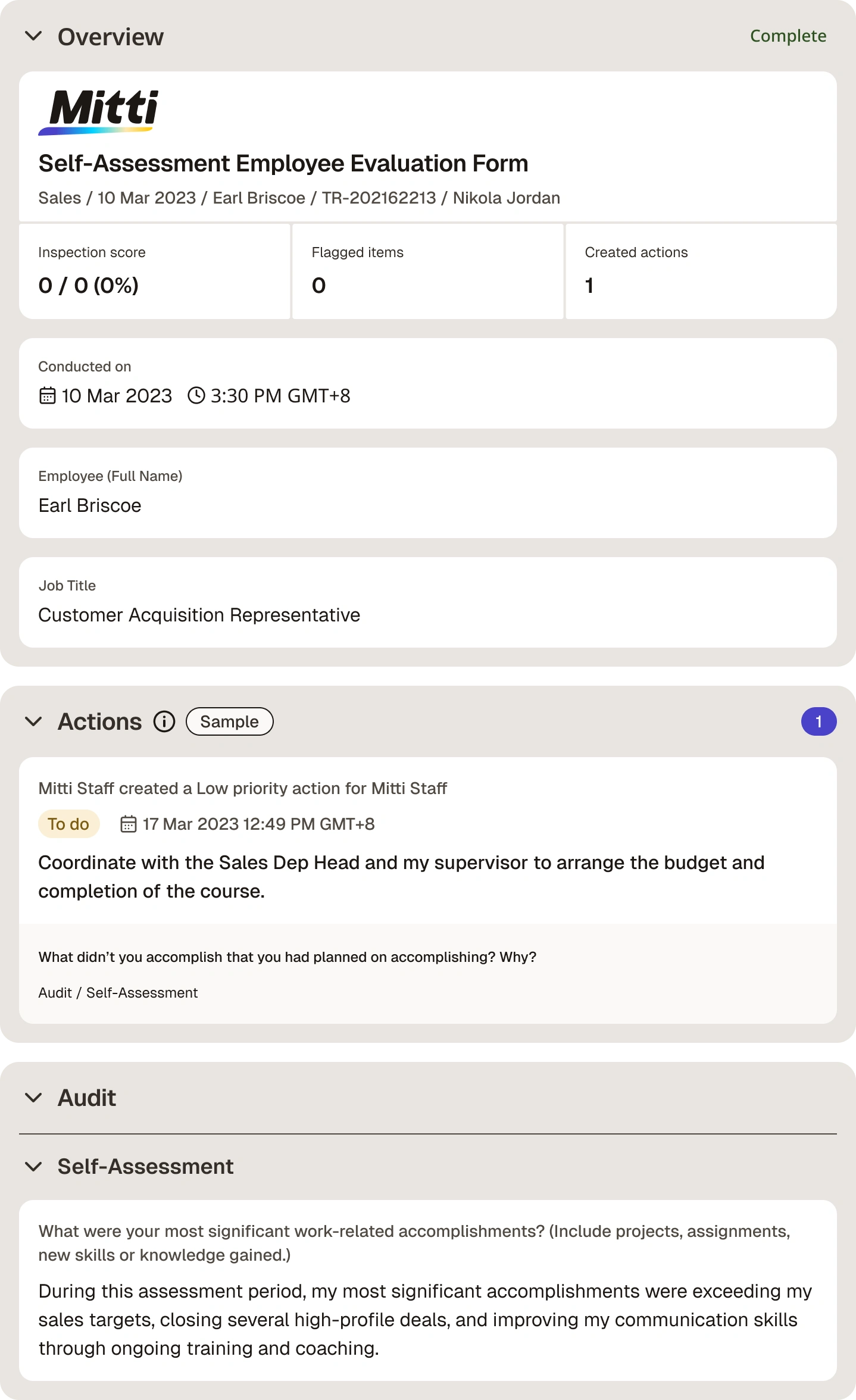
Employee Self-Evaluation Form PDF | Mitti (by SafetyCulture)
Title Page – employee details, including name, employee number, job title, and supervisor name
Self-Assessment – open-ended questions regarding your work accomplishments, goals, things that went well, and your next steps
Completion – feedback or suggestions for team improvement and sign-off
Example Questions to Include in a Self Evaluation Template
The employee self evaluation form usually consists of a set of questions that covers various aspects of the employee’s job performance and goals. These self-evaluation questions can range from rating one’s performance on specific job tasks to describing significant accomplishments and improvement opportunities.
A comprehensive self evaluation template includes asking and answering the following questions:
What were your most significant work-related accomplishments?
How do these accomplishments relate to your key responsibilities and goals for you and your unit/department?
What didn’t you accomplish that you had planned on accomplishing? Why?
What are your goals for the next evaluation period?
How will you accomplish these goals?
How can your supervisor help you to work more effectively and support your goals?
What additional training or development would help you improve and/or enhance your work performance?
How to Write a Self Evaluation
As an employee, it’s important to understand how to fill out a self evaluation template. This is a crucial component of your performance review process, as it provides an opportunity to reflect on your achievements, areas for improvement, and career goals.
Now, what do you write in an employee self-evaluation? To help you complete this form, here are 5 steps to write a self-assessment review:
1. Review the evaluation criteria.
This is to help you understand what it’s specifically for. The evaluation criteria may include specific job duties, performance metrics, or other goals outlined by your supervisor. Make sure you understand what’s expected of you and how you’ll be evaluated. If you have any questions or concerns, don’t hesitate to ask your supervisor, manager, or Human Resources (HR) representative for clarification.
2. Gather supporting documentation.
To ensure your self-evaluation is accurate and comprehensive, gather supporting documentation such as project reports, customer feedback, and performance metrics. These will provide concrete evidence of your achievements and help you identify areas for improvement. Also, it can help demonstrate to your supervisor that you’re committed to working on your performance.
3. Reflect on your performance.
Take the time to reflect on your performance over the evaluation period. Consider your strengths and weaknesses, as well as any challenges you faced, how you overcame them, and how you plan on mitigating them as much as possible. Most importantly, be honest with yourself and avoid being overly critical or too self-congratulatory.
4. Consider the feedback you received.
Aside from your own perspective, it would also be helpful to look back on the feedback you received throughout the specific period. This allows you to evaluate your progress and development. By reviewing both positive and negative feedback, you can gain insights into areas where you’ve improved and identify opportunities for further growth. This process not only helps in recognizing your strengths but also in understanding how to address any weaknesses.
5. Write your self-evaluation.
Start by outlining your accomplishments, being as specific and detailed as possible. Use your supporting documentation and data to provide examples of your achievements, areas for improvement, and the specific steps you plan to take to address them.

Still looking for a checklist?
Search, filter, and customize 60,000+ templates across industries and use cases.