Mitti by SafetyCulture
Pricing
Log inSign up for free
  1. Home
  2. Checklist guides
  3. Operations
  1. Home
  2. Checklist guides
  3. Operations
Mitti by SafetyCulture

The way the world works

Follow us

App Store
Google Play

Product

  • Pricing
  • Book a demo
  • Product updates
  • Mitti (by SafetyCulture)

Support

  • Help center
  • Contact us
  • API developer documentation
  • Digitize your checklist

Resources

  • Content library
  • App & software guides
  • Checklist guides
  • Topic guides
  • eBooks
  • Blog

Company

  • About
  • Careers
  • News room
  • Meet the leadership team
  • Events & webinars
Copyright © 2026 Mitti
StatusLegalPrivacyTerms & ConditionsSecurity

SafetyCulture has a new name. Say hello to Mitti. Learn More.

Powered by

Verified

ISO 9001 Lessons Learned Log

Capture and document valuable insights for continuous improvement with a digital checklist.

Rated 4.6/5 stars on Capterra | 3k+ app store reviews
Use templatePreview template
ISO 9001 Lessons Learned Log
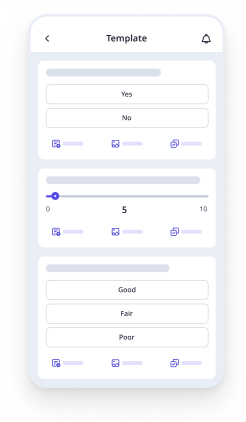
Mobile Preview
See the template in action (opens in new tab)

Effectively apply knowledge gained from past projects, processes, audits, or incidents in alignment with ISO 9001’s continuous improvement principles with a digital template. Use this ISO 9001 lessons learned log to document what worked well, what went wrong, and how to improve future outcomes throughout operations.

This checklist can also be used to:

  • Record corrective actions taken to identify and address the root cause of issues

  • Provide a reference for positive KPIs and how to continually improve them

  • Share best practices across departments to keep everyone aligned with quality standards

  • Export the lessons learned log report in PDF, Excel, or Word formats as proof of completion

ISO 9001 Lessons Learned Log
Mobile Preview
See the template in action (opens in new tab)

Why Mitti digital checklists?

  • Free to use for up to 10 users

  • Eliminate paperwork with digital checklists

  • Generate reports from completed checklists

Use template
  • What is an ISO 9001 Learned Lessons Log ?
  • What is a Lessons Learned Log?
  • Importance & Benefits
  • What to Include in a Lessons Learned Log
  • How to Use an ISO 9001 Lessons Learned Log
  • Sample ISO 9001 Lessons Learned Log Report
  • FAQs about ISO 9001 Learned Lessons Log

In this article

  • What is an ISO 9001 Learned Lessons Log ?
  • What is a Lessons Learned Log?
  • Importance & Benefits
  • What to Include in a Lessons Learned Log
  • How to Use an ISO 9001 Lessons Learned Log
  • Sample ISO 9001 Lessons Learned Log Report
  • FAQs about ISO 9001 Learned Lessons Log

Eliminate paperwork with digital checklists

Skip the setup and get to work in seconds.

Use template

Article by

Gabrielle Cayabyab

|

3 min read

|

13 Aug 2025

What is an ISO 9001 Learned Lessons Log?

An ISO 9001 Learned Lessons Log is a documented record used within an organization’s quality management system (QMS) to capture, maintain, and share lessons learned from past experiences, both positive and negative. It serves as a tool to systematically store and update lessons learned as part of the ongoing quality improvement process.

What is a Lessons Learned Log?

A lessons learned log is a documented record that captures important insights, experiences, and knowledge gained from past projects, activities, or processes. It helps organizations identify what worked well and what didn’t, allowing them to apply these lessons to improve future performance and avoid repeating mistakes.

This kind of documentation can be tailored to follow standards or regulations, such as ISO 9001, to observe specific principles and highlight improvement. The log serves as a valuable resource for continuous improvement, knowledge sharing, and informed decision-making within an organization.

Importance & Benefits

An ISO 9001 lessons learned log is important because it helps capture and preserve organizational knowledge from past experiences. Not only does this prevent the recurrence of issues, but highlighting lessons learned can improve regulatory compliance and audit readiness within the organization.

Moreover, managing lessons learned lets organizations adapt faster to changes, maintain conformity to requirements, and foster a culture of learning and continuous improvement aligned with ISO 9001 Clause 7.1.6 on organizational knowledge.

What to Include in a Lessons Learned Log

A lessons learned log is a versatile tool that can be used for different quality needs within an organization, which is why the contents may vary depending on how it is used. However, a good lessons learned log usually includes core items such as:

  • Project Name and Details: Identifies the specific project or task the lesson applies to, including relevant dates and stakeholders.

  • Description of the Situation: A concise account of what happened, including the context and circumstances leading to the outcome.

  • Impact or Outcome: Explains how the situation affected the project, whether positive or negative, including cost, schedule, or quality implications.

  • Action Taken: Describes how the issue was addressed during the project and what measures were implemented.

  • Recommendation for Future Projects: Clear advice on how to replicate successes or avoid repeating mistakes.

How to Use an ISO 9001 Lessons Learned Log

In order to properly document lessons learned and account for the details recorded, it is important to know how to use the log template properly. Here is a step-by-step guide:

  1. Start by filling out the details on the title page. This usually includes the document number, the name of the person completing the log, the location, and the date of recording.

  2. Provide the information on the lessons learned. This involves the product or project name, the date it was released, project lead’s name, and the team members involved. It is important to be transparent and provide concrete data for the lessons learned.

  3. Describe the lessons learned by including the context of the issue, the identified root causes, corrective actions taken, and the general impact of it on the organization and its operations.

  4. After providing context for the lessons learned, complete the filled-out log with a sign-off from the team lead to acknowledge the information included in the document.

Sample ISO 9001 Lessons Learned Log Report

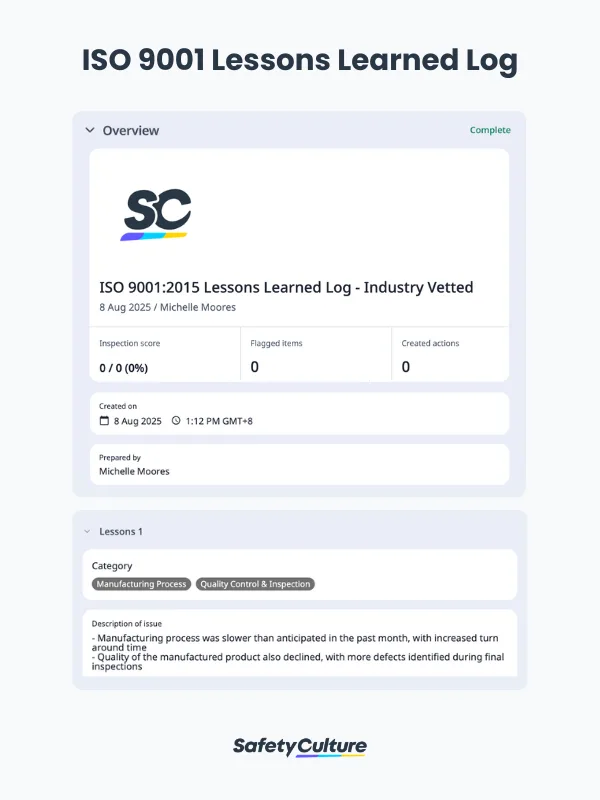
For reference, here’s an example of a filled-out ISO 9001 lessons learned log report:

iso 9001 lessons learned template pdf report

Sample ISO 9001 Lessons Learned PDF Report

Content library templates

Still looking for a checklist?

Search, filter, and customize 60,000+ templates across industries and use cases.

Browse Library

FAQs about ISO 9001 Learned Lessons Log

GC

Article by

Gabrielle Cayabyab

Mitti (by SafetyCulture) Content Specialist

View author profile

Related resources you might like

Templates

Powered by

ISO 9001:2015 Roles and Responsibilities Matrix

Use this checklist to clearly define roles and responsibilities aligned with ISO 9001:2015 requirements.

View template in library

Powered by

Gap Analysis ISO 9001 Checklist

This checklist can help teams prepare for ISO 9001:2015 certification. Evaluate if the Context of the organization, Planning, Operation, Quality control, and Product improvement complies with the ISO standard. It will also help determine the needs of consumers and opportunities for improvements within the QMS.

View template in library

Powered by

Corrective Action Log Template

Use this checklist to guide corrective actions and prompt further investigation for effective resolution and continuous improvement.

View template in library

Articles

Recreation Management Software

Explore top recreation management software to streamline operations, enhance user experience, and simplify managing recreational activities.

Learn more

Transportation and Logistics: What’s the Difference?

Learn about the importance of transport and logistics within the supply chain and how it is used in business operations.

Learn more

Project Handover Template

Download and use free project handover templates to ensure efficient communication and turnovers across various project stakeholders.

Learn more