What is a new employee training checklist?
A new employee training checklist is a tool used to list tasks and activities intended to onboard and train new employees. The checklist serves as a guide or roadmap to ensure that new employees receive the necessary information, resources, and support to become productive and successful in their roles. Also, it helps establish a streamlined process of completing all necessary training and orientation activities for a smooth integration of the new employee into the organization.
Why is it important to train new employees?
Training new employees is crucial for several reasons, including the following:
Performance and productivity – When employees are trained well, they can quickly become productive and contribute to the organization’s goals, reducing the learning curve and minimizing errors.
Job satisfaction and engagement – New employees who receive thorough training feel valued and supported, which can enhance job satisfaction and engagement toward improved employee retention and reduced turnover.
Company culture and values – By aligning new employees with the company’s ethos, training helps create a cohesive and unified workforce that shares a common vision and understands the company’s core principles.
Consistency and standardization – Training helps promote standardization in processes, procedures, and service delivery, leading to higher quality outcomes and improved customer satisfaction.
Safety and compliance – Training educates new employees on workplace safety protocols, emergency procedures, and industry-specific regulations, reducing the risk of accidents, injuries, and legal issues.
Confidence and skill development – Training equips new employees with the necessary tools and knowledge to handle their responsibilities with competence, which can boost their self-assurance and contribute to long-term career growth.
Team collaboration and communication – Proper training introduces new employees to their team members, establishes relationships, clarifies roles and responsibilities, and encourages teamwork, fostering a positive work environment.
To ensure everything is well accounted for during this phase, using a training checklist for new employees can help streamline the onboarding process and provide consistency in training.
New employee onboarding vs. new employee training
While both processes work together to set the stage for a new employee’s success and smooth transition into the organization, they are distinct phases with unique goals and purposes.
New employee onboarding is a broader process that encompasses the entire experience of welcoming and integrating new employees into the organization. Commonly, this starts before the employee’s first day and goes on beyond the initial training period.
This phase focuses on familiarizing the employee with the company’s culture, values, policies and procedures, setting up accounts and access, and completing paperwork. Its main purposes include making the employee feel welcomed, connected, and engaged with the company.
On the other hand, new employee training is a specific component or part of the onboarding process that usually takes place during the first weeks or months of employment. This focuses on developing the skills, knowledge, and competencies required for the employee’s role. Also, training aims to ensure that the employee is equipped with the necessary skills and knowledge to perform their job successfully.
What should be included in a new employee training checklist?
While new employee training checklists can serve unique purposes to various organizations, these common items must be included to ensure their accuracy and help make the training process comprehensive and straightforward:
Introduction to the organization
Company mission, vision, and values
Company’s products and services
Company policies and procedures
Organizational structure and key departments
Company stakeholders
Company benefits and resources
Company culture
Systems and tools
IT and security
Workplace safety
Job-specific training
Other training
Other important elements and details you may consider including in the template for your new employee training checklist to help you efficiently track progress are the following:
Training objectives
Target completion date (for each training item)
Training status
Feedback and recommendations
Next evaluation date
How to create one
To guide you through the process of creating a new employee training checklist, follow these steps:
Consider including both job-specific training and broader organizational training topics, such as policies, procedures, and company culture in the new employee training checklist.
Identify who will be responsible for delivering or overseeing each training item. Assign trainers or subject matter experts who have the knowledge and expertise to effectively train the new employee so that their names can be included when filling out the checklist.
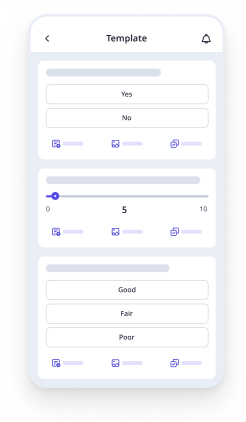
Determine and specify the timeline or duration of each training session, the overall training period, and any specific deadlines or milestones. Alternatively, include multiple-choice questions to indicate the status of each training item.
Follow the checklist during the new employee’s training period, ensuring that all topics are covered according to the planned timeline. Continuously evaluate the effectiveness of the training by gathering feedback from the employee and trainers, making adjustments as needed.

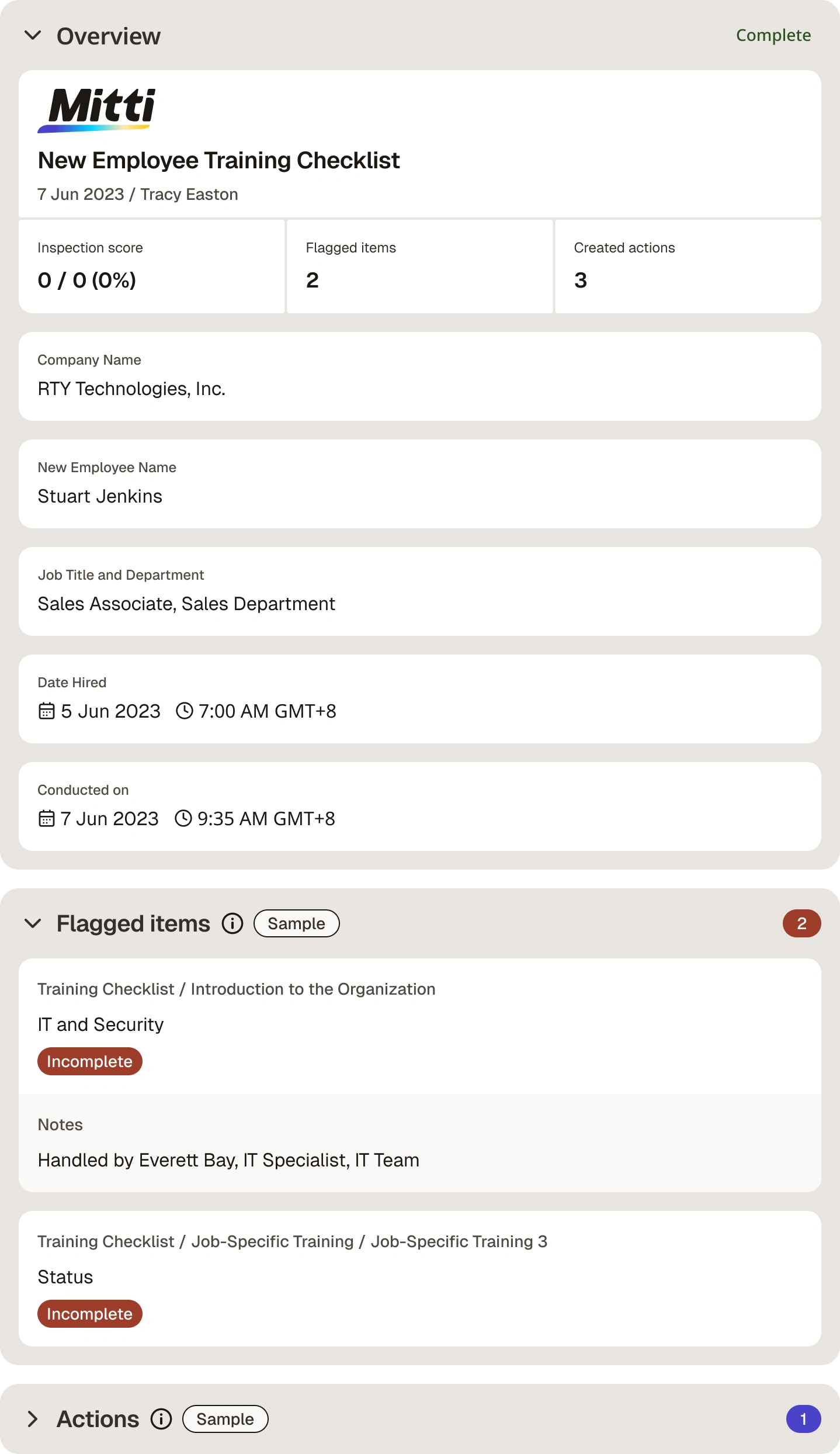
New employee training checklist sample report | Mitti (by SafetyCulture)
Best Practices for Using a Checklist for Training New Employees
Here are some best practices for using a new hire training checklist template to maximize its advantages in your organization:
Tailor the checklist to fit the specific needs of your organization, industry, and job roles by adding job-specific training and other necessary development efforts.
Allocate sufficient time for each training item on the checklist. Avoid overloading the schedule, which can lead to rushed, inadequate, or counterproductive training.
Remember that training doesn’t end with the completion of the checklist. Offer ongoing support and guidance to new employees as they apply their training in real work situations. Regular check-ins, feedback sessions, and additional resources contribute to their continued development.
Periodically review and update the training checklist to reflect any changes in job responsibilities, processes, or company policies.
Keep a record of the training progress and completion for each new employee. This documentation helps track their development, identify any gaps in training, and serve as a reference for future training needs or performance evaluations.

Still looking for a checklist?
Search, filter, and customize 60,000+ templates across industries and use cases.