Mitti by SafetyCulture
Pricing
Log inSign up for free
  1. Home
  2. Checklist guides
  3. Operations
  1. Home
  2. Checklist guides
  3. Operations
Mitti by SafetyCulture

The way the world works

Follow us

App Store
Google Play

Product

  • Pricing
  • Book a demo
  • Product updates
  • Mitti (by SafetyCulture)

Support

  • Help center
  • Contact us
  • API developer documentation
  • Digitize your checklist

Resources

  • Content library
  • App & software guides
  • Checklist guides
  • Topic guides
  • eBooks
  • Blog

Company

  • About
  • Careers
  • News room
  • Meet the leadership team
  • Events & webinars
Copyright © 2026 Mitti
StatusLegalPrivacyTerms & ConditionsSecurity

SafetyCulture has a new name. Say hello to Mitti. Learn More.

Powered by

Business Requirements Document Template

Define requirements clearly and effectively with a digital template

Rated 4.6/5 stars on Capterra | 3k+ app store reviews
Use templatePreview template
Business Requirements Document Template
Mobile Preview
See the template in action (opens in new tab)

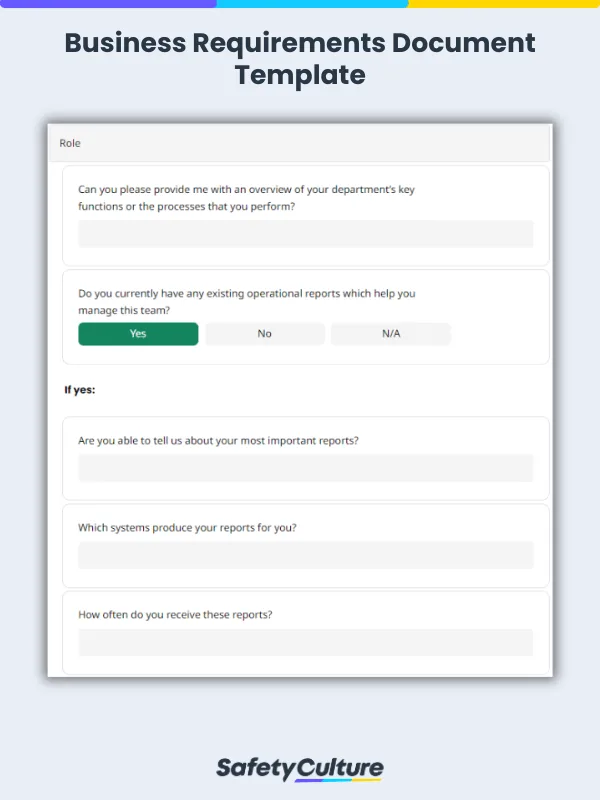
Use this business requirements document (BRD) template for easy requirements gathering. By sharing this interactive BRD template with clients, business analysts are able to get detailed information on stakeholders and how they fit into the organization; understand the current processes and systems and how to improve them; and build strong business relationships. Follow the steps below to get started on your requirements document template:

  1. Ask stakeholders about their department’s key functions or the processes they perform

  2. Ask stakeholders to provide screenshots of systems that support these processes

  3. Add notes and edit answers for clarification or when there is a relevant update

  4. Ask for the signatures of stakeholders and add your own to verify the BRD template

Business Requirements Document Template
Mobile Preview
See the template in action (opens in new tab)

Why Mitti digital checklists?

  • Free to use for up to 10 users

  • Eliminate paperwork with digital checklists

  • Generate reports from completed checklists

Use template
  • What is a Requirements Document Template?
  • Why Requirements Gathering Can Be Difficult
  • Requirements Gathering Techniques
  • How do I Make Requirements Gathering Easier?

In this article

  • What is a Requirements Document Template?
  • Why Requirements Gathering Can Be Difficult
  • Requirements Gathering Techniques
  • How do I Make Requirements Gathering Easier?

Eliminate paperwork with digital checklists

Skip the setup and get to work in seconds.

Use template

Article by

Mitti (by SafetyCulture) Content Team

|

4 min read

|

20 Feb 2024

What is a Requirements Document Template?

A requirements document template is a set of questions given to stakeholders to assess business requirements. It assists the business analyst in understanding what the current systems and processes of the business are. Aside from data collection, a requirements document template can also be used for stakeholder engagement and collaboration.

Why Requirements Gathering Can Be Difficult

Requirements gathering is crucial in recommending the best course of action for a business. However, it is one of the most difficult parts of a business analyst’s job. Requirements gathering is also time-consuming since it involves asking questions that aren’t easy for the business to answer right away.

It is even more challenging during a crisis, especially one that prevents business analysts from being on-site with stakeholders. This lack of face-to-face interaction and first-hand experience of business constraints can lead to business analysts making costly mistakes.

Requirements Gathering Techniques

While there are a handful of techniques in requirements gathering, most require much more effort than is necessary. One technique is document analysis, in which the business analyst has to go through organizational documents about the current process or system. Another technique is prototyping, in which the business analyst has to construct prototypes based on requirements from stakeholders.

Document Analysis

When using this technique, the business analyst has to request or find the documents, figure out which information within the document can be of use, and hopefully obtain insights that might help in defining the business requirements.

Prototyping

When using this technique, the business analyst has to obtain the necessary information through other means such as one-on-one or group interviews. The business analyst also has to keep making prototypes until the expected outcome of the requirements is achieved.

How do I Make Requirements Gathering Easier?

While document analysis and prototyping might lead to more accurate definitions of business requirements, they are also widely inefficient for business analysts to do on a regular basis. To truly make requirements gathering quick and painless, use a requirements document template and follow these three tips:

Ask the Right Questions the Right Way

When using a premade requirements document template, template items and questions should be tailored to fit the business. Think carefully about what you need to know about the business in order to move forward. Also, keep in mind that the way you phrase your question matters. While it’s your job to identify areas where the business can improve, having a good relationship with stakeholders can make them more receptive to your recommendations.

Examples:

✔ What other changes are happening within the organization that may impact this project?

✘ How has the dismissal of a strategic leadership team member affected employee morale?

✔ Does this feature meet the business need and solve the problem we’re trying to solve?

✘ Is this feature really necessary or is it just an accessory to the main product?

Ensure the Criteria is Clear

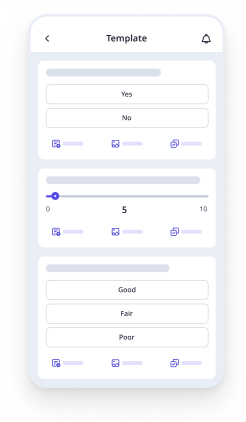
While creating and editing questions, don’t forget to set appropriate response types. This helps ensure that the criteria for each question is clear and stakeholders understand the kind of information they need to provide so that you can help them improve their business. Some common response types that you might use are annotations or media files, multiple choices, and signatures for stakeholder approval.

Examples:

response types for requirements gathering

response types for requirements gathering

Response Types for Requirements Gathering

Add Notes to Provide Context

Avoid miscommunication and wasting time on irrelevant details by adding detailed notes to template items as necessary. Since a requirements document acts as a reference point for both analyst and stakeholder, you must ensure that it has everything one needs to get up to speed. Save time explaining the data and focus more on talking about what steps the business should take.

Example using business requirements document template:

business requirements document template example

business requirements document template example

Example using product requirements document template:

product requirements document template example
product requirements document template example
Content library templates

Still looking for a checklist?

Search, filter, and customize 60,000+ templates across industries and use cases.

Browse Library
MT

Article by

Mitti (by SafetyCulture) Content Team

Mitti (by SafetyCulture) Content Contributor

View author profile

Related resources you might like

Templates

Powered by

Product Requirements Document Template

This product requirements document (PRD) template serves as an excellent starting point for cross-functional team meetings. It includes five (5) different sections that explore in detail the background and requirements for prospective products. Lead managers can empower team members to take product ownership by giving them editing access.

View template in library

Powered by

User Requirements Document Template

Download this user requirements document (URD) template to define requirements effectively. Share this digital URD template with the product and engineering teams for better collaboration. Follow the steps below to get started on your requirements document template:

  1. List down your assumptions about the proposed feature

  2. Determine if the proposed feature meets the business need or solves the problem

  3. Establish who is responsible for delivering the inputs for the feature

  4. Go through how the feature would be used in multiple scenarios

View template in library

Articles

Recreation Management Software

Explore top recreation management software to streamline operations, enhance user experience, and simplify managing recreational activities.

Learn more

Transportation and Logistics: What’s the Difference?

Learn about the importance of transport and logistics within the supply chain and how it is used in business operations.

Learn more

Project Handover Template

Download and use free project handover templates to ensure efficient communication and turnovers across various project stakeholders.

Learn more