What is a Bridge Inspection Checklist?
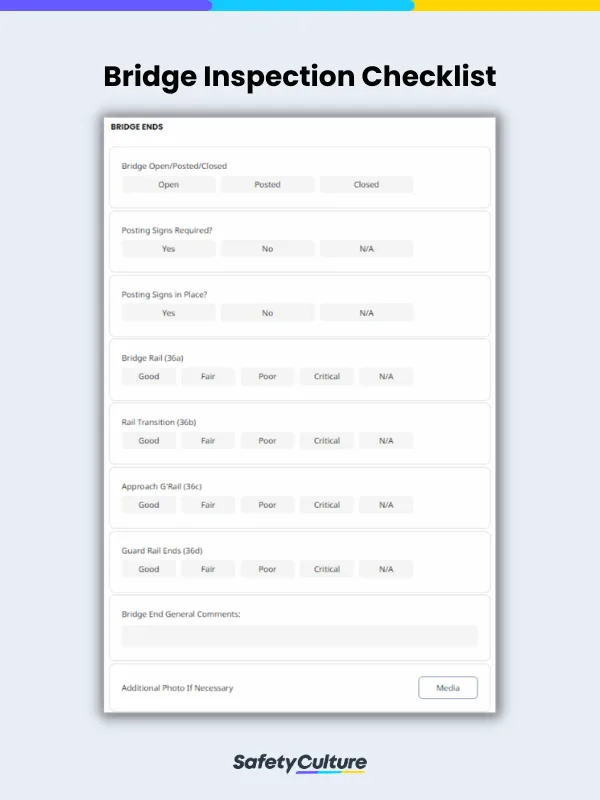
A bridge inspection checklist is a document used by licensed inspectors when performing bridge inspections. It serves as a guide to ensure that all aspects of the bridge inspection are performed completely, and as a recording tool to document the inspector’s findings, observations, and recommendations. A typical bridge inspection checklist is manually filled out via pen-and-paper as the engineer performs the inspection.
The Importance of Bridge Inspections
Bridges all over the world are used by millions of people on a daily basis. Numerous industries, especially those that rely heavily on logistics, benefit from the convenience of having bridges.
Most bridges have been around for a very long time, weathering the impact of the natural environment including storms, earthquakes, and hurricanes over their years of service. No matter how durable a bridge may be, it is not exempt from damage and natural wear e.g. leaks. Foregoing bridge inspections means missing critical warning signs which could lead to structural failure, putting the public at risk of high-fatality disasters.
Diligent bridge inspections also help local governments save money. Preventive maintenance is generally less expensive compared to repairs, and timely bridge inspections help engineers spot minor structural issues and resolve them before they turn into high-cost, high-risk problems.
The information gathered from bridge inspections also informs future repair, maintenance, and bridge construction. Having the necessary documentation on a bridge’s performance including tendencies, common causes of damage and deterioration, and residual life expectancy, allows civil engineers to optimize maintenance efforts and build more durable bridges.
Types of Bridge Inspections
Bridges go through different types of inspections depending on their age, condition, and special circumstances such as possible structural damage after a natural catastrophe. Each inspection type is designed to contribute to bridge safety and stability in different aspects of its operation.
Below are the different types of bridge inspections conducted by civil engineers and licensed bridge inspectors:
Initial inspection The initial inspection is the very first bridge inspection conducted on newly constructed and recently rehabilitated bridges. The FHWA (Federal Highway Administration) recommends that initial inspections are done before a bridge is opened to the public. The primary purpose of the initial inspection is to take a structural inventory of the bridge to establish its standard condition, and to take note of different parts and areas that may need close monitoring for maintenance purposes.
Routine inspection The most common type of bridge inspection conducted is the Routine Inspection. This type of inspection is performed to assess the general working condition of a bridge and to identify opportunities for repair and maintenance work. The US Department of Transportation recommends that routine inspections be performed every 2 years. Upon approval, however, newly constructed or rehabilitated bridges may be allowed for less frequent routine inspections.
In-depth inspection An in-depth inspection is typically performed by two or more licensed bridge inspectors who check on the infrastructure both above and below sea level. An in-depth inspection aims to identify any structural deficiencies, signs of deterioration, and damage that may cause partial or complete structural collapse. In-depth inspections are performed when routine inspection procedures are deemed inadequate to identify more elusive structural issues.
Emergency inspection An emergency inspection sometimes called a Damage Inspection, is immediately performed following a natural calamity, accident, or human error that may negatively affect a bridge’s functionality and structural integrity. The bridge is usually closed from public access while emergency inspections are being conducted to avoid safety hazards.
Special inspection A special inspection is conducted when there is a known or suspected deficiency in need of consistent monitoring while awaiting repairs.
Keep Bridges Safe for Public Use With Every Inspection
Bridges are among the most valuable infrastructures in the world. They allow safe passage where it was previously strenuous or not possible. As it helps enable transportation between distant shores, it has also become a key driver of economic activity. It intensifies trade by allowing people to travel so they can purchase goods and services in other communities and beyond.
Bridges, however, like all other structures, decline with time. They gradually deteriorate due to traffic volume and calamities such as earthquakes. As bridges age, they require regular monitoring and routine maintenance management. The lack of which can cause bridges to deteriorate quicker, which can lead to prolonged closure or irreparable damage. When a bridge closes, it significantly impacts the economic activity it enhanced when it was first built.
This is why bridge inspections are crucial in the maintenance of these complex structures. These routine checks provide comprehensive evaluations of bridges’ structural integrity. It serves as a proactive mechanism to identify and address findings (e.g., cracks, corrosion, spalling) before they cause major damage.
How Bridge Inspections are Better with Digital Checklists
As civil engineers and licensed bridge inspectors perform bridge inspections, they usually record their findings and recommendations on a paper bridge inspection checklist. Though paper checklists are still the norm for many inspectors, the emergence of the digital checklist introduced a number of benefits that help streamline the overall bridge inspection process in ways unavailable through manual pen-and-paper means.
Below are some of the reasons why bridge inspections are better with digital checklists:
Automatic and centralized recordkeeping Inspections completed via paper forms would require manual data entry to be recorded onto a database. Paper documents are susceptible to loss, damage, and unauthorized access. Digital checklists can automatically save and upload inspection data onto a central database for efficient documentation and easy access.
Easily customizable forms Paper inspection forms are costly to print and a hassle to update. Once your team decides to switch over to an updated version of your bridge inspection form, unused forms in the outdated format would have to be discarded and reams of new paper forms would have to be manually distributed. A digital checklist app or software lets bridge inspectors update digital inspection checklists and roll it out to the rest of the team through the app to ensure that all inspectors are using the same updated form.
Efficient inspections In some instances, bridge inspectors would have to take pictures of structural damage and signs of deterioration to make reports more comprehensive. Using a paper bridge inspection checklist would mean having to bring a dedicated camera along with the paper checklist. A digital bridge inspection checklist provides bridge inspectors with the convenience of taking photos through the app mid-inspection for a more comprehensive report done in less time.