
Mitti by SafetyCulture
Pricing
Log inSign up for free
  1. Home
  2. Checklist guides
  3. Safety
  1. Home
  2. Checklist guides
  3. Safety
Mitti by SafetyCulture

The way the world works

Follow us

App Store
Google Play

Product

  • Pricing
  • Book a demo
  • Product updates
  • Mitti (by SafetyCulture)

Support

  • Help center
  • Contact us
  • API developer documentation
  • Digitize your checklist

Resources

  • Content library
  • App & software guides
  • Checklist guides
  • Topic guides
  • eBooks
  • Blog

Company

  • About
  • Careers
  • News room
  • Meet the leadership team
  • Events & webinars
Copyright © 2026 Mitti
StatusLegalPrivacyTerms & ConditionsSecurity

SafetyCulture has a new name. Say hello to Mitti. Learn More.

Powered by

Halal Internal Audit Checklist

Capture non-compliance photos, assign corrective actions, and prepare for halal certification with an internal audit.
Rated 4.6/5 stars on Capterra | 3k+ app store reviews
Use templatePreview template
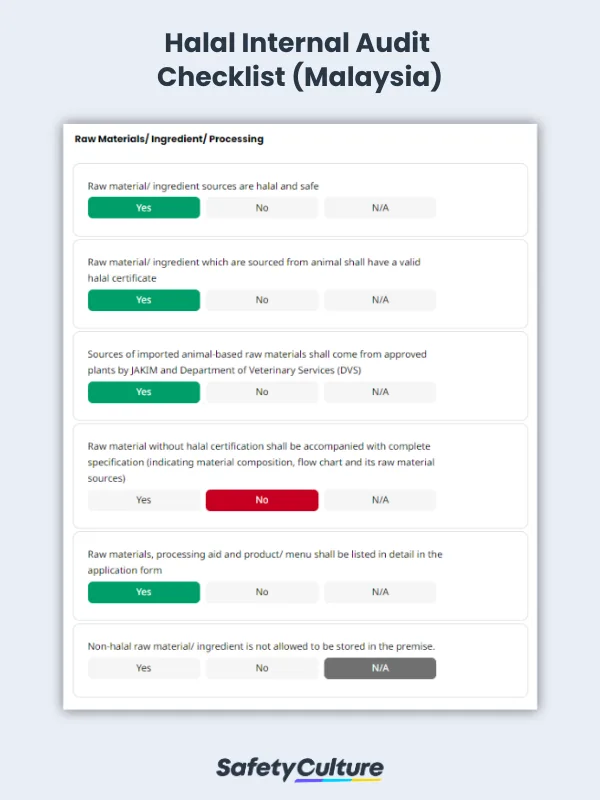
Halal Internal Audit Checklist (Malaysia)
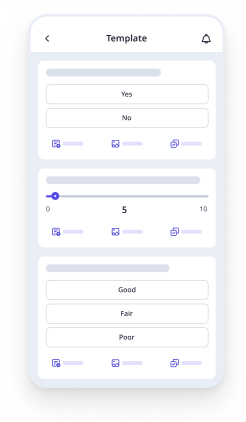
Mobile Preview
See the template in action (opens in new tab)

A Halal internal audit checklist is used to check if the ingredients and steps in food production are compliant with the Halal certification requirements of the Halal certifier. Use this digitized checklist on the Mitti (by SafetyCulture) mobile app to:

  1. Proactively discover gaps in the effort to become Halal compliant and document corrective actions made.

  2. Take photos and describe issues found. Assign corrective actions using mobile devices.

  3. Automatically organize and retrieve reports anytime.

  4. Customize Mitti (by SafetyCulture) templates to fit the needs of your Halal certification. No programing skills needed!

Halal Internal Audit Checklist (Malaysia)
Mobile Preview
See the template in action (opens in new tab)

Why Mitti digital checklists?

  • Free to use for up to 10 users

  • Eliminate paperwork with digital checklists

  • Generate reports from completed checklists

Use template
  • What is “Halal” food?
  • What is a Halal Audit?
  • The 3 Criteria of “HALAL”
  • What is a Halal Internal Audit Checklist?
  • Getting a Halal Certification
  • 5 Steps to Prepare for Halal Food Certification

In this article

  • What is “Halal” food?
  • What is a Halal Audit?
  • The 3 Criteria of “HALAL”
  • What is a Halal Internal Audit Checklist?
  • Getting a Halal Certification
  • 5 Steps to Prepare for Halal Food Certification

Eliminate paperwork with digital checklists

Skip the setup and get to work in seconds.

Use template

Article by

Jona Tarlengco

|

4 min read

|

9 Sept 2025

What is “Halal” food?

Halal literally means “allowed” in Arabic and “Halal food” means food that is allowed or lawful as prescribed by the Koran. The opposite of halal is “haram” or forbidden by the Koran. Halal certified food ensures that the food produced is prepared in a way that is free from cross contamination or does not have haram ingredients.

What is a Halal Audit?

A halal audit aims to evaluate products deemed as halal to ensure that it fulfills the conditions stated in the halal requirements or guidelines. A halal audit generally involves checking and reviewing deemed halal food in compliance of the following:

  • Halal product and ingredients

  • Customer production process flow

  • Onsite facility audit inspection (incl. production process, packaging, labeling and post production storage)

  • Sanitation, recall, and other standard documentation and practices

The 3 Criteria of “HALAL”

In the efforts of getting certified, local halal-certification bodies will conduct an audit to determine its compliance against the following 3 criteria:

Lawful Food

This refers to whether the foods using the term halal are considered lawful under the Islamic Law. All sources of food are lawful except for the following sources:

  • Food of animal origin – refers to the following animals:  pigs, boars, dogs, snakes, monkeys, carnivorous animals (with claws and fangs), birds of prey, pests, animals forbidden to be killed in Islam (ants, bees and woodpecker birds), repulsive animals (lice, flies, maggots, and other similar), animals living on both land and water (e.g., frog, crocodiles), mules and domesticated donkeys, poisonous and hazardous aquatic animals, blood, and any other animals not slaughtered according ot Islamic Law.

  • Food of plant origin – Intoxicating and hazardous plants except for types where toxin or hazard can be eliminated during processing.

  • Drink – refers to alcoholic drinks and any other form that is intoxicating and hazardous.

  • Food additives – refers to food additives derived from all items mentioned above.

Slaughtering

Lawful land animals under the Islamic law should be slaughtered in compliance with the following requirements:

  • The person in charge should be a Muslim who is knowledgeable of the Islamic slaughtering procedures.

  • The animal to be slaughtered should be alive at the time of slaughtering.

  • The phrase “Bismillah” meaning in the Name of the Allah, should be invoked right after the time of slaughtering.

  • The slaughtering device should be sharp and not to be lifted off the animal during the slaughter act.

  • The slaughter act should sever the trachea, esophagus, and main arteries and veins of the neck.

Preparation, Processing, Packaging, Transportation and Storage

All food should be prepared, processed, packaged, transported and stored in the following conditions:

  • Sections and lines where non-halal foods were previously produced should take the necessary measures that prevent contact between halal and non-halal foods.

  • Facilities that were previously used for non-halal foods should be properly cleaned and adhere to relevant Islamic requirements.

What is a Halal Internal Audit Checklist?

A Halal internal audit checklist is used by quality and safety managers in the food production industry to ensure that the food production process and the food product adheres to the requirements of Halal certifiers.

Getting a Halal Certification

Having the Halal certification allows food producers the opportunity to partner with institutions and provide food products to markets and regions that require Halal certification.

5 Steps to Prepare for Halal Food Certification

  1. Understand the requirements of the local Halal certifiers. Different countries have different certifiers that will provide the certification valid for that country only.

  2. Review your organization’s ingredient sourcing and food production processes to determine which steps in production may need to be improved or changed in order to be compliant with the requirements of the certifier.

  3. Implement changes to your production processes, if needed, and conduct internal audits to ensure that the changes implemented are followed and that the production steps are documented.

  4. Analyze the results of the internal audits to discover areas for improvement and use the information to create training programs for employee competency.

  5. Contact the Halal certifier and schedule the Halal food certification audit.

Content library templates

Still looking for a checklist?

Search, filter, and customize 60,000+ templates across industries and use cases.

Browse Library
JT

Article by

Jona Tarlengco

Mitti (by SafetyCulture) Content Specialist

View author profile

Related resources you might like

Templates

Powered by

Halal Requirements Checklist

This Halal requirements checklist is made for corporate to review a sites halal compliance. This checklist can also be used as a general guide in preparing for a HALAL Certification Audit.

View template in library

Articles

Safety Audit Software

Discover the most outstanding safety audit software of 2026 and validate your organization’s safety processes with your number one choice.

Learn more

50+ Safety messages of the day

Discover 50+ safety message of the day examples and tips for offices, construction sites, and labs to help keep your workplace safe daily.

Learn more

5×5 Risk Matrix Template

Download free 5x5 risk matrix templates today. Learn how it works and how it can help systematically assess and plan strategies for workplace risks.

Learn more