What is a Retail Health and Safety Checklist?
A retail health and safety checklist is a tool that keeps retail areas safe by spotting hazards, ensuring compliance, and protecting staff and customers. A well-structured checklist also enhances employee productivity by minimizing disruptions caused by injuries or safety violations.
Importance
By regularly using a retail health and safety checklist, store managers and employees can proactively address risks, reduce workplace accidents, and create a secure shopping experience for customers. Below are the key benefits of following a structured checklist in retail settings:
Ensures regulatory compliance – A retail store health and safety checklist helps businesses comply with industry regulations, occupational safety laws, and local health codes. Regularly checking for compliance reduces the risk of fines, legal issues, and business disruptions due to safety violations.
Reduces workplace accidents and injuries – By systematically identifying and addressing hazards, a health and safety checklist for retail stores minimizes the risk of slips, trips, falls, and other workplace hazards. This proactive approach creates a safer environment for employees and customers, reducing liability and potential compensation claims.
Enhances employee productivity and well-being – A safe work environment leads to healthier, more confident employees who can focus on their tasks without fear of injury. A retail health and safety checklist fosters a culture of responsibility and awareness, leading to fewer disruptions and higher staff morale.
Improves customer experience and trust – A well-maintained retail space that prioritizes safety enhances the overall shopping experience. In fact, there’s a strong correlation between interior cleanliness and customer satisfaction (0.96), indicating that as cleanliness improves, customer satisfaction and sales also significantly increase.
Prevents costly damages and operational downtime – Regular maintenance and safety checks prevent equipment failures, fire hazards, and other costly disruptions. A health and safety checklist for retail stores ensures that potential risks are addressed before they escalate, saving businesses from unexpected expenses.
What to Include in a Retail Health and Safety Checklist
Whether for grocery stores, clothing boutiques, or a chain of department stores, a retail health and safety checklist is a crucial tool for maintaining a secure and well-managed retail environment. With this in mind, a well-structured checklist often includes the following components:
General safety and housekeeping
Customer and public safety
How to Use a Health and Safety Checklist For Retail Stores
Implementing a retail health and safety checklist ensures a safe and compliant store environment. Follow these steps to use the checklist and maintain workplace safety:
1. Identify key safety areas.
Before using a retail store health and safety checklist, determine the critical safety areas that need inspection. Common categories include fire safety, employee training, equipment maintenance, emergency exits, cleanliness, and hazardous materials handling. Customizing the checklist to your store’s specific needs ensures thorough coverage.
2. Schedule regular inspections.
Consistency is key to maintaining safety standards. Set a schedule for routine safety checks—daily, weekly, or monthly—depending on business needs and regulatory requirements. Assign responsibilities to designated employees or managers to ensure accountability and timely completion of the retail store health and safety checklist.
3. Conduct inspections and assess risks.
Perform a safety walk to assess each safety component on the checklist. Look for hazards such as blocked fire exits, spills, faulty equipment, or missing safety signs. Document any issues and determine the level of risk to prioritize corrective actions.
4. Take immediate action on identified hazards.
If a safety violation is found, take prompt corrective action to prevent accidents or compliance issues. This may include cleaning spills, repairing broken equipment, updating safety protocols, or scheduling staff training. Addressing hazards immediately reduces risks and keeps the retail environment safe.
5. Keep records for compliance and future reference.
Maintain records of completed retail health and safety checklists for audits, inspections, and legal compliance. Tracking past checklists helps identify recurring issues, measure improvements, and refine safety protocols over time. Digital records can streamline documentation and enhance accessibility.
6. Train employees on safety protocols.
Educate employees on the importance of using a health and safety checklist for retail stores and encourage them to report potential hazards. Regular training sessions reinforce a safety-first culture, ensuring all staff members actively contribute to a positive culture of safety.
7. Continuously review and update the checklist.
Retail safety requirements evolve, so regularly update the retail health and safety checklist to reflect new regulations, store layout changes, or emerging risks. Regular reviews ensure that the checklist remains relevant and effective in maintaining a safe retail space.
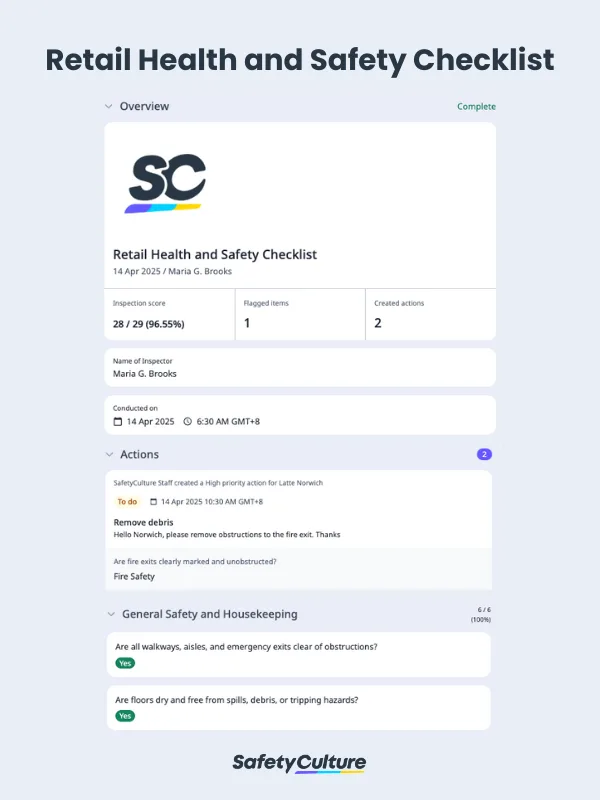
Here’s a filled-out sample of a retail health and safety checklist to see how these components are put together:

Retail Health and Safety Checklist | Mitti (by SafetyCulture)

Ensure retail health and safety with ready resources
A pre-built collection of retail health and safety templates and courses so you can get started from day one