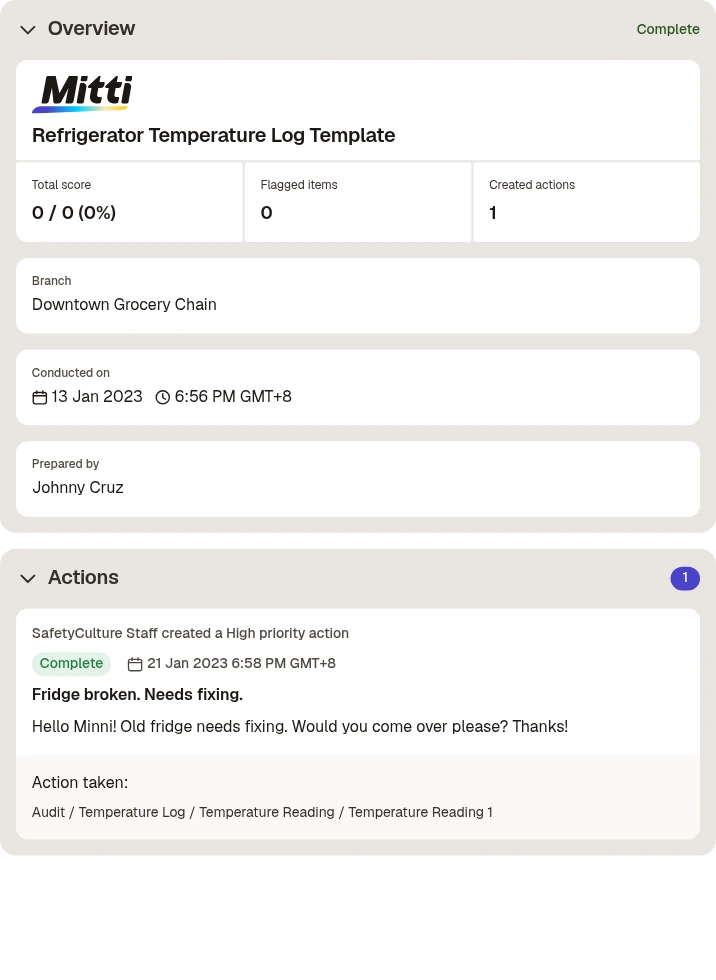
What is a refrigerator temperature log?
A refrigerator temperature log records the temperature of fridges, freezers and walk-in coolers at set times, so you can show food stayed in a safe range. It also shows who checked each unit and what they did when a reading was off. The same idea applies to other temperature-sensitive spaces, such as medical storage and server rooms.
Why keep a temperature log?
Logs give you the history to see where temperature control slips and fix it, which protects the quality of the product you store.
They also help in a dispute. Recorded readings, exact times and corrective actions show you took reasonable precautions.
What temperature should a fridge and freezer be?
Keep cold food at 41°F (5°C) or below and freezers at 0°F (-18°C) or below. This template alerts at 40°F, one degree under the limit, so your team has time to act. Limits vary by country and local health department, so check yours. Templates with temperature fields can switch from °F to °C.
How to fill in a refrigerator temperature log
Place a calibrated probe thermometer in the warmest part of the unit.
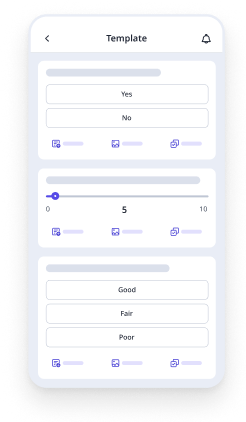
Enter the reading. The template stamps the time and can tag the location.
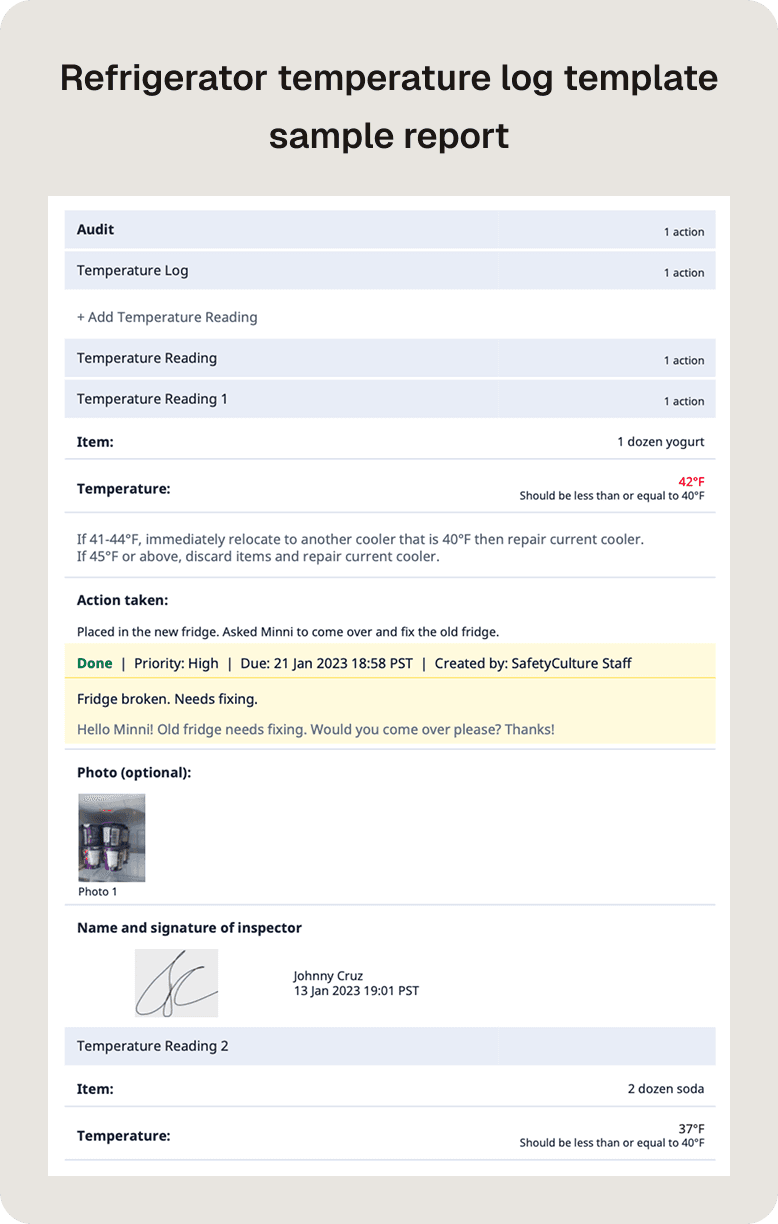
If the reading is above 40°F, record the corrective action and add a photo if useful.
Share the report as a PDF or web link. Every log and action saves to the cloud.
Local rules set how often to check, so follow yours.
What to do when a reading is out of range
Act fast, whatever the cause. Check the unit with a probe, move high-risk food (raw meat, seafood, dairy and prepared food) to a unit that works, call your service provider and record what you found and when. If you can't tell how long food sat above its safe temperature, discard it. The first-hour steps when temperatures look wrong walk through each one.
How are Temperature Logs Measured?
Temperature logging can be done in two ways: the manual and automated methods.
Manual Temperature Logs
The manual temperature logging system uses printed temperature log sheets, which are used to note and gather readings from a specific location at a scheduled inspection time. An assigned personnel will have to stop what he is doing to ensure accuracy in temperature monitoring. These temperature record sheets are then consolidated and data are manually registered into a central system.
Automated Temperature Logs
Automated temperature logs can involve the combined use of digital checklists and devices that provide real-time temperature readings from various remote locations. This system allows for easy visual documentation, automatic generation of reports, and setting of trigger alarms based on set temperature parameters. Data and auto-generated reports are stored in a centralized cloud-based monitoring system. The same approach underpins cold chain monitoring, which tracks temperature from storage to delivery.
Who uses temperature logs?
Many industries rely on consistent temperature monitoring to protect products or keep equipment running. Without it, poor temperature control can lead to the following consequences:
Food
Food that is improperly stored and prepared beyond temperature thresholds is a food safety risk. These conditions can advance pathogen growth and increase the risk of spoilage. The availability of temperature logs helps prevent rejections or recalls, which further helps the company avoid steep losses and potential business closures.
Healthcare
Maintaining proper temperature levels matters in medical care. It also helps demonstrate compliance with standards set by the CDC, FDA, HACCP and State Boards of Pharmacy. Incorrect temperatures in storage areas for medications or vaccines can degrade drugs and weaken their effect. Pharmaceutical products that leave their safe temperature range during shipment can become dangerous and will be recalled.
Transport and logistics
Unsold perishable goods will be disposed of if they are not stored at the right storage temperature during transit. Food and pharmaceutical industries rely on temperature-controlled logistics or cold chains to maintain the integrity of their products.
Information technology
Unmaintained room temperature of server rooms can lead to server crashes, halting business operations. With automated temperature logs, IT facility managers receive alerts when thresholds are breached in a data center or server room.
For employee health checks, see the employee temperature log sheet.
FAQs about refrigerator temperature logs

Still looking for a checklist?
Search, filter, and customize 60,000+ templates across industries and use cases.
Article by
Mitti (by SafetyCulture) Content Team
Mitti (by SafetyCulture) Content Contributor
View author profile