Mitti by SafetyCulture
Tarifs
ConnecterInscription gratuite
  1. Home
  2. Guides de listes de vérification
  3. Qualité
  1. Home
  2. Guides de listes de vérification
  3. Qualité
Mitti by SafetyCulture

La façon dont le monde fonctionne

Suivez-nous

App Store
Google Play

Produit

  • Tarifs
  • Réservez une démonstration
  • Mises à jour du produit (en anglais)
  • Mitti (par SafetyCulture)

Support technique

  • Centre d'aide
  • Contactez-nous
  • Documentation pour développeurs d'API (en anglais)
  • Numérisez votre liste de contrôle

Ressources

  • Bibliothèque de contenu (en anglais)
  • Guides applications et logiciels
  • Guides de listes de contrôle
  • Guides des thèmes
  • eBooks
  • Blog (en anglais)

Société

  • À propos
  • Carrières (en anglais)
  • Salle de presse (en anglais)
  • Rencontrez l'équipe de direction (en anglais)
  • Événements et webinaires
Copyright © 2026 Mitti
StatutMentions légalesConfidentialitéConditions généralesSécurité

SafetyCulture a changé de nom. Découvrez Mitti.

Ressources connexes que vous pourriez aimer

Modèles

Propulsé par

Modèle d'AMDEC (machines)

Ce modèle d’AMDEC est conçu pour aider les ingénieurs industriels à anticiper les défaillances des machines industrielles et à éviter les pannes coûteuses. Analysez facilement les tendances des modes de défaillance, des effets et des causes à haut risque à l’aide de ce modèle. Vous pouvez également personnaliser ce modèle AMDEC numérique en fonction des besoins de votre entreprise.

Voir dans la bibliothèque

Propulsé par

Modèle de grille d'évaluation AMDEC

Une grille d’évaluation AMDEC est une documentation complète des actions correctives développées par une étude AMDEC. Les équipes chargées de la conception des produits et de l’amélioration des processus devraient utiliser une grille d’évaluation d’AMDEC pour hiérarchiser les modes de défaillance à haut risque et les minimiser ou les atténuer. Utilisez ce modèle pour spécifier les techniques de mesure de l’évaluation, les méthodes de contrôle et les plans de réaction.

Voir dans la bibliothèque

Articles

5 Principes des 5s

Les principes des 5S permettent d'identifier et d'éliminer les gaspillages pour créer un environnement de travail plus organisé et plus sûr.

En savoir plus

Marche Gemba

Listes de contrôle de marche Gemba pour une documentation et une analyse efficaces des observations. Lancez-vous avec iAuditor pour des promenades Gemba efficaces à 360 degrés.

En savoir plus

Propulsé par

Modèle de méthode AMDEC

Anticiper les défaillances potentielles des processus opérationnels et atténuer leur impact sur les clients.

Noté 4,6/5 étoiles sur Capterra | 3000+ avis dans l'App Store
Utilisez le modèleAperçu du modèle
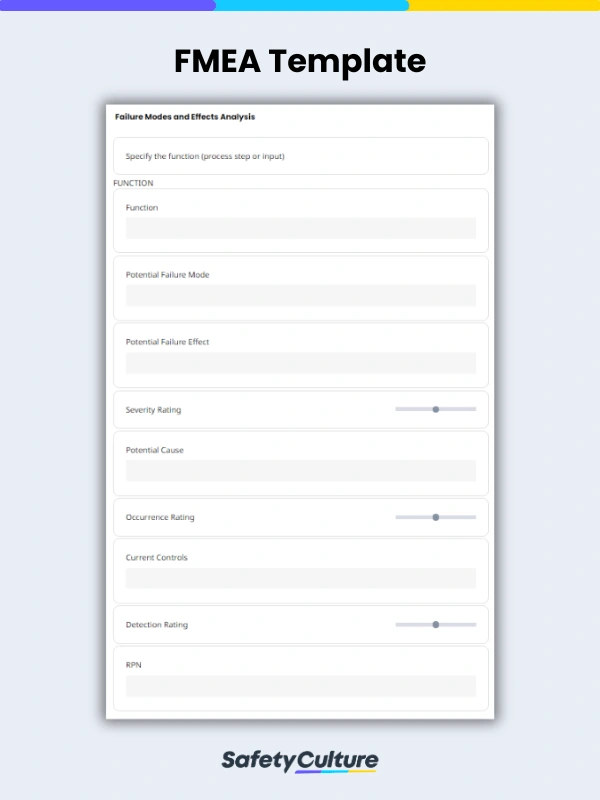
FMEA Template
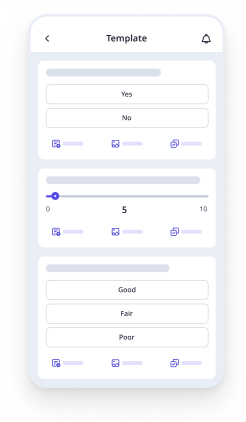
Mobile Preview
Voir le modèle en action (opens in new tab)

Un modèle d’AMDEC vise à identifier les problèmes potentiels d’un processus, d’un produit ou d’une conception et à prévenir leurs effets négatifs sur les clients. Contrôlez la mise en œuvre et l’efficacité des actions correctives à l’aide de ce modèle. Notre modèle d’AMDEC permet à votre équipe d’effectuer facilement les tâches suivantes :

  1. Décrire la fonction du processus

  2. Identifier le mécanisme de la défaillance

  3. Déterminer l’IPR

  4. Créer et compléter les actions correctives

  5. Valider l’AMDEC avec des signatures numériques

FMEA Template
Mobile Preview
Voir le modèle en action (opens in new tab)

Pourquoi les listes de contrôle numériques Mitti?

  • Jusqu'à 10 utilisateurs

  • Éliminez la paperasse avec des listes de contrôle digitales

  • Générez des rapports à partir de listes terminées

Utilisez le modèle
  • Qu’est-ce que la méthode AMDEC ?
  • Types of FMEA
  • What is an FMEA Template?
  • FMEA Success Factors
  • What to Include in a FMEA Template?
  • FMEA Report Example

In this article

  • Qu’est-ce que la méthode AMDEC ?
  • Types of FMEA
  • What is an FMEA Template?
  • FMEA Success Factors
  • What to Include in a FMEA Template?
  • FMEA Report Example

Éliminez la paperasse avec des listes de contrôle digitales

Omettez la configuration et commencez à travailler en quelques secondes.

Utilisez le modèle

Article par

Mitti Content Team

|

8 min de lecture

|

8 Jul 2025

Qu’est-ce que la méthode AMDEC ?

L’analyse des modes de défaillance, de leurs effets et de leur criticité (AMDEC) est une méthode permettant d’anticiper les défaillances potentielles des processus commerciaux et d’atténuer leur impact sur les clients. Une étude AMDEC commence généralement par une séance de brainstorming composée d’une équipe expérimentée et se termine par une nouvelle analyse des risques de défaillance après l’application d’actions correctives. En fin de compte, les AMDEC peuvent aider à prévenir les défaillances industrielles coûteuses, à améliorer la fiabilité des produits et des services, et à accroître la satisfaction des clients.

Types of FMEA

While there are a variety of FMEA types, all follow the same principles—focusing on detection, elimination, and/or mitigation of critical risk events. The 2 most common types of FMEA are:

  • Design FMEA (DFMEA)

    DFMEA or Design FMEA is applied during the early or end stage of product design. It aims to uncover potential failures associated with product design that could result in risks to health and safety, financial stability, and the environment.

  • Process FMEA (PFMEA)

    PFMEA or Process FMEA is done prior to the start-up of a new process or an existing process. It aims to discover risks associated with process changes that can negatively impact product quality, process reliability, customer satisfaction, public safety, and the environment.

What is an FMEA Template?

An FMEA template (or FMEA form) is used by product design or process improvement teams to determine the risk priority number (RPN) of the mechanism of equipment or process failures and monitor the corrective actions delegated to key personnel. Using specific FMEA templates such as a design FMEA template or a process FMEA template can help easily determine more potential failures at the onset and prevent avoidable losses in manufacturing operations.

FMEA Success Factors

To achieve optimum results from FMEAs, it should be done correctly—performed on the correct parts, by the correct team, in the correct time frame, and with the correct procedure. Here are the essential ingredients for success in implementing FMEAs:

  • Proper Identification of the Mechanism of Failure

    Key information such as the functions (process step or input) should be available before conducting meetings and visible during brainstorming. The mechanism of failure (potential failure modes, effects, and causes) can be identified properly when FMEA teams account for past failures, agree upon certain assumptions, and establish ground rules. Inviting customers and suppliers is a good idea to help gather alternative viewpoints.

  • Accurate Computation of RPN

    FMEA RPN Risk Analysis

    The RPN is used to prioritize the potential failures that require additional quality planning. It is the product of the numerical severity, occurrence, and detection ratings. Determine the RPN accurately by following the guide below:

    As a rule of thumb, FMEA teams should focus their improvement efforts on potential failures at the top 20% of the highest RPNs. These high-risk failure modes should be addressed through effective and executable action plans.

  • Regular Monitoring of Corrective Actions

    Companies usually fail to mitigate the adverse effects of failures because they neglect following up on

    corrective actions and their effectiveness. FMEA teams should review high-risk failure modes with the management and update FMEAs with subsequent tests and linkages to control plans.

What to Include in a FMEA Template?

Using a FMEA Template ensures a systematic approach to identifying, assessing, and mitigating risks to improve product or process reliability and customer satisfaction. A comprehensive FMEA template should include the following essential elements based on industry best practices and standards:

  • Potential Failure Modes: Specific ways in which a process, product, or system component can fail to perform its intended function. These are identified through brainstorming or historical data and represent the root failures to analyze.

  • Potential Failure Effects: The consequences or impact of each failure mode on the system, customer, or related processes. This answers what happens if the failure occurs and what the customer experiences.

  • Severity Rating: A numerical score (typically 1 to 10) assessing how serious the failure effect is, with 10 being catastrophic. The highest severity effect per failure mode is recorded to prioritize risks.

  • Potential Cause: Root causes or reasons why the failure mode might occur, focusing on factors that can be controlled or corrected. These causes help target mitigation efforts.

  • Occurrence Rating: A likelihood or frequency rating (usually 1 to 10) indicating how often the failure mode is expected to happen.

  • Current Controls: Existing preventive or detective measures in place to reduce the chance of failure or detect it before it reaches the customer. This includes inspections, tests, or process controls.

  • Detection Rating: A rating (1 to 10) showing the probability that current controls will detect the failure before it causes harm. A higher number means lower detectability.

  • Risk Priority Number (RPN): Calculated by multiplying Severity × Occurrence × Detection. It quantifies the risk level and helps prioritize which failure modes require corrective action.

  • FMEA Team: Names and roles of the multidisciplinary team members involved in the FMEA process, typically including representatives from design, manufacturing, quality, maintenance, and customer service to ensure diverse expertise

FMEA Report Example

Here’s a practical example and implementation of the FMEA method:

FMEA Step

FMEA Example

Process Step/Input

- Utilize a process map to identify all the steps and key inputs on the process being analyzed

Pouring a concrete foundation for a building

Potential Failure Mode - For each process step and key input, list all of the different things that could go wrong, AKA: Failure modes

The cured concrete doesn’t support the weight of the structure placed on top of it

Potential Failure Effects - Anticipate the impact of the failure on the output of the process

The structure could collapse

Severity Ranking - Assign a severity ranking to each effect that has been identified. This can range from 1 (low impact with almost no effect) to 10 (high impact with catastrophic results). Set criteria for each ranking from 1-10.

10 Very High - This could result in catastrophic failure, injury, and damaged public opinion with little to no warning

Potential Causes - Determine the root cause of each failure mode. Utilize root cause analysis tools such as 5 why and fishbone diagrams as well as employee experience

- Improper concrete mix

- Not vibrating the concrete while it is poured

- Undersized steel reinforcement

Current Controls - For each potential cause, list the current control measures in place to prevent failures. These are things like procedures, tests, inspections, and other mechanisms

- Mix tickets verified by the foreman upon delivery

- Field personnel designated for vibrating the pour

- Steel design approvals by an engineer

- Break tests performed on 7, 14, and 21 days

Occurrence Ranking - Assign a probability to the likelihood or frequency of the failure mode occurring. This can range from 10 (very likely) to 1 (very unlikely). Have a set objective criteria for each rank between 1 and 10.

5 - There have been occasions of this happening but it is not very frequent.

Detection Ranking - This represents the likelihood of a failure mode being detected if it were to occur. A detection ranking of 10 is bad, it means there’s almost no chance it will be detected. A rank of 1 means it is almost certain. Define criteria for each number between 1 and 10 with the likelihood of detection getting less as the number goes up.

3 - There is a high likelihood that this failure mode will be prevented or, worst case scenario, it will be detected prior to setting the structure.

Risk Priority Number - This is the relative risk ranking. It is calculated by multiplying a failure modes severity x occurrence x detection. The mode with the highest RPN should be addressed first and so on down.

150 - This falls at the low end of the priority ranking because, although the outcome is severe, the likelihood is low.

Action Plan - Develop an action plan to reduce failure modes RPN. Include who is responsible, what will be done, and when it will be done by

It has been determined that the current detection and prevention methods are adequate to prevent the concrete from failing. The general foreman is to ensure all quality procedures are followed and all installation procedures are adhered to.

However, out of an abundance of caution, we will have a second engineer review the mix designs and steel plans to ensure the structure will be adequately supported

Recalculate RPN - Recalculate a failure modes RPN once action has been taken to reduce it to ensure they had a positive effect.

90 - The ranking has come down due to a lower occurrence score.

Content library templates

Vous cherchez encore une liste de contrôle?

Créez un modèle de liste de contrôle personnalisé instantanément avec l'IA

Essayez maintenant
MT

Article par

Mitti Content Team

Mitti Content Contributor