








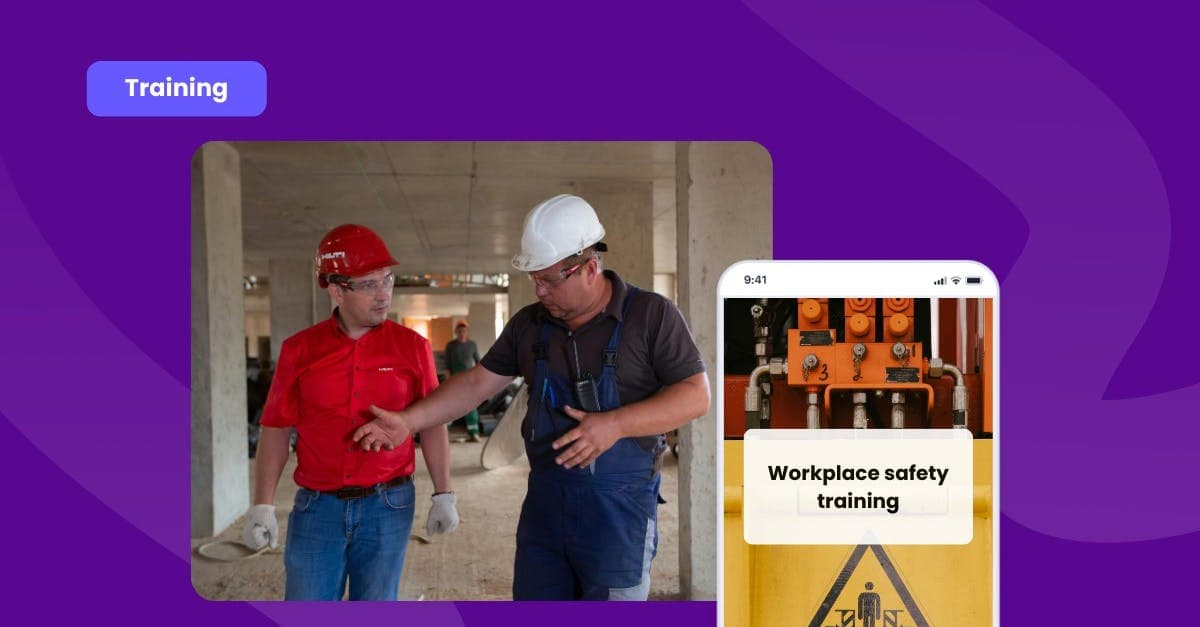

We’ve put together ten hard hat training courses to keep your workers informed on the proper use and maintenance of their hard hats and other protective equipment. These courses will empower your workers and help your business comply with regulations on workplace safety.
Hard hat training is a critical component of workplace safety. It educates workers about the proper usage and significance of hard hats and other protective equipment in hazardous environments, particularly in construction and industrial settings.
This type of training acts as a proactive measure to safeguard workers from potential injuries caused by falling objects, impacts, or electrical hazards. Employers bear the responsibility to make sure that workers are trained on how and when to use protective equipment.
So, they should deliver comprehensive training programs to reinforce safety protocols and emphasize the importance of fostering a secure working environment for all personnel.
What are the 3 classes of hard hats?
Hard hats are classified into three primary classes based on their level of protection and intended use. These classes are established by the American National Standards Institute (ANSI) and the International Safety Equipment Association (ISEA). The three classes of hard hats are:
Class G (General): This class gives protection against impact and penetration. It’s commonly used in the construction industry and other general industrial applications where protection from falling objects and low-voltage electrical hazards (up to 2,200 volts) is required.
Class E (Electrical): Designed for electrical applications, Class E hard hats offer additional protection against electrical shocks and burns. They’re rated for higher-voltage electrical hazards (up to 20,000 volts) and are often used by electricians and other workers exposed to high-voltage environments.
Class C (Conductive): This class offers limited protection and isn’t intended for electrical work. Class C hard hats don’t offer electrical insulation and are typically used in environments where there‘s no risk of electrical exposure but head protection is still necessary, such as in the construction industry.
Workers should select the appropriate class of hard hat based on the specific hazards they encounter in their work environment to secure effective head protection.
What are the OSHA rules for hard hats?
The Occupational Safety and Health Administration (OSHA) mandates certain rules for the use of hard hats to make sure that workers are safe in any industry.
According to OSHA regulations, employers must provide and require employees to wear hard hats when there’s a potential for head injuries from falling objects, electrical hazards, or other impacts. Hard hats must conform to ANSI standards, and employers are responsible for assessing workplace hazards to determine the appropriate class of hard hat needed.
OSHA also emphasizes the importance of proper maintenance and inspection of hard hats so they remain in good condition without any visible signs of damage. Employers are required to train workers on the proper use, care, and limitations of hard hats in their specific work environments.
Keep your workers safe with hard hat training
In environments where potential head injuries are a concern, such as construction sites or industrial workplaces, hard hat training is a must. This training equips workers with the knowledge to assess and mitigate risks, so they understand the importance of wearing hard hats and other protective equipment and how to use them effectively.
By investing in hard hat safety training and construction safety training software, you’re not only complying with safety regulations but also actively contributing to the well-being of your workers. This proactive approach establishes a culture of safety, where employees feel empowered and equipped to navigate their tasks with confidence and protection.