Mitti by SafetyCulture
Pricing
Log inSign up for free
  1. Home
  2. Checklist guides
  3. Compliance
  1. Home
  2. Checklist guides
  3. Compliance
Mitti by SafetyCulture

The way the world works

Follow us

App Store
Google Play

Product

  • Pricing
  • Book a demo
  • Product updates
  • Mitti (by SafetyCulture)

Support

  • Help center
  • Contact us
  • API developer documentation
  • Digitize your checklist

Resources

  • Content library
  • App & software guides
  • Checklist guides
  • Topic guides
  • eBooks
  • Blog

Company

  • About
  • Careers
  • News room
  • Meet the leadership team
  • Events & webinars
Copyright © 2026 Mitti
StatusLegalPrivacyTerms & ConditionsSecurity

SafetyCulture has a new name. Say hello to Mitti. Learn More.

Powered by

Final Inspection Checklist

Ensure a fully compliant, occupancy-ready property with a digital checklist

Rated 4.6/5 stars on Capterra | 3k+ app store reviews
Use templatePreview template
Final Inspection Checklist
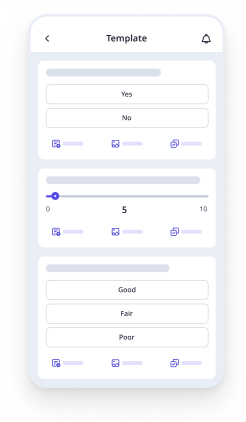
Mobile Preview
See the template in action (opens in new tab)

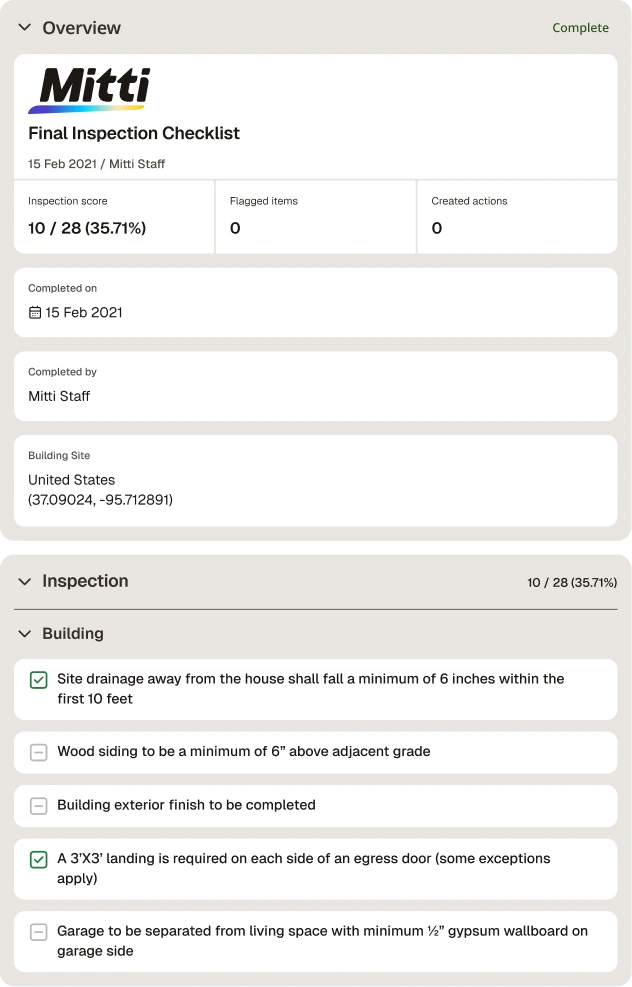
This final inspection checklist is used for checking if newly constructed or remodeled commercial and residential properties are up to code. This checklist can be used by building inspectors to assist in doing the final walkthrough or visual inspection. This final inspection checklist goes through some of the following items to ensure that:

  • The building exterior is finished and completed

  • The garage is appropriately separated from the living space

  • Egress doors can be opened from the inside without the use of a key

  • Guardrails are installed on open sides of stairways, porches, or balconies

  • Final roofing material installed

  • The electrical system and required fixtures are installed properly

  • Smoke detectors are installed and functioning

  • The heating system is installed and working properly

  • The building is built with a water closet, a lavatory, and a bathtub or shower

  • There’s an approved wastewater discharge system

You may download and customize the items in this checklist according to the type of property or building structure

Final Inspection Checklist
Mobile Preview
See the template in action (opens in new tab)

Why Mitti digital checklists?

  • Free to use for up to 10 users

  • Eliminate paperwork with digital checklists

  • Generate reports from completed checklists

Use template
  • What is a Final Inspection?
  • What is a Final Inspection Checklist?
  • What is Required for a Final Building Inspection?
  • What Happens Before a Final Inspection
  • Final Inspection vs Pre-Settlement Inspection (Final Walkthrough)
  • How to Conduct Final Inspections Efficiently

In this article

  • What is a Final Inspection?
  • What is a Final Inspection Checklist?
  • What is Required for a Final Building Inspection?
  • What Happens Before a Final Inspection
  • Final Inspection vs Pre-Settlement Inspection (Final Walkthrough)
  • How to Conduct Final Inspections Efficiently

Eliminate paperwork with digital checklists

Skip the setup and get to work in seconds.

Use template

Article by

Mitti (by SafetyCulture) Content Team

|

4 min read

|

5 Mar 2025

What is a Final Inspection?

A final Inspection is a critical quality control step conducted at the end of a manufacturing or construction process. It ensures that a product or property meets the specified requirements and safety standards agreed upon by both the buyer and seller. The inspection helps detect and rectify any potential issues in the manufacturing or construction processes.

What is a Final Inspection Checklist?

A final inspection checklist is used by building inspectors to check newly constructed or remodeled commercial and residential properties for building code compliance. Building inspectors can also choose to give a final inspection checklist to contractors even before conducting the final inspection so that safety issues are addressed earlier.

What is Required for a Final Building Inspection?

For commercial properties –

ROW (Right-of-Way) sidewalk

Parking striping and signs

Handrails and guardrails for stairs

Interior doors and hardware

Overall accessibility

MEP systems

For residential properties –

Light fixtures and outlets

Stair headroom and width

HVAC and plumbing system

Electrical switchboard panels

Smoke detectors

Insulation and drywall

What Happens Before a Final Inspection

There are many steps to accomplish in the inspection process before the building inspector can issue a certificate of occupancy. The first step in this process is the foundation inspection, which is conducted before the concrete is poured.

A thorough foundation inspection is crucial as some parts of construction cannot be fixed after the concrete has been poured. Examples of this are pier depths, structural rebar, footings, stem walls, and retaining walls.

The next step in the inspection process is the rough-in inspection, which is composed of three inspections (mechanical, electrical, and plumbing or MEP) and may sometimes include the framing inspection as well. The mechanical and plumbing inspections, similar to the foundation inspection, must be conducted before the systems are concealed.

Final Inspection vs Pre-Settlement Inspection (Final Walkthrough)

The main difference between a final inspection and a pre-settlement inspection is that the final inspection is usually conducted by the city’s building inspector while the pre-settlement inspection is completed by the buyer of the property.

A pre-settlement inspection or final walkthrough is the buyer’s right to ensure that the property is in the same condition as the initial walkthrough. Building inspectors cannot conduct pre-settlement inspections without the presence of the buyer as they would not be privy to what was stated in the purchase contract.

How to Conduct Final Inspections Efficiently

Though final inspections are conducted only when the property is 100% complete and all the construction work has ended, as the last inspection before occupancy, it’s important for the building inspector to still be on the lookout for building code violations.

As the primary enforcer of safety, it’s the building inspector’s responsibility to ensure a fully compliant, occupancy-ready property. However, since building inspectors often have to fit multiple inspections in one day, they also need to conduct final inspections efficiently as well. Here are tips on how to do just that:

Prepare Documents Beforehand

Before leaving for the building site, review all available information such as inspection history, what inspections have passed, what has not passed, problems associated with the project, and individual inspection records.

Preparing these documents beforehand can save the building inspector valuable time on the field and may lead to the discovery of issues previously missed by other inspectors.

Give the Contractor a Heads-Up

If an issue has been identified, it’s good to let the contractor know in advance so that they can resolve it before the final inspection. Informing the contractor what the building inspector will be looking for during the final inspection can also result in less code violations such as notches, cuts, and penetrations in structural frame elements and lack of accessibility for safe egress.

Use a Digital Final Inspection Checklist

For building inspectors, paperwork takes up most of their day, though it doesn’t have to. With a digital final inspection checklist, submitting reports and occupancy permits are fast and hassle-free.

No need to type everything up, since a digital checklist does the work for you. Digital final inspection checklists are also much easier to share with contractors and fellow inspectors than paper checklists.

Content library templates

Still looking for a checklist?

Search, filter, and customize 60,000+ templates across industries and use cases.

Browse Library
MT

Article by

Mitti (by SafetyCulture) Content Team

Mitti (by SafetyCulture) Content Contributor

View author profile

Related resources you might like

Templates

Powered by

Final Building Inspection Checklist

Use this final inspection checklist to check the building’s interior and exterior, decks and walkways, stairs, handrails, attic, smoke alarm, windows, and glazing.

View template in library

Powered by

Residential Building Final Inspection Checklist

Use this final inspection checklist to do the following:

  1. Check exterior, garage, and decks

  2. Check kitchen, laundry room, and bathrooms

  3. Check mechanical room and electrical panel

  4. Check basement, windows, and handrails

  5. Check smoke/carbon monoxide alarms

View template in library

Powered by

Commercial Building Final Inspection Checklist

Use this commercial building final inspection checklist in Mitti (by SafetyCulture) to review specific areas in a finished building and be able to do the following:

  1. Examine the building’s underground/floor plumbing and electrical quality

  2. Inspect foundation, framing, plumbing, T-bar ceiling, drywall, and insulation

  3. Check inner mechanical and electrical aspects of the building

  4. Execute a final inspection of door/hardware, smoke detectors, handicap parking signage, building accessibility, etc.

  5. Sign off inspection with necessary forms, certifications, reports, and approvals from governing bodies and other departments.

View template in library

Articles

REACH Compliance Software

Explore 7 of the best REACH compliance software to enhance regulatory adherence and chemical management for businesses.

Learn more

A Comprehensive Guide to Creating a Risk Treatment Plan

Learn how to write a risk treatment plan, align it with ISO 27001 and 31000, and monitor it over time with practical steps and examples.

Learn more

ISO 17025 Checklist

Use this free ISO 17025 checklist template to help your lab meet accreditation requirements and digitize preparations for certification.

Learn more