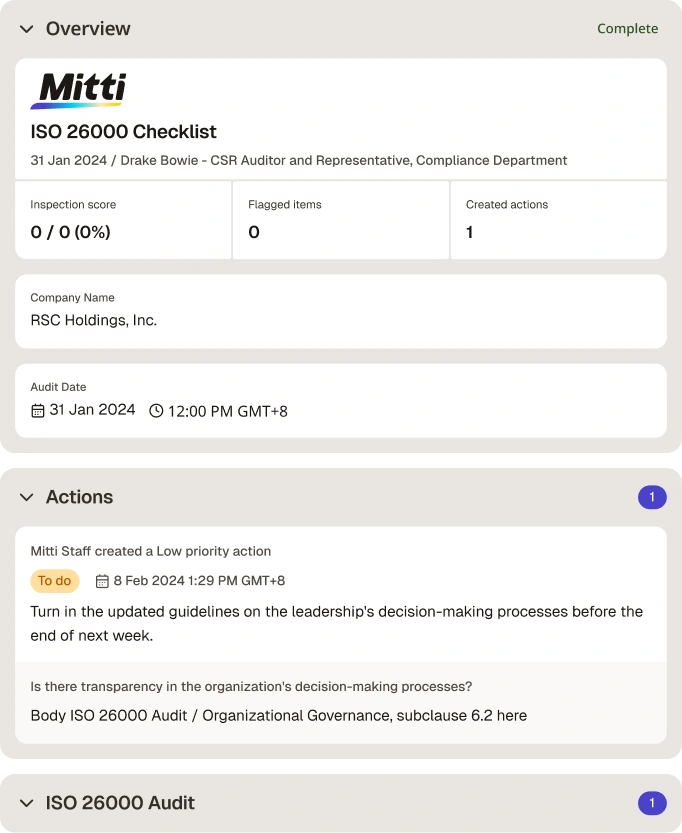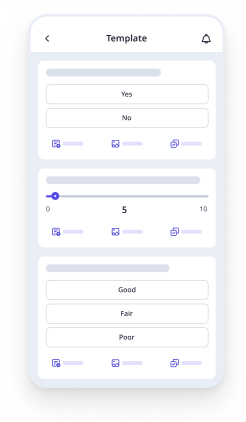
What is an ISO 26000 Checklist?
An ISO 26000 checklist helps you document how well your organization complies with ISO 26000 guidance on social responsibility. It breaks the standard down into clear questions covering governance, human rights, labor practices, the environment, fair operating practices, consumer issues, and community involvement, so you can review each area systematically instead of guessing where you stand.
Why use a checklist for auditing ISO 26000 conformance
The ISO 26000 standard guides organizations on how they can align their operations with the United Nations’ Sustainable Development Goals (SDGs). It also supports supply chain sustainability by encouraging organizations to build social responsibility into their core practices, and it points them toward human rights, fair labor practices, and anti-corruption measures as core issues to address.
ISO 26000 also complements newer regulatory frameworks: the EU’s Corporate Sustainability Reporting Directive and ISSB-aligned standards now formalize much of what ISO 26000 has guided voluntarily for over a decade. Platforms like Mitti (by SafetyCulture) can turn this kind of audit into a repeatable digital process your team runs every time, instead of a one-off spreadsheet exercise.
Here are a few more reasons why using a checklist is beneficial:
Structured self-assessment
Conducting an audit for ISO 26000 conformance is a complex task, given the broad scope of social responsibility areas covered by it. Checklists serve as helpful tools for conducting self-audits of their conformance with this standard. Since it’s a voluntary guidance standard with no certification, the checklist serves as a self-assessment tool for organizations committed to improving their social responsibility performance.
By going through an ISO 26000 checklist, organizations can identify strengths, weaknesses, and areas for improvement in their CSR initiatives. It helps them ensure that their operations will lead to enhanced sustainability and positive contributions to society.
Systematic and thorough evaluation
By breaking down the standard into specific criteria, auditors can methodically assess each area of social responsibility, from governance to community involvement. This approach ensures a thorough examination, leaving no critical aspect overlooked during the audit process.
Consistency and objectivity across audits
Checklists promote audit consistency, whether conducted by the same auditor over time or by different auditors within an organization. The standardized criteria provided by the checklist also reduce the risk of subjective judgments and help maintain the integrity and reliability of audit results across various evaluations.
What to include in an ISO 26000 checklist
A comprehensive ISO 26000 checklist covers the core elements of the ISO 26000 standard. Knowing what to include helps you check your practices, spot gaps, and align your operations with globally recognized social responsibility principles.
Hence, make sure to include the following core areas in the checklist during ISO 26000 audits:
Subclause 6.2 — Organizational Governance
Subclause 6.3 — Human Rights
Subclause 6.4 — Labor Practices
Subclause 6.5 — Environment
Subclause 6.6 — Fair Operating Practices
Subclause 6.7 — Consumer Issues
Subclause 6.8 — Community Involvement and Development
It's also important to include a title page and completion page to add further information about your organization and the audit being conducted.
How to conduct an ISO 26000 audit using a checklist
Conducting an ISO 26000 audit with the aid of a comprehensive checklist is a key process for organizations aspiring to uphold social responsibility standards. Follow this step-by-step guide as you carefully assess each aspect of your organization’s ISO 26000 conformance:
1. Plan the audit process
Initiate the audit process by defining the scope and objectives. Make sure to clearly outline the criteria and subjects within the ISO 26000 standard that will be assessed. Based on these, make a plan that includes timelines, resources, and the choice of qualified auditors.
2. Customize the checklist to an organizational context
Tailor the ISO 26000 checklist to align with the organization’s unique context, industry specifics, and social responsibility goals. Ensure that it includes the 7 core subjects of the standard to enhance its relevance and facilitate a more accurate evaluation of the organization’s practices.
3. Train auditors on checklist application
Invest in training for auditors to familiarize them with the checklist’s application. Ensure that they understand the specific criteria and the documentation required during the audit. This way, well-trained auditors contribute to the consistency and objectivity in the evaluation process toward the overall effectiveness of the audit.
4. Systematically conduct the audit
Evaluate each aspect or subject thoroughly, engage with relevant stakeholders, and gather evidence to support audit findings. The audit’s systematic execution ensures that all aspects of social responsibility are addressed, providing a holistic view of the organization’s performance.
5. Document findings and implement improvements
Communicate conformance and non-conformance results to the organization’s leadership and stakeholders. Make sure to work with relevant teams on developing corrective action plans, utilizing the checklist as a guide for implementing improvements and aligning the organization more closely with ISO 26000 principles.
ISO 26000 checklist example
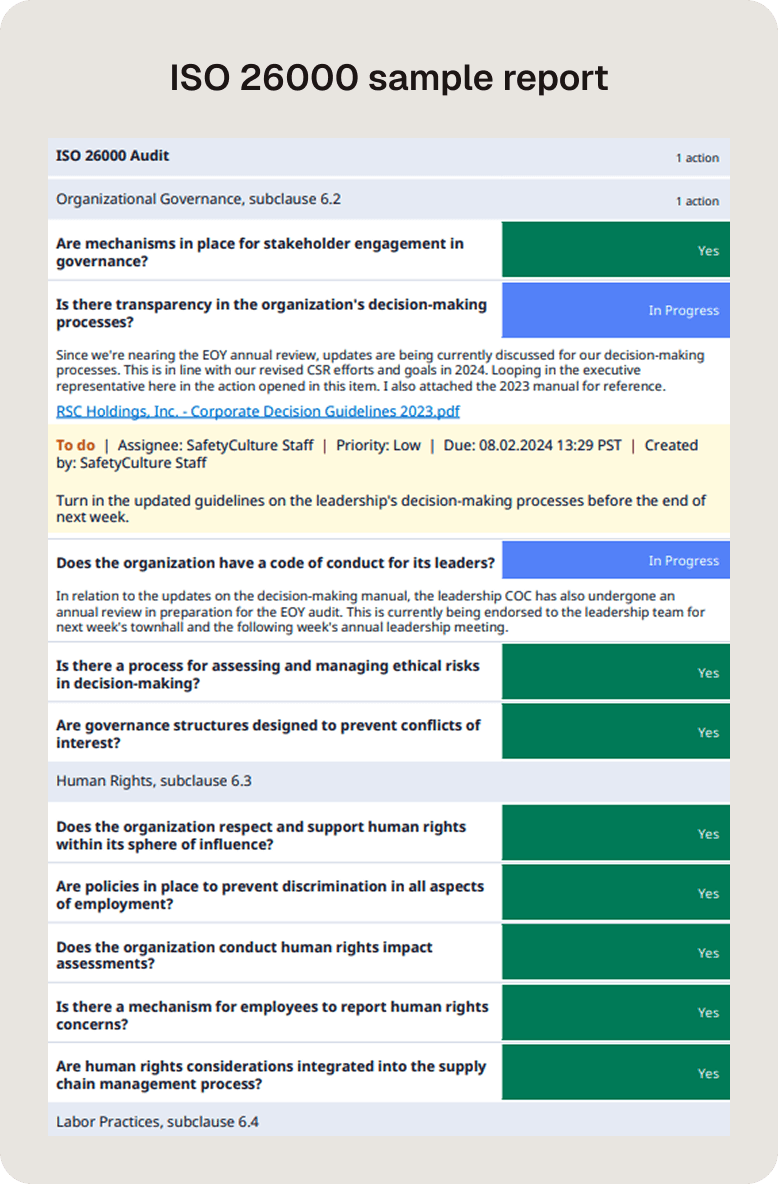
Check out this sample checklist to gain insights into the structured evaluation of various aspects of social responsibility, facilitating a systematic approach towards adherence to the ISO 26000 standard:

Still looking for a checklist?
Search, filter, and customize 60,000+ templates across industries and use cases.