Why is it Important?
Employee offboarding can be difficult and complicated, especially if there is a lot of paperwork and procedures to go through. A well-crafted employee offboarding checklist can help ensure that nothing is overlooked and that the process goes as smoothly as possible.
Ready-to-use checklists or employee offboarding templates can also help protect the company from potential lawsuits by ensuring that all the necessary steps have been taken to conclude the employee’s ties to the organization.
Benefits
Gaining honest feedback from employees who are resigning, terminated, or retiring empowers organizations to identify areas of improvement that they can work on. Hence, leveraging an employee offboarding checklist establishes a great work environment and helps HR department/s and teams to:
Minimize Error and Oversight
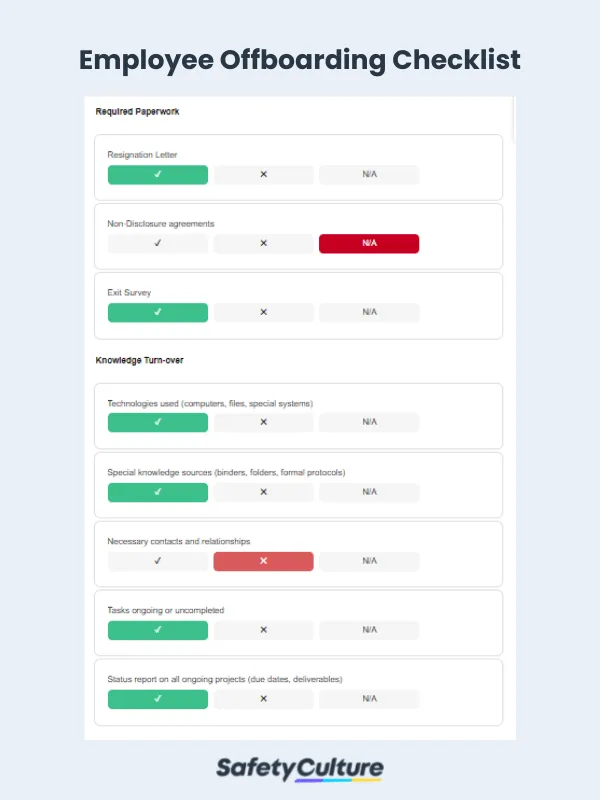
Overlooking crucial steps of the offboarding process can lead to incomplete paperwork , administrative errors, and compliance violations. The use of offboarding checklists can help HR professionals keep track of offboarding requirements like critical paperwork (i.e. Non Disclosure Agreements), knowledge and project handover requirements, and transfer of company assets.
Mitigate Legal Risks
Not having a comprehensive audit trail for leaving employees opens organizations up to potential litigation. Even employees who initially leave on good terms could be disgruntled in the future and make unfair dismissal claims. Having a structured offboarding process with the use of checklists can remind your HR teams to follow the correct legal steps when offboarding departing employees.
Manage IT Security Risks
Failure to retrieve company equipment and switch off data access for employees who are on the process of departure can pose serious risks of data breach for an organization. HR teams should consult IT departments to determine what equipment and access should be retrieved or which confidential information should be secured. Checklists can also be helpful when asking employees to declare that all access has been returned.
Ensure Seamless Handover
Without proper knowledge transfer, the remaining employees would suffer. It could cause confusion, low work productivity, and in extreme cases, teams starting from scratch. An employee offboarding checklist is an effective way to ensure that departing employees do not leave until they have transferred login access, guidelines, strategy planning and their contact details in the event of future team inquiries.
Build a Positive Reputation
Disgruntled departing employees can cause negative reviews, lower employee morale, and damage employer branding. Conducting exit interviews can help ensure departing employee voices are heard and help HR teams identify areas for improvement. Continuously monitoring insights through offboarding checklists also helps prevent a high turnover rate. Employees who leave on good terms and feel their concerns have been heard may return in the future, or at least not vocally disparage your organization.
The Employee Offboarding Process
There is no specific set of steps and chronology when it comes to employee offboarding processes since they vary depending on the company’s policies, required paperwork, and the employee’s role within the company. However, most offboarding processes observe a general set of steps, including the following actions:
1. Transition and document the status of ongoing projects (if any)
Create detailed handover documents for each project
Schedule knowledge transfer sessions with team members taking over
Document current status, challenges, and next steps for each project
Identify key stakeholders and contacts for ongoing work
Archive relevant files and ensure they’re accessible to the team
2. Gather all the employee’s belongings and return any company property
Create a checklist of all company assets assigned to the employee
Schedule a time for the employee to collect personal items
Document the condition of returned company equipment
Ensure sensitive materials are returned (notebooks, files, etc.)
Provide shipping labels/boxes if remote employee needs to return items
3. Collect the employee’s ID, keys, and other physical access to the company
Document all access credentials being returned
Update security logs to reflect returned items
Ensure that building access cards are deactivated
Collect parking permits or other facility access items
Change any shared access codes the employee knows
4. Disable the employee’s account and email address
Coordinate with IT to set account deactivation date
Set up email auto-responders with alternative contacts
Transfer ownership of digital assets and files
Remove access to cloud services, SaaS tools, and internal systems
Archive email and important communications for compliance
5. Update the employee’s contact information in the company’s systems
Record forwarding address for tax documents and final payments
Update HR systems to reflect employment end date
Remove employee from active directories and distribution lists
Update emergency contact information if needed
Document reason for departure for HR records
6. Revise the organization chart to reflect relevant changes
Update formal org charts in company documentation
Reassign reporting relationships as needed
Identify gaps created by the departure
Update team structure in HR systems
Communicate new reporting lines to affected teams
7. Inform the employee’s colleagues and supervisor of their departure
Draft appropriate communication about the departure
Consider timing of announcements to different stakeholders
Guide team on how to discuss the departure
Arrange farewell events if appropriate
Communicate transition plan to clients/customers if applicable
8. Finalize the employee’s exit paperwork
Complete exit interview documentation
Process final paycheck and benefits information
Provide information about COBRA or other benefits continuation
Have employee sign non-disclosure or non-compete reminders if applicable
Document return of all company property
Provide reference policy information
What to Include in an Employee Offboarding Checklist
As previously mentioned, the items in an employee onboarding checklist can vary according to the specifications of the employee’s role, department, and the business itself. However, the important ones generally include the following:
Employee details such as position title, department, last day, and address
List of required paperwork
Knowledge turnover, like contacts, files, and uncompleted projects
List of company assets to be retrieved such as laptops, phones, credit cards etc.
Recovery of administrative access and implementation of data security measures
Acknowledgement and signature from employee and supervisor/manager