What is a vehicle condition report template?
A vehicle condition report template is a standardized document and tool used to record and state the condition of a vehicle. It provides a structured format to help the individual assessing a vehicle describe its exterior, interior, mechanical components, and any existing damages or issues in detail.
How to describe vehicle condition
When describing a vehicle’s condition, be specific and provide details about its overall aspects, including the exterior, interior, mechanical aspects, and tire condition. Include information about any repairs needed, maintenance history, and the overall impression of the vehicle. With these guidelines, you can accurately assess and describe a vehicle’s condition using the common terms “Excellent,” “Very good,” “Good,” “Fair,” and “Poor.”
You can use these sample criteria to help you describe a vehicle’s condition:
Excellent:
Exterior: Minimal or no visible flaws, scratches, or dents
Interior: No signs of wear or damage, clean and well-maintained.
Mechanical: All systems and components are in excellent working order, with no issues or repairs needed; the tread depth is good, and the tires are in excellent condition.
Overall: The vehicle appears almost new and has been meticulously cared for.
Very good:
Exterior: Minor cosmetic flaws like light scratches or small dents
Interior: Minimal wear and tear, clean and well-kept
Mechanical: All systems and components are in good working order, with no major issues; the tread depth is decent, and the tires are in good condition.
Overall: The vehicle shows slight signs of use but is in overall great condition.
Good:
Exterior: Visible wear and tear, including scratches, dents, or blemishes
Interior: Some signs of wear, such as minor stains or wear on upholstery
Mechanical: All major systems and components are functional, with no significant issues; the tread depth is reasonable, and the tires are in acceptable condition.
Overall: The vehicle shows average wear and tear for its age and mileage.
Fair:
Exterior: Noticeable wear and tear, multiple scratches, dents, or paint damage
Interior: Moderate wear, such as stains, tears, or significant signs of use
Mechanical: Some mechanical or electrical issues that require attention, but the vehicle is still operational; the tread depth may be low, and the tires may require replacement soon.
Overall: The vehicle shows significant signs of use, with noticeable wear and some functional issues.
Poor:
Exterior: Extensive damage, including major dents, deep scratches, or severe paint damage
Interior: Severe wear, significant damage, or non-functional components
Mechanical: Multiple mechanical or electrical issues that impact the vehicle’s functionality; low tread depth, worn-out tires, or uneven wear.
Overall: The vehicle is in poor condition, with significant cosmetic and mechanical deficiencies.
Why use a template for recording vehicle condition
Having a standardized vehicle condition report template is important to achieve the following benefits and more:
Ensures that all necessary information is consistently captured for each vehicle assessment
Saves time and effort by not having to create a format from scratch for each vehicle assessment
Provides a clear and objective assessment of the vehicle’s condition before and after a specific event, such as a rental period or transport
Helps protect the interests of both parties involved by documenting any pre-existing damages or issues
Makes it easier to share information about the vehicle’s condition with relevant parties, such as buyers, sellers, renters, or insurers
Serves as a reference point or legal document for resolving disputes or claims regarding damages that may occur during the use or transportation of the vehicle
What should be included in a vehicle condition report template
A comprehensive vehicle condition report template typically includes these key information and sections:
Title page – Details about the vehicle assessment and report being created
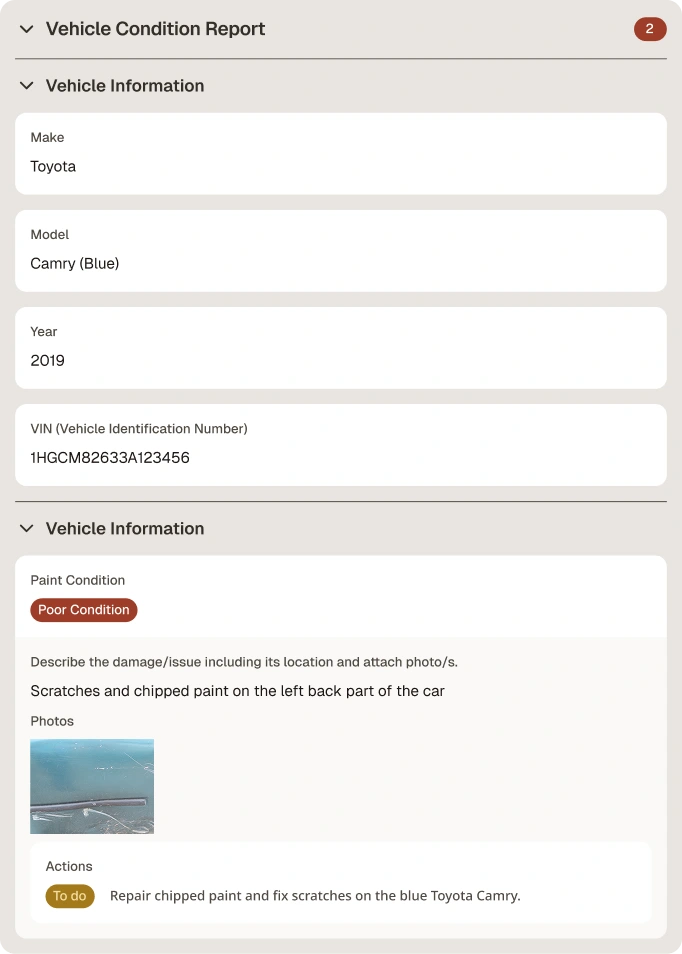
Vehicle information – This section includes details such as the make, model, year, VIN (Vehicle Identification Number), license plate number, mileage, etc.
Exterior assessment – Any scratches, dents, paint chips, windshield cracks, rust, or other visible damages
Interior assessment – Condition of seats, upholstery, dashboard, carpets, and any equipment or accessories
Mechanical assessment – Functionality of lights, indicators, brakes, tires, wheels, engine, transmission, etc.
Additional setails – Fuel level, tire pressure, and existing damages
Provision for media attachments – Photos and other visual documentation of the vehicle’s condition and any damages or issues
Completion page – Any other relevant observations and sign-offs
How to write a vehicle condition report using a template
To write a vehicle condition report using a template, follow these steps:
Include information about the vehicle assessment being conducted and the purpose of recording the vehicle’s condition.
Enter the vehicle information, including the make, model, year, VIN (Vehicle Identification Number), license plate number, and mileage or odometer reading.
Use the designated sections to describe the condition of the vehicle’s:
exterior, including the lights, mirrors, windows, and windshields;
interior, including the seats, upholstery, dashboard, carpets, headliner, air conditioning, infotainment system, and controls;
mechanical components and systems, including the engine, transmission, brakes, steering, suspension, exhaust, lights, indicators, audio system, and power windows; and
tires, including tread depth, wheels, and rims.
Note any scratches, dents, paint chips, rust, stains, wear and tear, abnormal noises, vibrations, leaks, or other visible damages and issues.
Include any additional observations or details about the vehicle’s condition, such as maintenance records, recent repairs, modifications, or known issues.
Attach relevant photos and notes to provide context or evidence of the vehicle’s condition.
Ensure the report is dated and signed by the person conducting the assessment. If applicable, obtain the signature of the vehicle owner or representative as well.


Mitti (by SafetyCulture) helps Trackhouse ensure every car is race-ready by streamlining safety checklists, build tracking, and NASCAR compliance. Its fast issue reporting allowed the team to quickly resolve problems and prevent recurring issues, boosting efficiency and reliability.


Still looking for a checklist?
Search, filter, and customize 60,000+ templates across industries and use cases.