What is a pre pour inspection?
A pre-pour inspection is a formal check done just before concrete is placed. The inspector confirms that formwork, reinforcement, embedded items, approvals and site conditions all match the drawings and specifications.
Once concrete is in, you can’t see the rebar, the sleeves or the form alignment anymore. So it’s necessary to catch problems beforehand, and it’s much quicker to fix them then than afterward.
It's also best to do the inspection after the formwork and rebar are finished and before any concrete goes in. Walk it in the same order each time and write down every result.
What to check before you place concrete
Walk the pour area one zone at a time and mark each item pass or fail. Photograph anything that fails. The order follows a typical construction site inspection: paperwork first, then what’s built, then the site around it.
Drawings, mix and approvals
Start with the paperwork. OSHA requires drawings for formwork, shoring, working decks and scaffolds, including all revisions, to be available at the job site.
Are you working from the current drawings, with every revision?
Is the mix design approved for this pour?
Are permits and temporary works approvals signed?
Are the foreman and engineer booked to inspect and sign off?
Formwork, shoring and falsework
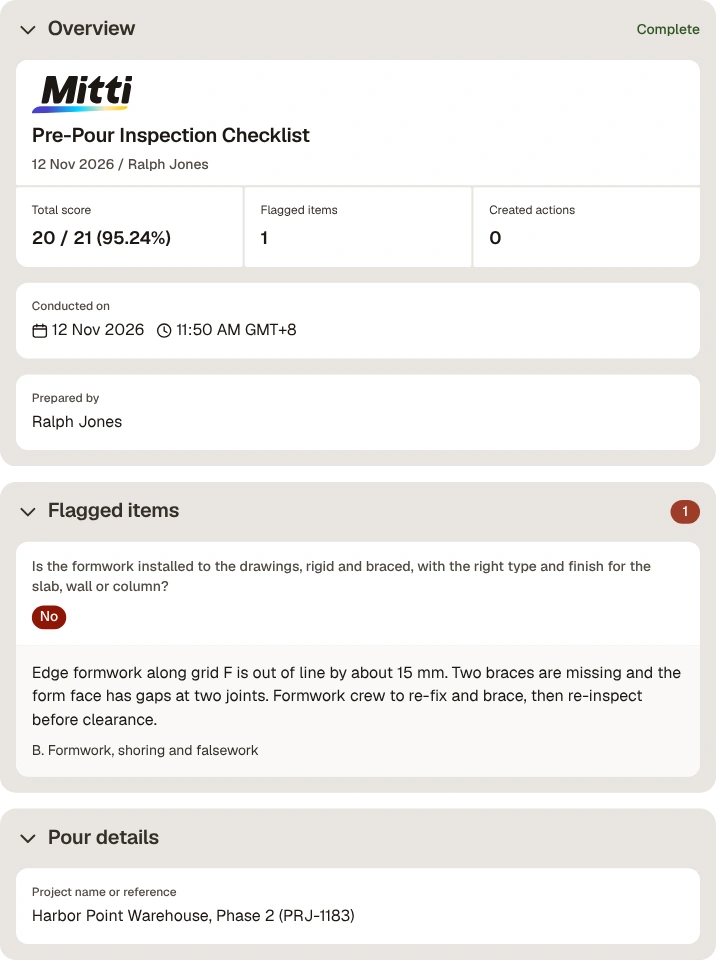
Forms must hold their shape under the weight of wet concrete. The North Carolina Department of Transportation (NCDOT) manual says forms should be rigid enough to avoid bulging or displacement, and OSHA requires employers to inspect erected shoring immediately before, during and after placement.
Do the forms match the drawings for line, level and dimensions?
Are forms rigid, braced and free of bulging or movement?
Is falsework braced against sideways forces and uneven loading?
Has shoring been inspected, with any damaged equipment fixed?
Are temporary works drawings issued for construction and logged in the register?
Are joint details and waterstops installed?
Are the forms clean, and is the correct release agent on site?
Reinforcement
Steel can’t be corrected once it’s buried, so check it before the forms close. The Colorado Department of Transportation’s pre-pour agenda asks for bars of the correct number and size, in the correct location and properly tied.
Do bar size, spacing and position match the drawings?
Is the steel clean, tied and supported?
Are laps and splices to specification?
Is cover correct at the base and sides, with chairs or spacers in place?
Is vertical rebar supported against overturning, and is protruding steel capped or guarded?
Embeds, sleeves and penetrations
Embedded items are the hardest to correct after the pour, so get a second person to check them.
Are anchor bolts, inserts and built-in items in the right positions?
Are sleeves and penetrations in position and secured?
Have the plumbing, electrical and HVAC trades confirmed their sleeves and conduits?
Are construction joints where the drawings show them, with surfaces clean and wet?
Site readiness and safety
Check the site as well as the structure. Worker hazards such as burns, silica dust and formwork collapse sit outside this list, so see our guide to concrete construction safety [LINK: concrete construction safety guide].
Cold weather needs its own checks. NCDOT requires crews to remove ice, snow and frost from forms and reinforcing steel just before placement and bars casting on frozen soil. ACI 301-20 also requires formwork contact surfaces and large metal embeds to be above −12°C (10°F) in cold weather placement.
Is the pour area clean, with debris and standing water removed?
Are enough crew, equipment and access routes ready for the planned pour?
Are weather conditions suitable, with coverings ready if rain arrives?
Has the crew been briefed, including no-go zones under buckets and pump lines?
Are barriers and edge protection in place around the pour area?
Is the subgrade ready, with no frost or standing water?
Concrete mix and delivery checks on pour day
The checks continue when the trucks arrive. Match each load to the approved mix design from your paperwork check before it goes into the forms.
Delivery ticket: The Florida DOT inspection guide expects ticket details to be complete, accurate and signed before placement starts.
Discharge time limit: ASTM C94 no longer sets one fixed window, so the limit is stated on the delivery ticket. Confirm it before the truck discharges.
Slump: Test against the specified range. NCDOT calls for an immediate check test and rejection of the load if it fails. Re-run the tests if anyone adds water afterward.
Added water or admixture: Record the type and amount on the ticket. NCDOT keeps a record of any admixture and water added on the sample card and batch ticket, so you can trace a load later.
Documentation and sign-off
Record every result on the day of the inspection. A dated record shows what was checked before the pour and who approved it. Capture these details for each inspection:
Date, time and location of the pour
Weather and ground conditions at the time of inspection
Inspector, foreman and engineer names
Items passed, failed and corrected
Photos of reinforcement, embeds and formwork
Final clearance to pour
Any failed item needs an owner and a due date. Track each one as a corrective action and re-inspect it before concrete goes in.
Standards that apply to pre pour inspections
Rules vary by project and state, so start with your contract specifications. Most pre-pour checks trace back to these references:
OSHA (US): 29 CFR 1926 Subpart Q covers concrete and masonry construction, including the shoring inspections above.
Michigan (MIOSHA Part 25): The state’s amended concrete construction standard took effect June 22, 2026. The amendments update the inspection and documentation requirements for forms, shoring and reshoring before concrete placement.
ACI 301-20: This reference specification for concrete construction is written to the contractor and covers handling, placing and finishing.
ACI 318-19: This building code sets minimum requirements for structural concrete, including specified rebar cover. Concrete cast against and in permanent contact with ground needs 76 mm (3 in.).
ISO 45001: The international standard for occupational health and safety management expects organizations to identify hazards and assess risks. This ISO 45001 audit checklist covers hazard identification and emergency preparedness.
Agency specifications: State DOTs publish their own pre-pour requirements, so check your project’s manual before you rely on a generic checklist.
Local authorities fill gaps in the plans too. The City of Santa Clara, for example, tells builders to use ACI 318-19 Table 20.5.1.3.1 when the plans don’t specify concrete cover. Ask your building department which edition it enforces.

Still looking for a checklist?
Search, filter, and customize 60,000+ templates across industries and use cases.
FAQs about pre pour inspections
Article by
Mitti (by SafetyCulture) Content Team
Mitti (by SafetyCulture) Content Contributor
View author profile