What is a BRC audit?
BRC stands for British Retail Consortium, the UK trade body that created the standard in 1996. The scheme now trades as BRCGS, and Issue 9 is the current version.
A BRC audit is a third-party assessment of how well your site meets the BRCGS Global Standard for Food Safety. An accredited certification body examines your processes, records, and site conditions across the nine clauses of the standard.
What is a BRC audit checklist?
A BRC audit checklist is a tool you use to run regular internal inspections before a certification audit. Work through it clause by clause and you can catch non-conformances before they turn into audit findings, spot unsafe production methods, and close gaps while there is still time to fix them.
What does a BRC audit checklist include?
Issue 9 is the current version of the standard, which has been adopted by more than 22,000 sites across over 130 countries and was the first food safety scheme to be GFSI benchmarked. Each clause carries its own set of requirements, so your checklist needs to mirror all nine.
If you are working from an Issue 8 checklist, it is out of date. Issue 9 tightened the requirements around food safety culture, root cause analysis, environmental monitoring, and documented maintenance schedules. Sites that carry over an old checklist usually discover the gap during the audit rather than before it.
Most common BRC audit non-conformances
Most sites do not fail on food safety. They fail on evidence. Here are common non-conformances that can be avoided by using a BRC audit checklist:
Internal audits that were run but never documented to the standard's requirements
Corrective actions closed out with no root cause analysis behind them
Cleaning schedules with no defined performance limits or trigger thresholds
Calibration and preventive maintenance records with gaps in the date trail
Allergen controls documented in the plan but not matched by floor practice
Traceability exercises that cannot be completed inside the required window
Issue 9 names twelve fundamental requirements, including senior management commitment, the HACCP plan, internal audits, corrective and preventive actions, traceability, allergen management, and training. A major non-conformance against any one of them stops certification outright, so these are the clauses to self-assess hardest.
BRCGS Food Safety Issue 9 achieved recognition against the GFSI Benchmarking Requirements in August 2024, which is why most major retailers accept it as proof of supply readiness.
How to prepare for a BRC audit
A BRC audit covers a lot of ground. Here is how to get ready.
Pull your documentation together first. Auditors ask for the same records every time:
HACCP plan with hazard analysis and CCP validation records
Internal audit schedule and completed reports for the last 12 months
Corrective action log with root cause analysis and closeout evidence
Supplier approval records and raw material specifications
Traceability test results, forward and backward
Training records, including refresher dates
Calibration and maintenance logs for all monitoring equipment
Then run the audit on yourself. Work through the checklist clause by clause exactly as an auditor would, scoring each requirement as conform or non-conform and recording the evidence you would hand over. Score honestly, because a self-assessment that comes back clean usually means you tested too gently. Assign every gap an owner and a date, then re-check before the real audit. Dedicated audit management software keeps that trail in one place instead of across spreadsheets.
If you supply the US market, your BRC documentation overlaps heavily with the FDA's preventive controls requirements, which apply to domestic and foreign facilities required to register under section 415 of the Food, Drug and Cosmetic Act. UK sites should cross-check their food safety management system against Food Standards Agency guidance before the audit.
Run your internal BRC audits in Mitti (by SafetyCulture) and you get a live compliance score across every clause, corrective actions assigned the moment a gap is found, and Training records tied to the same platform your auditors ask about. Sensors and IoT can log fridge and cold-store temperatures automatically, which closes one of the most common documentation gaps before the auditor arrives. The same health and safety software covers your wider site obligations alongside food safety.
BRC audit sample report example
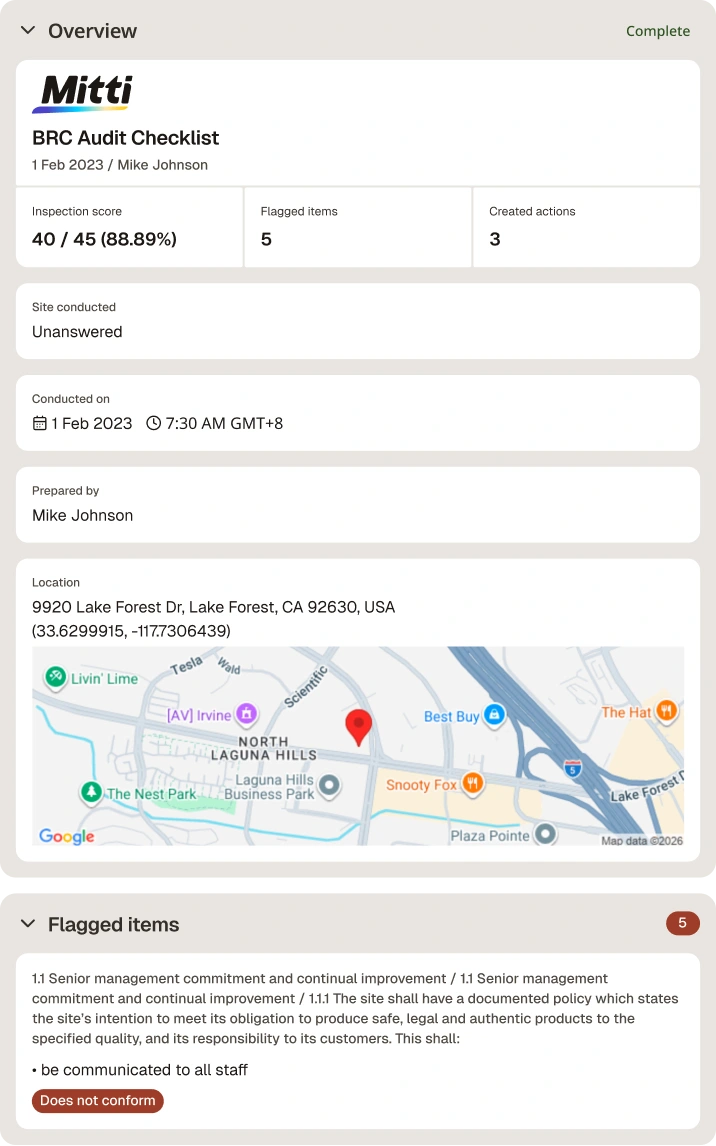
For reference on how a BRC audit checklist is used, here's a sample report you can view:


Still looking for a checklist?
Search, filter, and customize 60,000+ templates across industries and use cases.