What Makes a Safe Food Storage?
Safe food storage should be compliant with proper food storage and food hygiene procedures. It should consider storage temperatures and specific procedures for different types of food, especially in commercial kitchens. As a guide, below are the best practices for storing different types of food:
Dry Foods
Dry foods refer to canned goods, baking supplies, grains, and cereals. These types of food are stored in dry storage areas which should follow the following guidelines:
Storage area should be dry and cool with an ideal temperature range of 50°F to 59°F (10°C to 15°C) to prevent swelling and spoilage of canned goods.
Storage area should be easy to clean and free from rodents and vermin. Walls, ceiling, and floor openings should be sealed and protected.
Storage area should be well lit and with adequate air circulation
Food should be stored away from direct sources of heat and sunlight and placed off the floor and away from walls.
Storage area should be kept away from poisonous substances. This means cleaning products and chemicals should not be stored together in a room with non-perishable food.
Storage area should have a lock and key to prevent pilferage.
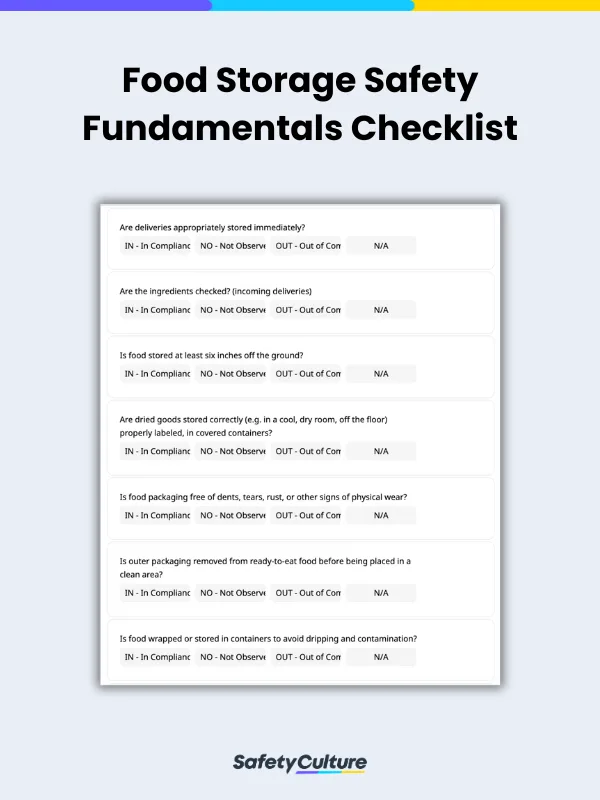
A simple dry food storage checklist can help keep everything in order and compliant.
Refrigerated Products
Refrigerated products refer to raw foods or products. It’s vital that these products be refrigerated to prolong shelf life and prevent bacterial growth. Optimize refrigerated storage conditions by following these guidelines:
Refrigerator temperature should be kept at 39°F (4°C) or cooler.
Refrigerator temperature should be monitored daily using a thermometer for easy and accurate readings.
Refrigerators should be in good working order and regularly maintained.
Refrigerators should be regularly cleaned. This also entails checking expiration dates and clearing of nearly expired or expired goods.
Refrigerator products should be stored in containers or sealed storage bags to prevent spills and cross-contamination.
Refrigerators should have enough open, slotted shelving to allow air circulation around shelves and refrigerator walls.
Refrigerators should always be closed tightly and seals checked regularly to maintain efficiency and appropriate temperatures.
Dairy Products
Dairy products must be stored at a temperature of 36°F to 39°F. Below are additional guidelines to protect dairy products from contamination and spoilage:
Dairy products should have their own area and be placed in protective coverings or containers to prevent absorption of strong odors from storage surroundings.
Dairy products should be ordered not too far in advance of their use date.
Dairy products should ideally be delivered on a daily basis.
Produce
Produce are mostly stored in the refrigerator, with some exceptions. Cold-season crops like cabbage, brussels sprouts and potatoes should be stored at cooler temperatures while warm-season crops like corn, cucumbers, and tomatoes should be stored at warmer temperatures. Below are factors to keep in mind when storing produce:
Soft fruits should not be stored for too long.
Unripe fruits can be ripened at 50°F to 59°F (10°C to 15°C) storage temperature.
Remove rotting fruits from cases to prevent destroying the quality of other fruits in the case.
Provide special storage for produce which shouldn’t be stored in the refrigerator.
Keep track of shelf life of produce as it varies widely per type.
Fresh Meats, Poultry, and Seafood
Fresh meats, poultry, and seafood are the most crucial in terms of food storage. These products should be refrigerated at a temperature of 39°F or cooler to prevent bacteria growth that can cause foodborne illnesses. Ensure the safety of your consumers by considering the following factors when storing fresh meats, poultry, and seafood:
Carcass meats should be unwrapped and hung, stored within 34°C to 37°F (1°C to 3°C), and placed above absorbent paper for quick cleanup of drips.
Fresh meat should not be kept for too long.
Boned meat should be kept no longer than 3 days.
Individual cuts should be used within 2 days (preferably on the day they are cut).
Individual meat cuts should be kept in plastic or stainless steel trays at 36°F to 39°F ( 2°C to 4°C ) temperature.
Fresh poultry should be packed in ice even when stored in the refrigerator.
Fresh seafood should be packed in ice, stored at 30°F to 34°F (−1°C to 2°C), and must be consumed as soon as possible.
Raw products should be stored on the lower shelves of the refrigerator, below cooked products.
Frozen Food
This refers to food preserved through freezing to retain quality and freshness. It could either be fruit and vegetables or fish and meat. Without proper storage and the right temperature, food can become discolored and lose its vitamin content, or worse, cause food poisoning to consumers. Consider the following factors in properly storing frozen foods to prevent freezer burns, moisture loss, and transfer of smells to and from other foods:
Maintain freezer storage spaces at 0°F (-17.78°C) or below.
Freezer units should have thermometers for easy reading, and a back-up appliance thermometer in case of a power outage.
Use freezer-safe containers or freezer bags and leave as little air inside as possible.
Wrap meats and baked goods tightly with foil before placing them in freezer bags.
Cool hot food before freezing them.
Label and date freezer bags or containers to keep track of shelf life.
Global companies conduct inspections with us
See how a trusted food delivery business in Australia, Marley Spoon, raises the bar on food quality and customer satisfaction using Mitti (by SafetyCulture):