Mitti by SafetyCulture
Pricing
Log inSign up for free
  1. Home
  2. Checklist guides
  3. Safety
  1. Home
  2. Checklist guides
  3. Safety
Mitti by SafetyCulture

The way the world works

Follow us

App Store
Google Play

Product

  • Pricing
  • Book a demo
  • Product updates
  • Mitti (by SafetyCulture)

Support

  • Help center
  • Contact us
  • API developer documentation
  • Digitize your checklist

Resources

  • Content library
  • App & software guides
  • Checklist guides
  • Topic guides
  • eBooks
  • Blog

Company

  • About
  • Careers
  • News room
  • Meet the leadership team
  • Events & webinars
Copyright © 2026 Mitti
StatusLegalPrivacyTerms & ConditionsSecurity

SafetyCulture has a new name. Say hello to Mitti. Learn More.

Powered by

Organic System Plan

Guarantee organic integrity by effectively developing and implementing your Organic System Plan using digital templates.

Rated 4.6/5 stars on Capterra | 3k+ app store reviews
Use templatePreview template
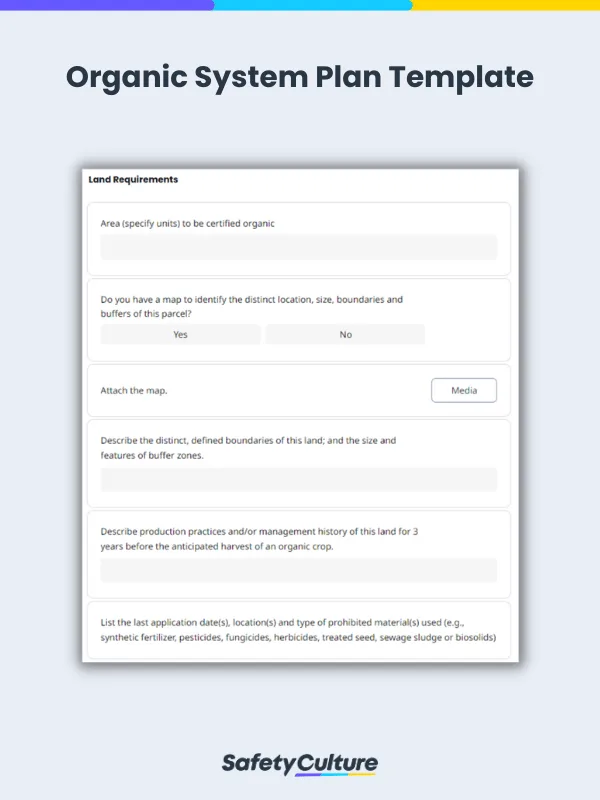
Organic System Plan Template
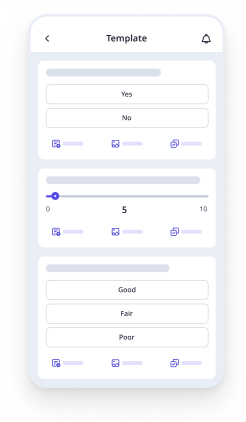
Mobile Preview
See the template in action (opens in new tab)

This organic system plan template is designed according to NOP standards for crop production so that organic farmers can easily document and monitor their operations. Use this template to completely provide all the details in the Organic System Plan and easily perform the following:

  • Take photos of crops, materials, etc. and annotate the photos for better visual reference

  • Create actions to follow up details with an assignee, priority level and due date

  • Store all records in Mitti (by SafetyCulture)’s cloud and worry less about losing required paperwork

  • Sign-off the Organic System Plan affirmations with electronic signatures

Organic System Plan Template
Mobile Preview
See the template in action (opens in new tab)

Why Mitti digital checklists?

  • Free to use for up to 10 users

  • Eliminate paperwork with digital checklists

  • Generate reports from completed checklists

Use template
  • What is an Organic System Plan?
  • Key Components of an Organic System Plan
  • What to Include in an Organic System Plan Template?
  • How to Effectively Implement Your Organic System Plan

In this article

  • What is an Organic System Plan?
  • Key Components of an Organic System Plan
  • What to Include in an Organic System Plan Template?
  • How to Effectively Implement Your Organic System Plan

Eliminate paperwork with digital checklists

Skip the setup and get to work in seconds.

Use template

Article by

Jona Tarlengco

|

5 min read

|

7 May 2025

What is an Organic System Plan?

An Organic System Plan (OSP) is a comprehensive document that outlines how an operation complies with organic standards to obtain organic certification. Certification is granted when the standards of the National Organic Program (NOP), regulated by the U.S. Department of Agriculture (USDA), are met. Farmers, ranchers, and businesses that sell or label agricultural products as organic should demonstrate the integrity of production and handling practices in the Organic System Plan to display the USDA organic seal.

Key Components of an Organic System Plan

To also ensure that the plan is comprehensive and serves its purpose as a complete record of organic practices, an Organic System Plan should include:

  1. Production practices – How crops are grown or animals are raised (e.g., soil management, pest control, animal welfare).

  2. Input list – All substances used (e.g., fertilizers, pesticides, feed) and proof they meet organic standards.

  3. Recordkeeping – Systems in place to track production, sales, and input use for traceability and compliance.

  4. Preventing contamination – Measures to avoid contamination from prohibited substances (e.g., buffer zones, equipment cleaning).

  5. Labeling and marketing – How products are labeled and marketed to ensure they meet organic claims.

What to Include in an Organic System Plan Template?

An organic system plan template is a digital tool used by producers and handlers of organic crops, livestock, and poultry to provide complete evidence of organic operations and keep all records available for inspection.

An organic system plan should clearly explain these details:

  • Information on land requirements

  • Description of the operation and soil, crop nutrient management, and crop rotation

  • Compost and manure (if applicable)

  • Natural resources of the operation and biodiversity conservation management

  • Seedlings, seed, and planting stock

  • Details on the management of pests, diseases, and weeds

  • Materials list (Input Substances)

  • Audit trail, traceability, and production verification

  • Labeling and representation of organic products

  • Contamination and commingling risk assessment and prevention plan

How to Effectively Implement Your Organic System Plan

Upon submission of your Organic System Plan, USDA representatives and accredited certifiers initially review it to determine possible compliance issues before the organic inspection—where they physically verify your organic operations and if records reflect the reality on your grounds.

Whether your Organic System Plan is approved or denied, demonstrating organic integrity is a continuous process, especially for those approved with reminders and approved upon resolution of noncompliance. Here are ways to effectively implement your Organic System Plan:

1. Verify the effectiveness of your Organic System Plan regularly

In an organic system plan template, you may have already noticed how being certified organic means that your operations should always demonstrate compliance with organic standards. Your monitoring methods should be clearly communicated to your staff, performed according to the indicated frequency or timing, and easily tracked with supporting documents.

Here are examples of how you can prove the effectiveness of your Organic System Plan regularly:

  • Routine preventative tasks for recurrent or potential pest, disease, and weed problems like tillage, mowing, and sanitizing tools and equipment

  • Before fertilizer application, weekly, or as needed soil or crop observation, analysis of soil characteristics (nutrient and organic matter content), plant tissue or microbiological tests, and crop yield or crop quality comparison

  • Scheduled maintenance and improvement of natural resources such as water (conservation and quality), woodlands, wetlands, and other habitat types, wildlife, ecological balance, and biodiversity, including control of invasive species

  • Monthly quality assurance and internal controls check for management practices and physical barriers using an organic farming plan checklist and an organic farming plan template

  • Quarterly risk assessments to identify, assess, and mitigate potential risks of commingling (contact between organic and non-organic product) and contamination by prohibited materials or their residues, plant nutrients, heavy metals, and pathogens

2. Audit and improve your recordkeeping practices periodically

Another characteristic of an effective Organic System Plan is the ability to show how your recordkeeping system consistently maintains organic integrity in each specific farming activity. Make sure that records of your organic product—from its production site; input substances, seed and planting stock; farm management practices and crop rotation; harvest, post-harvest handling, storage and transport; to final sale or release of custody—are traceable.

Use an organic management plan checklist to easily identify gaps in your recordkeeping system, share good agricultural practices with your staff, and continuously improve how you document your organic operations, especially because all records are subject to inspection by the USDA and accredited certifiers.

3. Review and update your Organic System Plan annually

As producers and handlers of organic crops, livestock, and poultry, keep in mind that your Organic System Plan should be regularly reviewed, especially because organic inspectors will visit your farm, ranch, or business—announced or unannounced—at least once a year.

Whenever a significant change is made to your operation (adding micronutrients for soil fertility, keeping animals healthy with a different treatment, new handling methods that may expose the organic product to prohibited substances, etc.), update your OSP and use an organic inspection checklist to be prepared for the annual inspection, having confidence in your operation that guarantees organic integrity.

Content library templates

Still looking for a checklist?

Search, filter, and customize 60,000+ templates across industries and use cases.

Browse Library
JT

Article by

Jona Tarlengco

Mitti (by SafetyCulture) Content Specialist

View author profile

Related resources you might like

Templates

Powered by

Organic Inspection Checklist

An organic inspection checklist is used to perform self-checks for the proper documentation of organic crop and/or livestock production and/or organic product handling and processing. Use this checklist to assess your organic operation’s recordkeeping before the scheduled inspection for organic certification.

View template in library

Powered by

Organic Farming Plan Template

This organic farming plan template is used to empower assigned staff to evaluate crop management practices, maintenance of organic integrity, and recordkeeping system regularly. Use this template to easily monitor weed, pest, and/or diseases control methods, safeguards against contamination and commingling, and equipment and storage area cleaning.

View template in library

Powered by

Organic Management Plan Checklist

This organic management plan checklist is built to make it easier for organic farm owners and managers to personally evaluate key details of the Organic System Plan and align current practices to it before the annual organic inspection. Use this checklist to assess contamination and commingling risks, recordkeeping system, and audit trail, traceability, and product verification practices.

View template in library

Articles

Safety Audit Software

Discover the most outstanding safety audit software of 2026 and validate your organization’s safety processes with your number one choice.

Learn more

50+ Safety messages of the day

Discover 50+ safety message of the day examples and tips for offices, construction sites, and labs to help keep your workplace safe daily.

Learn more

5×5 Risk Matrix Template

Download free 5x5 risk matrix templates today. Learn how it works and how it can help systematically assess and plan strategies for workplace risks.

Learn more