What is a pre start checklist?
A pre-start checklist is a structured document that lists the tasks or items you need to check before starting an activity, process, or piece of equipment. Teams in construction, manufacturing, and logistics use it to confirm everything's ready and safe before work begins.
Purpose and benefits
A pre-start checklist boosts safety and efficiency by systematically flagging critical risks before you start a task. Using a checklist when conducting pre-start checks lets you achieve the following benefits:
Safety – Guides operators in systematically inspecting safety features, verifying emergency functionalities, and ensuring that all necessary precautions are taken
Compliance – Ensures that all required tasks and inspections are completed, documentation is properly maintained, and compliance with relevant regulations is achieved, such as OSHA's requirement that powered industrial trucks be inspected before each shift (29 CFR 1910.178)
Efficiency – Provides a clear and structured approach to pre-start checks
Continuous improvement – Assists organizations in identifying areas for improvement, refining their processes, and implementing necessary changes
Reduced downtime – Helps identify and rectify potential risks or faults before a catastrophic fail
What to include in a pre start checklist
The content of a pre-start checklist can vary depending on the specific requirements of your equipment, industry, and operation. Generally, here are some of the most common items to include when you’re aiming to inspect a tangible asset before using it:
Title page:
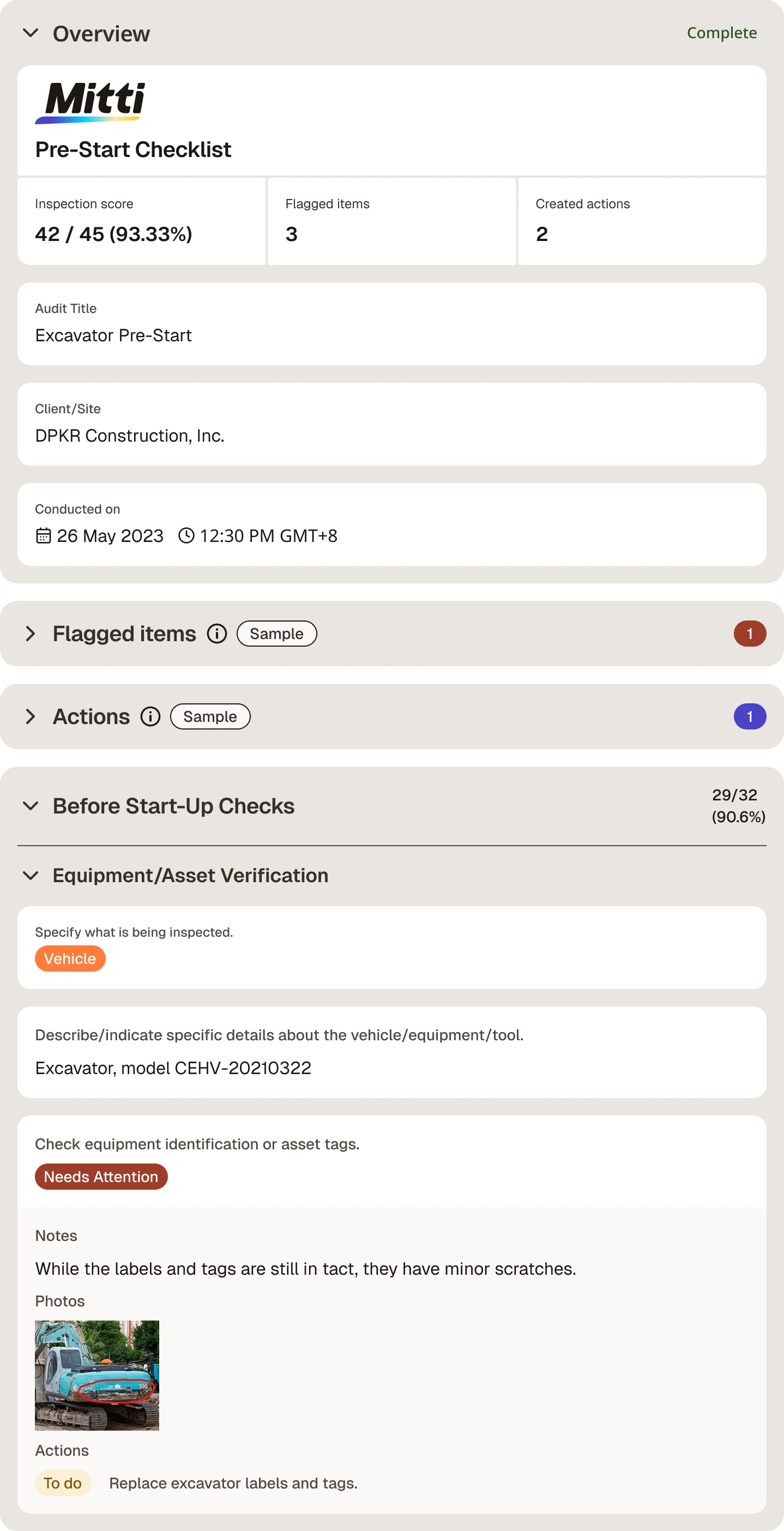
Audit title
Client/Site
Date, time, location, and person in charge of the pre-start check
Before start-up checks:
Equipment/Asset verification
Visual inspection
Supplies/Materials
Safety
Communication
Environment and surroundings
Documentation and permits, including any records required under regulator guidance such as Safe Work Australia's plant and machinery duties
Training
After start-up checks:
Functional tests
Completion page:
Notes/Recommendations
Operator’s name and signature
How to use a pre-start checklist
Using a pre-start checklist involves following a systematic approach to ensure that all required checks and inspections are conducted before starting an activity or operating equipment. Here’s a step-by-step guide on how to use a pre-start checklist effectively:
Familiarize yourself with the checklist to understand its structure, items, and instructions.
Prepare the checklist and required tools specific to the equipment or activity you’re about to undertake.
Perform a visual inspection to identify any obvious signs of damage, wear, or abnormalities.
Verify equipment readiness, including its critical components, safety features, controls, and indicators to ensure they are in proper working condition.
Conduct functional tests (if applicable) to ensure that it operates correctly and meets the required performance criteria.
Document your findings and the actions taken.
Keep a copy of the completed pre-start checklist for your records or as required by your organization’s procedures.

Pre-start checklist sample report | Mitti (by SafetyCulture)
Integrating pre-start checks into daily operations
Integrating pre-start checklists into daily operations requires careful planning and implementation to ensure their effectiveness and adherence to set standards. Here are some steps to follow:
Develop a standard procedure for conducting pre-start checks and ensure consistency across all operations, reflecting the operational control approach set out in ISO 45001:2018.
Create pre-start checklists that are specific to the equipment, vehicles, or systems used in your organization.
Integrate the pre-start checks into the daily routine and work schedule of operators and maintenance personnel.
Regularly monitor and assess compliance with the pre-start checklists.
Continuously review and improve the pre-start checklists based on feedback, lessons learned, and changes in equipment or operational requirements.
Promote a strong safety culture within the organization by emphasizing the importance of pre-start checks and adherence to the checklists.
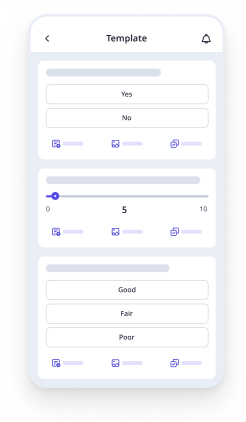
Platforms like Mitti (by SafetyCulture) make this easier — teams complete checks from a phone, attach photos as evidence, and get every record stored automatically instead of chasing paper forms.

Using Mitti (by SafetyCulture), the team saves 5,000 hours annually on audits, with average audit time cut by 50% and 5S audits by 70%. Hazard reporting now takes just one minute instead of ten.


Still looking for a checklist?
Search, filter, and customize 60,000+ templates across industries and use cases.