Mitti by SafetyCulture
Pricing
Log inSign up for free
  1. Home
  2. Checklist guides
  3. Safety
  1. Home
  2. Checklist guides
  3. Safety
Mitti by SafetyCulture

The way the world works

Follow us

App Store
Google Play

Product

  • Pricing
  • Book a demo
  • Product updates
  • Mitti (by SafetyCulture)

Support

  • Help center
  • Contact us
  • API developer documentation
  • Digitize your checklist

Resources

  • Content library
  • App & software guides
  • Checklist guides
  • Topic guides
  • eBooks
  • Blog

Company

  • About
  • Careers
  • News room
  • Meet the leadership team
  • Events & webinars
Copyright © 2026 Mitti
StatusLegalPrivacyTerms & ConditionsSecurity

SafetyCulture has a new name. Say hello to Mitti. Learn More.

Powered by

Pressure Vessel Inspection Checklist (Unfired)

Proactively catch boiler and pressure vessel issues with a powerful mobile tool

Rated 4.6/5 stars on Capterra | 3k+ app store reviews
Use templatePreview template
Pressure Vessel Inspection Checklist
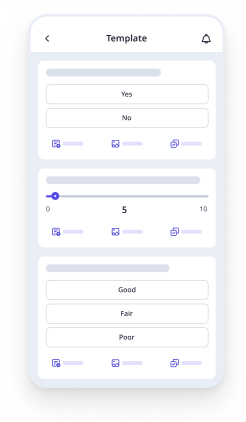
Mobile Preview
See the template in action (opens in new tab)

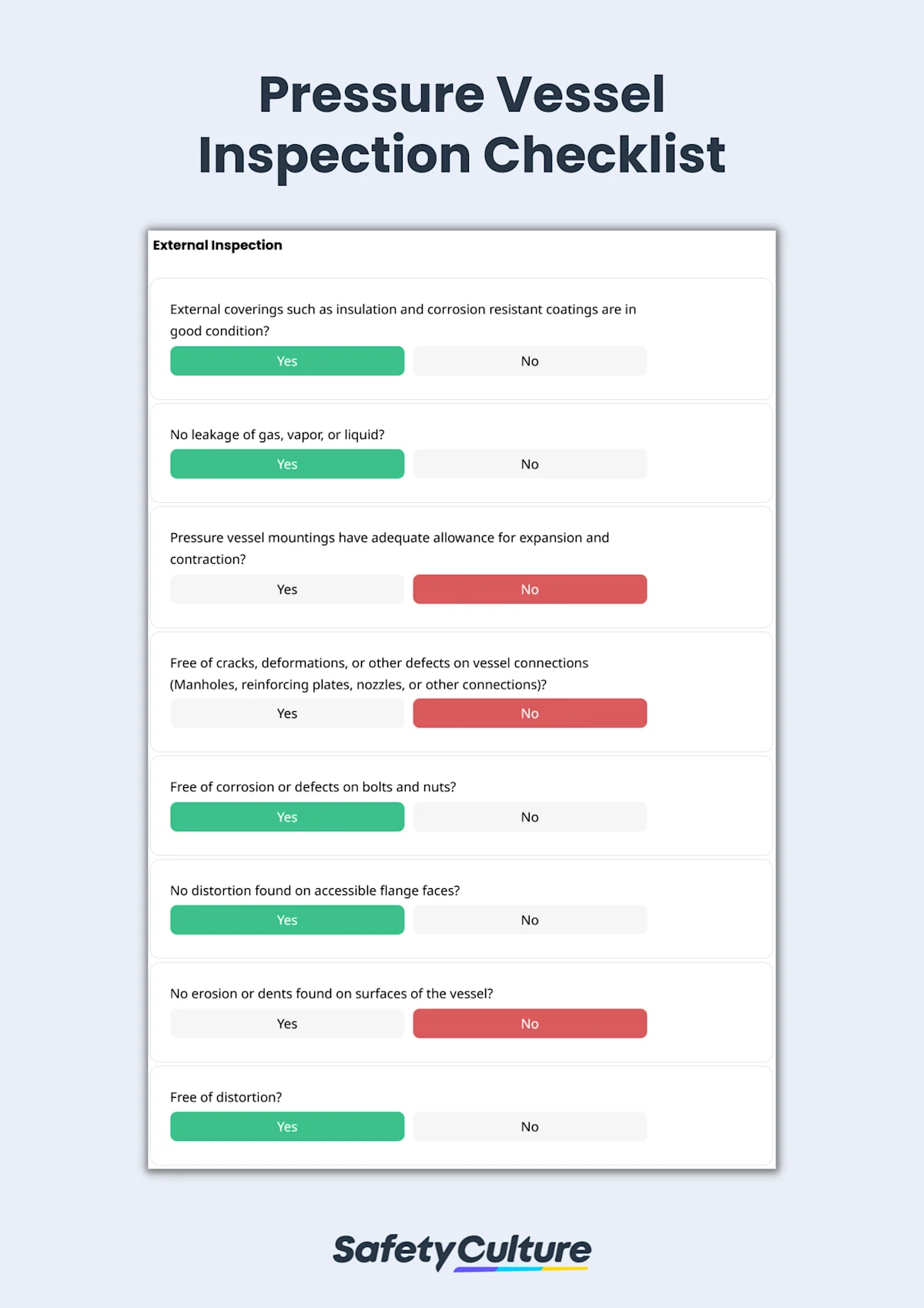
A pressure vessel inspection checklist is used by engineers and boiler inspectors to help ensure that pressure vessels are safe to hold liquids and gases under pressure. It is used when conducting external and internal inspection of pressure vessels, as well as inspecting safety devices and piping systems. This Mitti (by SafetyCulture) template is created based on a document on the inspection of unfired pressure vessels. Inspectors can use this to:

  • Take photos and make notes on issues found during inspections.

  • Assign corrective actions using mobile devices.

  • Automatically store reports for easy recordkeeping and utilize the data for future reference.

  • Meet industry standards by customizing the digital template according to the type of boiler or pressure vessel.

Pressure Vessel Inspection Checklist
Mobile Preview
See the template in action (opens in new tab)

Why Mitti digital checklists?

  • Free to use for up to 10 users

  • Eliminate paperwork with digital checklists

  • Generate reports from completed checklists

Use template
  • What is a Pressure Vessel Inspection?
  • Why Use Pressure Vessel Inspection Checklists?
  • What to Include in a Pressure Vessel Inspection Checklist?
  • How Often Should Pressure Vessels be Inspected?
  • Pressure Vessel Inspection Requirements
  • 3 Main Causes of Pressure Vessel Failure

In this article

  • What is a Pressure Vessel Inspection?
  • Why Use Pressure Vessel Inspection Checklists?
  • What to Include in a Pressure Vessel Inspection Checklist?
  • How Often Should Pressure Vessels be Inspected?
  • Pressure Vessel Inspection Requirements
  • 3 Main Causes of Pressure Vessel Failure

Eliminate paperwork with digital checklists

Skip the setup and get to work in seconds.

Use template

Article by

Mitti (by SafetyCulture) Content Team

|

4 min read

|

26 Jul 2024

What is a Pressure Vessel Inspection?

A pressure vessel inspection, also known as a boiler inspection, is a regular safety check to ensure vessels are in proper working condition. It involves visually inspecting the vessels to confirm they can safely hold liquids or gases under pressure, preventing failures that could lead to costly property damage, harm to business reputation, or loss of life.

Why Use Pressure Vessel Inspection Checklists?

Boilers and pressure vessels vary by shape, construction materials, working pressure, vessel threads, safety features, and maintenance features. Engineers, safety officers, or boiler inspectors use pressure vessel inspection checklists to help maintain the good working condition of pressure vessels and their safety accessories which keep liquid and gas pressure in check. Boilers are common devices for industrial heating and humidification applications, and pressure vessels are used to hold liquids, vapors, or gases at high pressures.

What to Include in a Pressure Vessel Inspection Checklist?

Below are the general items to check during pressure vessel inspections:

External Inspection

  • Coverings

  • Leakage

  • Vessel mountings

  • Check for defects, cracks, or deformations

  • Corrosions

Internal Inspection

  • Threads and threaded connections

  • Openings

  • Special closures

  • Free from cracks, deterioration, and corrosion

Safety Devices

  • Proper seal

  • Intact bolts

  • Check for rust, corrosion, and damage

  • Rupture disks

Piping Systems

  • Provision of expansion and support

  • Free from leakage, corrosion, erosion, cracking

How Often Should Pressure Vessels be Inspected?

Generally, pressure vessels should be inspected at least once every two years and tested at least once every five years. Visual examinations of pressure vessels, or storage tanks/vessels that operate at pressures above 15 psig (pound-force per square inch gauge), should also be conducted after installation, before operation, and during maintenance to detect potential cracks and ensure boiler and pressure vessel safety. This also applies to high-pressure vessels that will require regular inspections and monitoring.

Pressure Vessel Inspection Requirements

Inspection requirements for pressure vessels depend on country-specific regulations such as the Pressure Systems Safety Regulations of 2000 (PSSR) in the UK, regional guidelines such as the Pressure Equipment Directive of 2014 (PED) from the European Commission, and applicable industry standards such as the Boiler and Pressure Vessel Code of the American Society of Mechanical Engineers (ASME).

3 Main Causes of Pressure Vessel Failure

There are several causes of pressure vessel failure that can have dangerous consequences if not caught early and immediately corrected during routine inspections. Consider these common reasons why pressure vessels become unfit for use and watch out for them during routine inspections.

1. Hardware issues

Error in vessel design, plate material used, construction, or installation can cause cracks and erosion on boilers and pressure vessels that could lead to leakage or rupture. Compliance with industry standards for the manufacture of boiler pressure vessel valves can help prevent failures and other hardware issues.

2. Errors in repair

Welding, coating, and other methods of pressure vessel repair that do not conform with standards may not properly address issues and render the vessel unsafe for use. Periodic inspections should be conducted by engineers or boiler inspectors to proactively determine if boilers, pressure vessels, and safety devices are still in good working condition or already in need of repair or replacement.

3. Lack of monitoring

Prolonged use of pressure vessels without periodic maintenance or routine inspections can lead to catastrophic accidents. Whether inspections are done annually or every 4 hours, they can help keep the vessels at optimal condition and prevent unforeseen accidents if they are conducted by competent personnel.

Wrong material used and lack of internal audits contributed to the rupture of a pressure vessel in 2009 that caused injury, damage to nearby businesses, and loss of life in the state of Illinois.

YouTube video thumbnail
Content library templates

Still looking for a checklist?

Search, filter, and customize 60,000+ templates across industries and use cases.

Browse Library
MT

Article by

Mitti (by SafetyCulture) Content Team

Mitti (by SafetyCulture) Content Contributor

View author profile

Related resources you might like

Templates

Powered by

Pressure Vessel Safety Checklist

This pressure vessel safety checklist is used for routine inspections of pressure vessels in a German-owned discount supermarket chain with over 10,000 stores in 20 countries.  Use this checklist to record details of compressor packs, system racks, and enthalpy units and take photos of the low temperature receiver, pressure relief valve discharge point, and medium temperature receiver. Easily customize this checklist to meet your business needs using Mitti (by SafetyCulture)’s drag-and-drop template editor.

View template in library

Powered by

Boiler Inspection Checklist

A boiler inspection checklist is a tool used for the safe and accurate maintenance and routine checks of oil or gas-fired boilers on ships. Normally a part of the Port State Control regime, crew members should use this checklist to inspect the internal, external, and operation of a boiler. Select Safe-At Risk-N/A for crucial components and immediately fix problems to avoid boiler explosions, meltdowns, and scalding or steam burns.

View template in library

Powered by

Boiler Log Sheet

A boiler log sheet is used to document the daily inspection of boilers to make sure that the pressure and temperature are within the recommended range. Use this log template to record scheduled daily inspection or multiple inspections within a day to maintain the safety of boilers. Utilize Mitti (by SafetyCulture)’s scheduling feature and don’t miss another periodic boiler inspection.

View template in library

Powered by

Pressure Vessel Risk Assessment Template

Use this pressure vessel risk assessment template when a new boiler, pressure vessel, or new equipment is to be installed and determine possible risks from a new equipment and changes in processes within the workplace.

View template in library

Articles

Safety Audit Software

Discover the most outstanding safety audit software of 2026 and validate your organization’s safety processes with your number one choice.

Learn more

50+ Safety messages of the day

Discover 50+ safety message of the day examples and tips for offices, construction sites, and labs to help keep your workplace safe daily.

Learn more

5×5 Risk Matrix Template

Download free 5x5 risk matrix templates today. Learn how it works and how it can help systematically assess and plan strategies for workplace risks.

Learn more