Purpose
A risk mitigation plan aims to eliminate, manage, or minimize the impact of risks that can negatively affect projects, businesses, and security. In accomplishing this, it weighs the consequences of each risk, prioritizes them according to their risk levels, and strategizes in response to their impacts. By acknowledging the inevitability of certain threats, teams can plan around those risks to lessen their adverse effects.
Importance
A risk mitigation plan offers several advantages to project teams and organizations. It serves as a guide in managing and reducing risks through established procedures. By noting several approaches to risks ahead of time, organizations can better prepare in handling the risks.
Aside from this, having a readily available mitigation plan helps teams reach effective business decisions. Risk mitigation planning allows them to spot loopholes in the processes that could trigger these risks and respond before they worsen. Fraud risk management is one area where this kind of early intervention is especially critical.
5 Risk mitigation strategies and their examples
Risk mitigation involves different methods depending on the likelihood and impact of any given risk. This section discusses the five risk mitigation strategies and examples of how project teams can explore and use them for their operations.
Acceptance
The acceptance strategy begins by acknowledging risks and determining which are acceptable from the pool of threats. By bringing them into attention, a team can reach a common understanding of what these risks entail. Teams can also set a period for accepting these risks to prioritize efforts in mitigating other risks.
For example, they can outline risks that could hinder them from meeting project deadlines.
Avoidance
Teams can also mitigate risks by avoiding exposure to it as much as possible. This type of strategy takes on a preventive approach as opposed to the previous strategy. It lets teams plan steps to avoid threats and their impacts. Teams can avoid risks by adjusting specific project requirements, whether in operations, costs, or scheduling.
For example, they can choose not to participate in certain activities to prevent being exposed to the threat.
Control
The control strategy aims to remove, limit, or manage the impact or likelihood of threats. It carries out actions to reduce the project’s exposure to certain risks.
For example, teams can employ time-tracking and time management tools to monitor how much time it takes to accomplish tasks in a project. Doing so can help them mitigate any risk to the project timeline.
Monitoring
This risk mitigation strategy involves carefully watching potential risks for any noticeable change in their impact. Teams dedicate a specific period to observe indicated risks. If they spot any alarming changes that can negatively impact the project, they can act accordingly.
An example of this is holding periodic updates to assess the status and timeline of tasks.
Transference
Lastly, teams can mitigate risks by handing them over to a willing party. It means transferring the risks and associated consequences to a stakeholder who can deal with them. When doing this, it’s important to make sure that the conditions are acceptable for all the parties involved.
In financial risk management, this is commonly done through insurance policies or contractual indemnities, passing on the monetary consequences of a risk to a third party that's better positioned to absorb them.
A great example of this is outsourcing providers outside the company for tasks such as customer services.
Components of a risk mitigation plan
A risk mitigation plan template should consist of the following parts:
List of individual risks
Short description of each risk
Risk analysis and rating – according to its likelihood of occurrence and severity of impact
Root cause analysis – determining the root cause(s) that led to the risk
Plan of action – identifying which steps to take to mitigate the risk
Designated person/team
Timeline for the action plan
Estimated cost(s) for mitigating the risk
How to write a risk mitigation plan
After learning about the components of a risk mitigation plan template, it’s time to put them into action. This section walks you through the writing process of a risk mitigation plan and the subsequent steps to take during its implementation.
Identify and describe possible risks
It should cover all potential threats to the project, from those crucial to the operations to those affecting the team on a broader scale. Present a detailed description of the risk, including its root cause(s) and impact(s) on your project.
Assess the risks
The next step is to evaluate the risks based on how they impact your project and how likely they will occur. A risk assessment plan enables you to quantify risk levels in your organization. Choose a risk matrix that applies best to your project needs.
Rank them in terms of priority
This method lets you decide how to respond to each risk and its impact. You can start by establishing a manageable level of risk and defining critical points in your operations. After this, determine the appropriate strategies to respond to those risks.
Monitor the risks
Risk mitigation planning doesn’t stop when the plan is complete. It’s important to keep an eye on the risks as they change in relevance or impact. Set clear, well-defined metrics to detect any changes in the threats.
Implement and observe progress
An effective mitigation strategy requires constant re-evaluation and improvement. Periodically revisit the plan’s success in mitigating risks. If the planned approach isn’t working, it’s best to change the course of action.
Sample risk mitigation plan
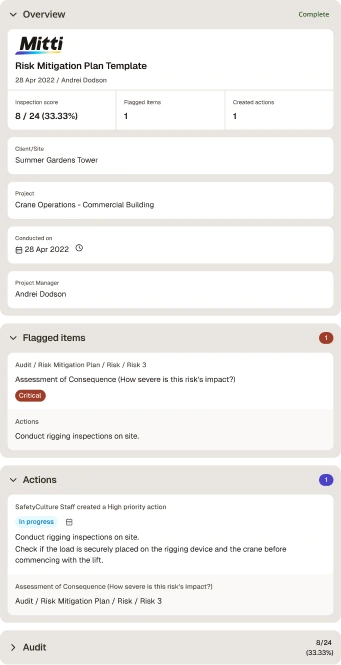
To give a better understanding of how this template is used, here is a sample report.
Risk migration plan sample report