
Powered by

Smoke Detector Inspection Checklist
Strengthen your line of defense against fires
Why Mitti digital checklists?
Free to use for up to 10 users
Eliminate paperwork with digital checklists
Generate reports from completed checklists
Powered by
Strengthen your line of defense against fires
Why Mitti digital checklists?
Free to use for up to 10 users
Eliminate paperwork with digital checklists
Generate reports from completed checklists
Smoke detector inspection is a routine fire safety check that helps ensure the reliability and safe operation of smoke detectors in the event of incipient fires. It helps determine if a smoke detector is properly installed, well-maintained, and is not expired.
Smoke detector inspections, similar to carbon monoxide detector inspections, are important to realtors and homeowners since they are a prerequisite to acquiring a smoke certificate, or Certificate of Compliance, when selling a property. The smoke certificate, awarded by a local fire department, assures potential buyers that the property they are purchasing comes with functional smoke detectors.
Smoke detectors and smoke alarms both provide an early warning system to ensure the safety of properties and its inhabitants. These terms are often used interchangeably, but they are not synonymous. Here is how the US National Fire Protection Association’s (NFPA) 72, or National Fire Alarm Code, describes each:
Smoke detectors operate as an interconnected system of smoke-sensing devices that send a signal to a building’s fire alarm system when there is a significant amount of visible or invisible particles of combustion. These are not self-contained devices, which means they lack control components and alarm notifications typically found in smoke alarms. Smoke detectors must be connected to a fire alarm system control panel which will then inform smoke alarms to sound. Smoke detectors are often used for commercial purposes and are commonly found in hotels, schools, offices, and other industrial buildings.
Smoke alarms are self-contained, single, or multiple-station devices with built-in speakers, control components, and smoke sensors. Unlike smoke detectors, smoke alarms are often used for smaller properties such as private homes.
Note: Some system-powered smoke detectors found in hotels, apartments, dorms, and lodging houses may sound audible alarms similar to a home smoke alarm system, even though they are industrial smoke detectors part of a larger, interconnected fire safety system utilized by a building.
Smoke detector requirements can vary per state, however, property owners can generally refer to the NFPA 72 (2019 Edition) to know the latest safety provisions to fire detection, signaling, and emergency communications.
To earn a smoke certificate, property owners must apply through their local fire department who will conduct an inspection to ensure that smoke detectors and other fire-protection systems meet the standards and requirements of NFPA 72.
Here are some points to remember when preparing for a smoke certification inspection:
Trace back when the property was built and the date the last building permit was issued for construction or renovation.
Verify the date in which your home was built, including the date in which the last building permit was issued. Additionally, coordinate with your local fire marshals regarding state specific requirements. All of these elements influence smoke detector installation requirements for your property.
List the location of all smoke detectors and fire alarms in your property, and determine the age of each alarm. On average, smoke alarms degrade and expire 10 years after initial installation.
If your smoke detectors and fire alarms do not meet state requirements, you can purchase and install new equipment yourself or hire professional help as an added precaution.
After your new smoke detectors and fire alarms are installed, test them. You can also review these fire safety tips to make sure the rest of your property is just as well-protected.

Search, filter, and customize 60,000+ templates across industries and use cases.
Powered by
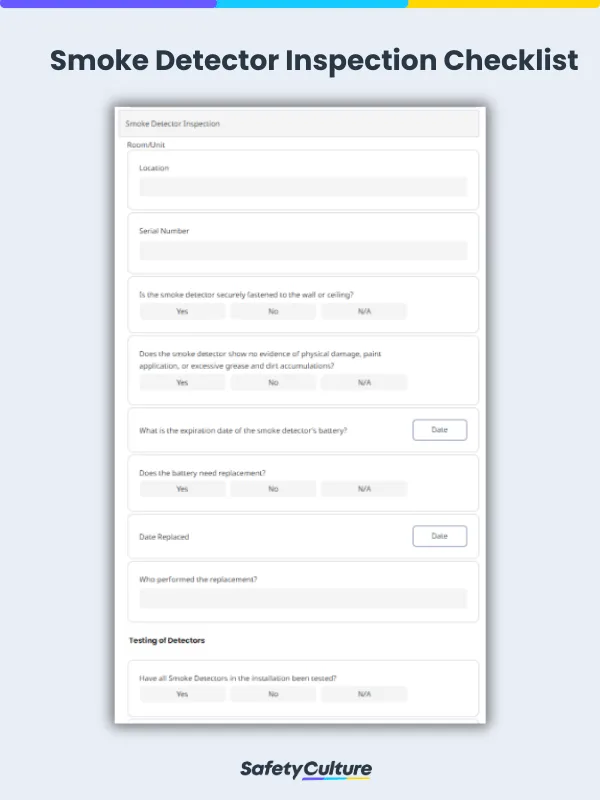
Use this smoke detector inspection log to record every inspection by assigned personnel. This can be used to log information from all smoke detectors, noting which ones passed or failed. Mitti (by SafetyCulture) helps inspectors track defective units for replacement, assign actions, and schedule the next tests to be conducted.
Powered by
Smoke detector tests are typically required every (6) six months. This smoke detector test template can help inspectors document the information gathered through these scheduled tests and record all actions taken to address findings (e.g. need for battery replacement).
Powered by
This digital smoke alarm maintenance checklist can be used by property owners/facility manager to document regular inspection checks of smoke alarms in their areas of responsibility. Through the Mitti (by SafetyCulture) app, users can take photos of noted defects or add notes to explain observations in depth. This digital checklist also allows users to assign actions to maintenance personnel for immediate resolution of smoke alarm maintenance findings.