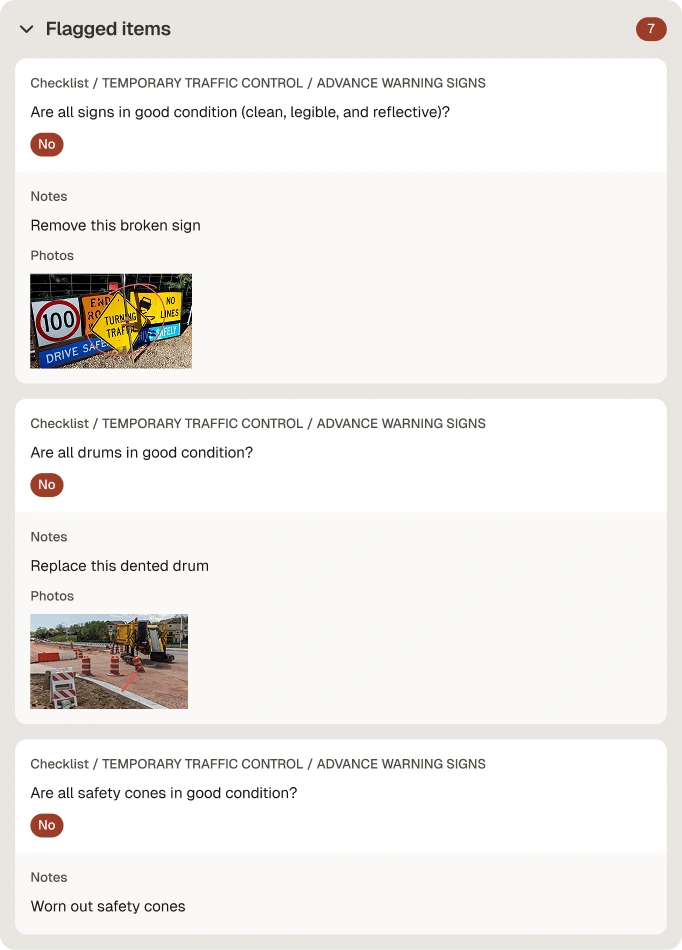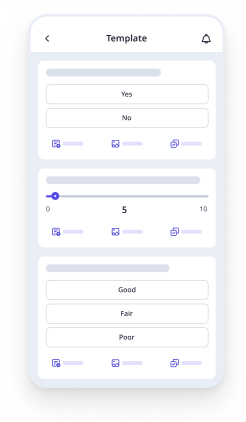
What is a traffic management plan template?
A traffic management plan template is used to plan safe traffic flow and work zones during roadside construction. It helps keep workers, contractors and road users safe from vehicles and equipment moving in and around a worksite.
Traffic management plan templates also help assess compliance with safety precautions, covering traffic controls, work zone security and overall worker protection.
What should a traffic management plan template include?
To ensure safety, efficiency and proper implementation in each traffic control, a basic traffic management plan template should include a comprehensive review of the following items:
General information (e.g., project description, speed limit, traffic conditions)
Project representatives
Advance warning signs
Channelizing devices
Pavement markings
Flagging
Roadside safety
Internal traffic control
Other project-specific items
What is the purpose of traffic management plan (TMP)?
A traffic management plan (TMP) outlines how road activities will be carried out so both workers and road users stay safe from potential hazards. A TMP should be approved by a local transport officer before any road work begins, in line with guidance from bodies like PIARC.
A traffic management plan also determines what safety equipment you'll need to protect everyone affected, such as safety cones, fences, barricades, traffic lights and closed road signs. This lets your team create a clear, organized zone around the work being done. Ultimately, a traffic management plan keeps your road construction project safe without disrupting normal traffic flow.
Elements of a traffic management plan
A traffic management plan covers more than worker safety during a road project. It also accounts for cyclists, pedestrians and other road users, and includes project specifics like location, time shifts, workers involved, work processes, contact details and the traffic management design plan itself. Here are the four key elements:
Design plan
Shows how traffic will move during the operation, separating vehicles from work zone equipment and the protected zone for road users
Identifies potential hazards and recommends suitable traffic flow
Accounts for vehicle types passing through, including width and turning radius between the work zone and the main road
Considers parking, nearby establishments and other high-traffic areas
Implementation
Covers the full timeline, from when work begins to when workers leave
Confirms workers handling high-risk tasks hold the right licenses, registrations and permits
Requires compliance documentation covering site, legislative, organizational, health and safety and emergency requirements
Includes incident reporting and recordkeeping
Maintenance
Moves through three design phases as the project evolves
Phase 1: rough outlines, including plan notes on construction sequence and traffic management control
Phase 2: major components like advance signing layouts, detour areas, geometry, temporary markings and barrier wall needs
Phase 3: completion stage, including pay items
Alteration or Removal of temporary traffic management (TTM)
Covers how temporary traffic arrangements are altered or removed once the job wraps up
Includes removing regulatory signs, equipment, speed restriction signs, barrier systems and delineation devices
Requires all TTM to be removed in reverse installation order
Should be planned and performed as carefully as the original setup, even though removal is often quicker
Traffic Management Plan in Other Countries
Traffic management plans vary by region, since regulations, standards and best practices differ. Check local requirements before starting a project. For example:
UK - construction traffic management plans follow the Traffic Signs Manual, Chapter 8 (TSM Chapter 8), which sets the code of practice for road work safety.
US - traffic management plans are based on the Manual on Uniform Traffic Control Devices (MUTCD). Temporary traffic control plans offer brief guidance on proper code of practice, though requirements can vary by state.
How to create a traffic management plan
Here's how to build a traffic management plan:
Gather site details - record the roadway type, traffic conditions, weather or light conditions and who's conducting the assessment.
Identify hazards and design the layout - map out traffic flow, work zone boundaries and the safety equipment you'll need, based on vehicle types and site conditions.
Secure approvals and documentation - confirm your licenses, permits and compliance documents are in place before work begins.
Set up the work zone - install signs, barriers, cones and other safety equipment according to your design plan.
Monitor and adjust - review the plan regularly during the project and update it as conditions change.
Remove temporary traffic management - take down all TTM equipment in reverse installation order once work is complete.
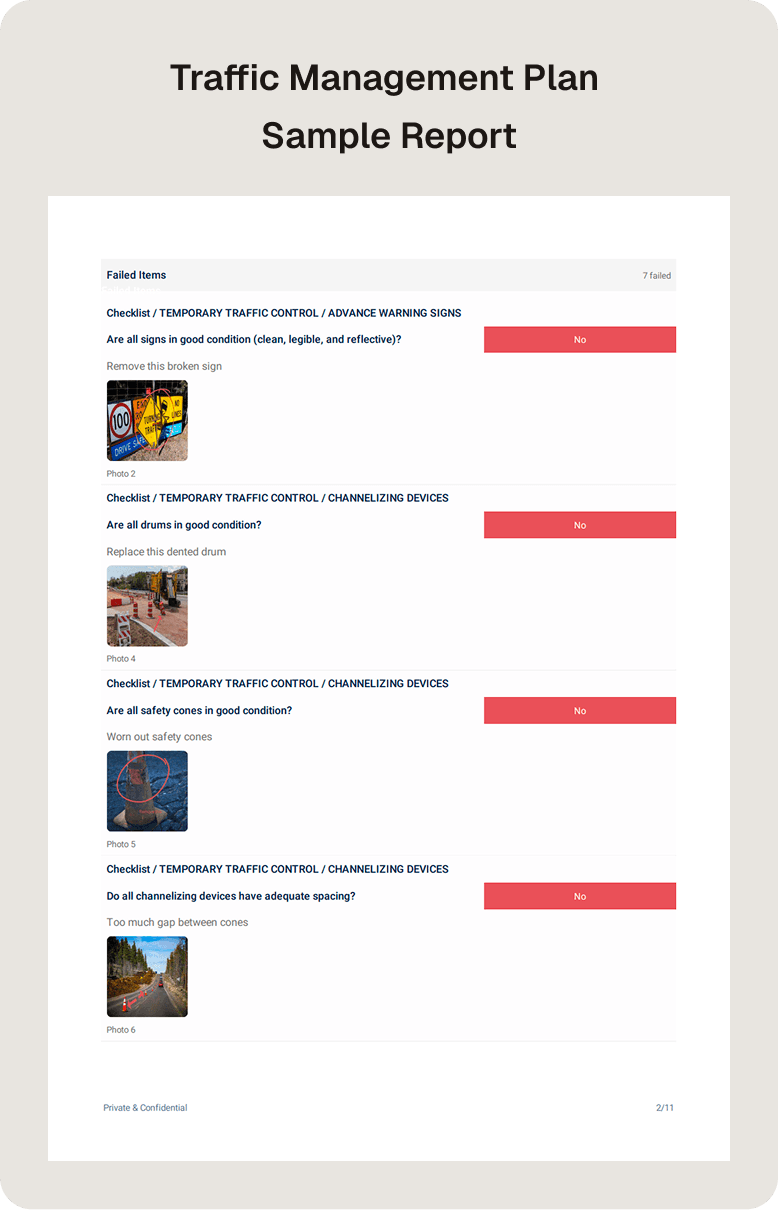
Here is what a sample report of the traffic management plan looks like:

Still looking for a checklist?
Search, filter, and customize 60,000+ templates across industries and use cases.