What is a warehouse safety checklist?
A warehouse safety checklist guides workers through the safety rules and precautions needed to work safely in the warehouse. Safety officers typically use it to confirm workers are taking the right steps to protect people and assets inside the facility.
Importance
A ready-to-use warehouse safety checklist helps establish a proper safety protocol, run regular safety training, and follow both long-term and short-term housekeeping procedures. This matters even more as warehouses handle more hazardous shipments, more storage, and heavier machinery.
Warehouse safety teps
A lot of factors are considered when it comes to warehouse safety and keeping track of them all can be a little bit challenging. To help with that, below is a list of steps to follow or best practices to implement in order to keep warehouses safe:
Promote general safety - emphasize safety in every part of the business. Provide training, boost hazard awareness, and keep communication open with employees, vendors, and anyone else on site.
Use safety equipment - use tools that help prevent injuries, like forklifts, guard rails, and anti-slip tape. Follow shelving and vehicle safety protocols, and keep training and safety checks ongoing.
Remove potential hazards - enforce good housekeeping and involve employees in the process. Keep floors clear of debris, liquids, loose cords, cracks, and pits to prevent injury and equipment damage.
Mark hazardous areas - clearly label hazardous zones using safety signs and symbols. Make sure equipment, harmful zones, and emergency exits are properly marked.
Wear protective clothing - use hard hats, gloves, and eyewear in operational areas. Avoid loose-fitting clothes that can catch in equipment or machinery.
Conduct fire safety drills - run regular drills so all occupants know the evacuation plan. Use drills to confirm fire alarms, smoke detectors, and emergency lights are working.
Perform regular inspections - run both scheduled and random inspections. This helps confirm safety protocols are followed, catch non-conformance early, and find ways to improve.
What's the difference between a safety audit and a safety inspection?
A safety inspection is a routine, often frequent check of specific conditions or equipment, like verifying that fire extinguishers work or aisles stay clear. A safety audit is a broader, more formal review of an entire safety program, comparing it against standards like OSHA regulations to find systemic gaps rather than one-off issues. Most warehouses need both: regular inspections to catch day-to-day hazards, and periodic audits to confirm the overall program still holds up.
How are warehouse inspections done?
Warehouse inspections matter because they can be the difference between a safe operations day and a serious accident. Skipping them can cost a company thousands of dollars, and in serious cases, put jobs or the business itself at risk.
Here are four key steps for a comprehensive warehouse inspection:
Examine the warehouse and identify opportunities for improvement
A thorough walkthrough helps catch and record potential risks before they cause accidents, injuries, or illness. A warehouse audit checklist makes sure no area gets missed, since it works from a full list of everything that needs checking. Complete, accurate inspection data keeps the working structure safe for staff.
Review the warehouse safety program to spot strengths and gaps
Compare the safety program against best practices from OSHA and international regulatory bodies. Assess conditions to find what's working well, and identify where compliance needs improvement against OSHA safety standards or international practices. Note findings in the inspection report, and use them as a starting point for discussion with management.
Develop a strategy to address gaps
Fixing what's found is the key to a successful warehouse safety audit. Active effort from the management team helps turn findings into real change. An action plan should list every area needing attention, so nothing gets missed and future audits go more smoothly.
Go beyond the minimum
Meeting basic requirements protects workers from injury, but going further builds a genuinely positive safety culture in a warehouse over time.
What to Include in a warehouse safety checklist
A warehouse safety checklist should confirm the following:
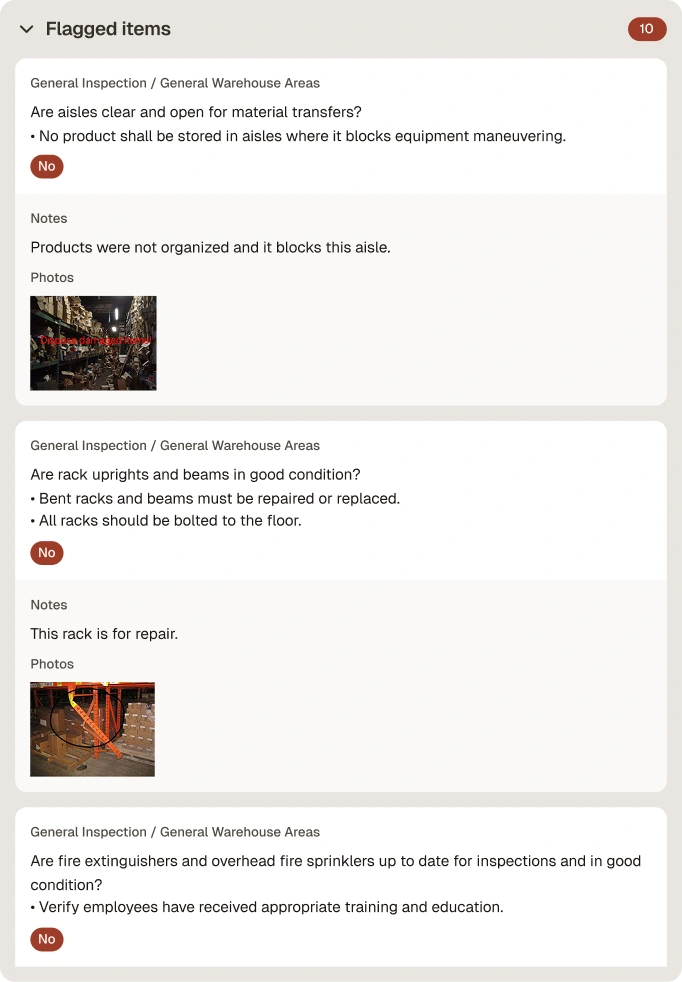
Aisles and open areas stay clear and open
Racks are in good condition
Fire extinguishers are inspected regularly and in good condition
Overhead lighting fixtures work and are in good condition
Loose or unboxed materials are properly stacked
Derail or bumper blocks are in place on spur railroad tracks
Employees wear PPE when handling chemicals
Covers or guardrails protect employees from fall hazards
Elevators and hoists are used correctly for lifting materials
Hazardous materials containers are labeled properly
Dock doors work properly and stay closed when not in use
Ventilation is adequate
Equipment is in good working condition
Pest control is effective
Training and evaluation are in place for employees
Here’s what a sample warehouse safety report looks like:


Still looking for a checklist?
Search, filter, and customize 60,000+ templates across industries and use cases.