Mitti by SafetyCulture
Pricing
Log inSign up for free
  1. Home
  2. Checklist guides
  3. Safety
  1. Home
  2. Checklist guides
  3. Safety
Mitti by SafetyCulture

The way the world works

Follow us

App Store
Google Play

Product

  • Pricing
  • Book a demo
  • Product updates
  • Mitti (by SafetyCulture)

Support

  • Help center
  • Contact us
  • API developer documentation
  • Digitize your checklist

Resources

  • Content library
  • App & software guides
  • Checklist guides
  • Topic guides
  • eBooks
  • Blog

Company

  • About
  • Careers
  • News room
  • Meet the leadership team
  • Events & webinars
Copyright © 2026 Mitti
StatusLegalPrivacyTerms & ConditionsSecurity

SafetyCulture has a new name. Say hello to Mitti. Learn More.

Use template
  • What is working at heights?
  • What is a working at height risk assessment?
  • Top 5 hazards to check during working at heights risk assessments
  • Planning for working at heights
  • Working at heights risk assessment procedure
  • Sample working at heights risk assessment report
  • FAQs about working at heights risk assessment

In this article

  • What is working at heights?
  • What is a working at height risk assessment?
  • Top 5 hazards to check during working at heights risk assessments
  • Planning for working at heights
  • Working at heights risk assessment procedure
  • Sample working at heights risk assessment report
  • FAQs about working at heights risk assessment

Eliminate paperwork with digital checklists

Skip the setup and get to work in seconds.

Use template

Article by

Jona Tarlengco

|

5 min read

|

13 Dec 2024

What is working at heights?

Working at heights is defined as the performance of work at an elevated height of two meters or higher where workers are exposed to the injury of falling. This type of work is common in the construction industry. Working at heights is one of the biggest causes of preventable work injuries and fatalities around the world.

What is a working at height risk assessment?

A working at height risk assessment evaluates hazards and risks associated with working above ground/floor level. It is both a moral and legal obligation of employers to have a risk assessment done prior to working at heights in order to formulate and implement preventive measures against potential injuries and fatalities associated with working at heights.

Same as a regular risk assessment, a risk assessing while working at heights involves the following steps:

  1. Identify hazards

  2. Evaluate the risks and determine who may be harmed

  3. Decide on protective, precautions, and control measures

  4. Document findings and implement them

  5. Review and update if necessary

Top 5 hazards to check during working at heights risk assessments

Working at heights is dangerous in more ways than one. Several situations, elements, and factors contribute not only to the overall risk level, but also to the nature of the hazards safety officers and construction workers may face on any given day. Below are the top hazards encountered when working at heights:

1. Slips, trips, and falls

Slips, trips, and falls are common accidents that occur when a person loses balance due to sudden changes in surface conditions, obstacles, or uneven flooring. Neglected tools and equipment are one of the common causes of these accidents. Workers must also be clear of any influence of drugs or alcohol, and be fit to work to ensure proper motor function.

2. Falling objects

Falling objects are another common hazard when working at heights that can injure workers or damage equipment. To prevent this, it's important to designate specific areas for tools and materials on elevated platforms. Safety officers should ensure that workers, especially those below, wear hard hats at all times.

3. Faulty work platforms and scaffolds

Elevated working platforms such as scaffolds and towers can be dangerous if they are poorly designed or maintained. Safety officers must ensure that elevated work platforms follow OSHA standards and are regularly inspected to catch and fix any structural problems promptly.

4. Fragile roofing

Fragile roofing refers to roofs not designed to support the weight of workers. To safely use them as work platforms, a proper assessment is necessary to determine the right safety measures. Construction personnel should use roof ladders or crawling boards to evenly distribute weight, allowing the roof to handle the load safely.

5. Inclement weather

Inclement weather such as strong winds, rain, snow, and fog can damage structures, make surfaces slippery, and reduce visibility. During bad weather, it's safest to stop any work. If work must continue, safety officers should ensure workers are properly trained and equipped with the right PPE to minimize risks and prevent accidents.

Planning for working at heights

Unless necessary, it is advisable to avoid working at heights and instead encourage workers to use extended or long-handled tools for hard-to-reach locations.

However, should it be necessary to work at height, determine first if falls and accidents are preventable. If so, proper safety equipment—PPE, scaffolding, and harnesses—should be used and maintained. If falls and accidents are at risk of occurring or not preventable, then additional safety harnesses and fall protection landing gear should be installed.

Below is a flow-chart that summarizes the decision-making process when planning on working at heights:

working safely at heights flowchart

Working at heights risk assessment procedure

Before working at heights, a thorough risk assessment is important to ensure the safety of your workers. Below is an example of how to conduct a working at heights risk assessment :

  1. Inspect Platforms and PPE: Thoroughly check all elevated platforms, such as scaffolds and towers, along with personal fall arrest equipment for defects or damage. Establish a regular inspection schedule to ensure ongoing safety.

  2. Verify Load Capacity: Confirm that platforms and equipment can safely support the intended load. For example, scaffolding should be able to bear at least four times the maximum load it will encounter.

  3. Assess Worker Fitness: Ensure that workers are properly trained for working at heights, physically fit, and free from impairments. They should not be under the influence of alcohol or drugs.

  4. Secure Tools and Equipment: Implement procedures to secure tools and equipment to prevent them from falling. Use tool lanyards, holsters, and belts to minimize the risk of falling objects.

  5. Report Hazards Immediately: Promptly report any identified risks or hazards. Cease work until a competent person addresses and resolves the issues to ensure a safe working environment.

Sample working at heights risk assessment report

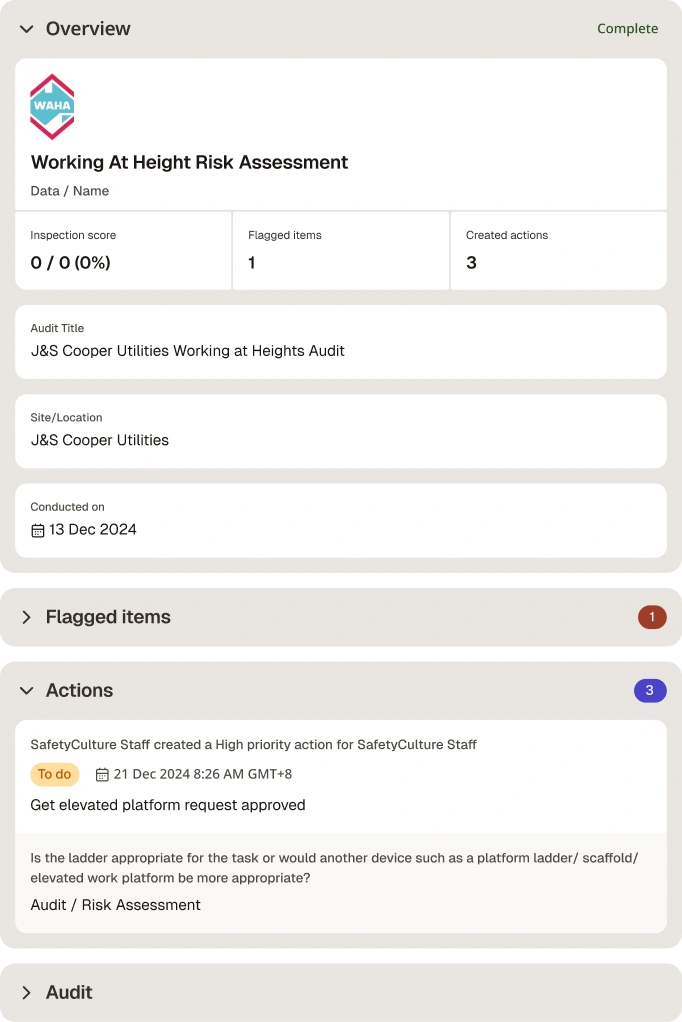
After the inspection, users can then generate a professional report to share with stakeholders and have an action plan already in the pipeline :

Working at Heights Risk Assessment Sample Report | SafetyCulture

Working at Heights Risk Assessment Sample Report | Mitti (by SafetyCulture)

Content library templates

Still looking for a checklist?

Search, filter, and customize 60,000+ templates across industries and use cases.

Browse Library

FAQs about working at heights risk assessment

JT

Article by

Jona Tarlengco

Mitti (by SafetyCulture) Content Specialist

View author profile

Powered by

Working at heights risk assessment

Proactively identify hazards and help reduce risks in one of the leading causes of work-related injuries and fatalities

Rated 4.6/5 stars on Capterra | 3k+ app store reviews
Use templatePreview template
Working at Heights Risk Assessment Template
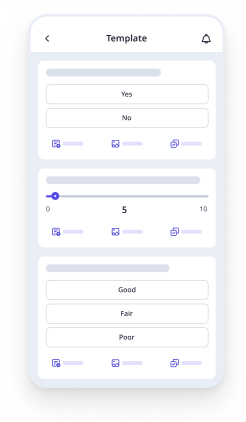
Mobile Preview
See the template in action (opens in new tab)

Use this Working At Height Risk Assessment checklist template created in partnership with Working at Heights Association Australia (WAHA) to identify any working at height hazards and risk assessment for working at heights. This can help you do the following more efficiently:

  • Identify hazards associated with the work to be done.

  • List down alternative tasks that can be done to avoid or mitigate identified risks and hazards.

  • Inspect fall protection and prevention equipment in place before they are carried out.

  • Ensure stairs, ladders, mechanical lifts, walkways, and the paths leading to them are free from obstructions.

  • Provide and record evidence of possible risks and other safety concerns.

After filling this up, you can then export it in Word, PDF, Excel, and Weblink formats for easy sharing within your organization or to other legal entities that may request so.

Working at Heights Risk Assessment Template
Mobile Preview
See the template in action (opens in new tab)

Why Mitti digital checklists?

  • Free to use for up to 10 users

  • Eliminate paperwork with digital checklists

  • Generate reports from completed checklists

Related resources you might like

Templates

Powered by

Fall protection inspection - industry vetted

This checklist was developed by Mitti (by SafetyCulture)’s Industry Expert Partners and can be used to recognize and control hazards on site. It covers general site information, fall protection programs and systems, anchorage points, guardrails, ladders, access points, work platforms, inspection protocols, maintenance procedures, and safe usage guidelines.

View template in library

Powered by

Working at height - scaffolding safety inspection

Use this template to ensure a stable foundation of a scaffold before working on it. Assess the risk of using a scaffold by checking the structure of the scaffold, its base, height, and dimensions. Capture photos of any defects and rate the overall condition of the scaffold with this inspection checklist.

View template in library

Powered by

Working at height safety PPE checklist

Use this working at height safety PPE checklist to ensure that all equipment are in good condition. This checklist allows you to describe the hazard, select suitable PPE, then check the quality of PPE by taking photo for further evidence of observation.

View template in library

Articles

Project Risk Register Software

Compare the best project risk register software for 2026. See features, pricing and integrations to manage project risks with confidence.

Learn more

Risk prioritization: how to rank and act on risks that matter most

Learn how to score, rank and act on risks using proven prioritization methods and a step-by-step matrix you can apply today.

Learn more

ISO 14001 Checklist

Use this free ISO 14001 checklist to perform a streamlined internal audit for Environmental Management System (EMS).

Learn more