Mitti by SafetyCulture
Pricing
Log inSign up for free
  1. Home
  2. Checklist guides
  3. Compliance
  1. Home
  2. Checklist guides
  3. Compliance
Mitti by SafetyCulture

The way the world works

Follow us

App Store
Google Play

Product

  • Pricing
  • Book a demo
  • Product updates
  • Mitti (by SafetyCulture)

Support

  • Help center
  • Contact us
  • API developer documentation
  • Digitize your checklist

Resources

  • Content library
  • App & software guides
  • Checklist guides
  • Topic guides
  • eBooks
  • Blog

Company

  • About
  • Careers
  • News room
  • Meet the leadership team
  • Events & webinars
Copyright © 2026 Mitti
StatusLegalPrivacyTerms & ConditionsSecurity

SafetyCulture has a new name. Say hello to Mitti. Learn More.

Powered by

Security Audit Checklist

Use this security audit checklist to assess security controls and fix gaps, built for safety and ops teams.

Rated 4.6/5 stars on Capterra | 3k+ app store reviews
Use templatePreview template
Security Audit Checklist
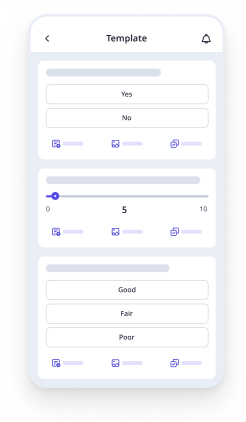
Mobile Preview
See the template in action (opens in new tab)

Download this free security audit checklist to verify the effectiveness of your organization’s security measures and controls. Through an in-depth security audit, be able to identify areas for improvement and address security issues by doing the following:

  1. Fill in basic details about the audit, such as the company name, date, and name of the auditor.

  2. Answer Yes-No-NÁ questions on checking each aspect of the organization’s security system in place, including access controls, network security, data protection, physical security, and incident response.

  3. Add notes and attach relevant media such as photos and files to provide context on audit findings.

  4. Assign corrective actions, summarize findings, and describe remediation plans.

  5. Add a digital signature to verify the completion of the audit before exporting it into a security audit checklist PDF, XLS, or Word file. Store it securely on the cloud for recordkeeping.

Security Audit Checklist
Mobile Preview
See the template in action (opens in new tab)

Why Mitti digital checklists?

  • Free to use for up to 10 users

  • Eliminate paperwork with digital checklists

  • Generate reports from completed checklists

Use template
  • What is a security audit checklist?
  • Types of security audits
  • Why conduct security audits using a checklist
  • Security standards and frameworks to reference
  • What to include in a security audit checklist
  • How to create and use one: eight steps
  • FAQs About Security Audit Checklists

In this article

  • What is a security audit checklist?
  • Types of security audits
  • Why conduct security audits using a checklist
  • Security standards and frameworks to reference
  • What to include in a security audit checklist
  • How to create and use one: eight steps
  • FAQs About Security Audit Checklists

Eliminate paperwork with digital checklists

Skip the setup and get to work in seconds.

Use template

Article by

Patricia Guevara

|

5 min read

|

23 Jul 2026

What is a security audit checklist?

A break-in doesn’t always come through the front door. Sometimes it’s an ex-employee’s badge that still opens the server room, or a guest Wi-Fi network nobody bothered to password-protect. A security audit checklist catches these gaps before someone else does.

It’s a structured tool for reviewing your organization’s security controls, from access management and network security to physical security and data protection, against a set of standards or best practices. Instead of relying on memory or scattered notes, you work through each area in the same order every time and record what’s working, what isn’t, and what needs fixing.

Types of security audits

Most organizations combine a few different approaches to build a complete picture of their security posture, the same way a broader safety audit draws on multiple methods to cover a site.

  • External audits – run by an independent third party with no stake in the outcome. These carry more weight with regulators, insurers, and customers than a self-assessment.

  • Penetration tests – also called ethical hacking. A specialist tries to break into your systems the way a real attacker would, then reports exactly what worked.

  • Vulnerability scans – automated tools that flag known weaknesses across your network, applications, and endpoints so you can prioritize fixes by severity.

  • Internal audits – run by your own team to check whether day-to-day practices match your written policies and compliance obligations.

Most teams use a mix of these rather than picking just one. NRS Healthcare, for example, relied on regular internal audits to keep a consistent record of its equipment and processes. When an NHS commissioning group later ran an external audit of the business, the team walked away with a perfect 100% score, the first time that had happened in the organization’s history.

Why conduct security audits using a checklist

Security audits cover a lot of ground, and it’s easy to lose track of what’s been reviewed and what hasn’t. A checklist keeps the process on track:

  • Comprehensive coverage – nothing gets skipped because you’re relying on memory alone

  • Consistency – every audit follows the same structure, so results are comparable across departments, sites, or time periods

  • Compliance with standards – you can map each item back to a specific requirement, which makes it easier to demonstrate compliance during external reviews

  • Efficiency – you work through set items instead of reinventing the process each time

  • Documentation – findings, evidence, and sign-offs are captured in one place instead of scattered across emails and notebooks

  • Risk prioritization – you can flag which gaps need fixing today versus this quarter instead of treating every finding the same way

The real value shows up over time. Run the same checklist every quarter and you start to see patterns, the same physical security gap keeps reappearing, or scores are trending down at one site. That’s easier to manage with dedicated audit management software that keeps every audit, finding, and fix in one place. Platforms like Mitti (by SafetyCulture) turn a checklist from a one-off compliance exercise into part of how the team improves security, audit after audit.

Security standards and frameworks to reference

Most checklist items map back to an established framework, and using one as your baseline keeps your audit aligned with recognized practice instead of a list you built from scratch.

The NIST Cybersecurity Framework organizes security work around six core functions, including Govern, added in the 2.0 update, and is widely used regardless of company size. ISO/IEC 27001:2022 lays out requirements for an information security management system and is often the reference point if you’re pursuing certification. SOC 2 focuses more narrowly on how service providers handle customer data and is common in software audits. For current threat guidance, CISA’s cyber threat resources are updated as new vulnerabilities and attack patterns emerge.

You don’t need to adopt a framework wholesale to benefit from it. Mapping even a handful of checklist items to the closest matching control gives your audit more credibility with auditors, insurers, and customers.

What to include in a security audit checklist

Every organization’s checklist looks slightly different depending on industry and what you’re protecting, but most cover the same core areas:

  • Audit title page

  • Access controls

  • Network security

  • Data protection

  • Physical security

  • Incident response

  • Employee awareness and training

  • Compliance

  • Electronic and information security

  • General facility impressions

  • Visitor and vehicle access

  • Completion and sign-off

How to create and use one: eight steps

To guide you on how you can prepare and maximize a checklist for your security audits, here are some steps and tips you can consider:

  1. Define the scope: which systems, networks, and locations you’re assessing, and which standards or regulations apply.

  2. Build the checklist around your chosen framework, grouping items by section with space for evidence and notes.

  3. Assign who’s running the audit: an internal team, a third-party auditor, or a mix of both.

  4. Walk through each control against the checklist, gathering evidence through interviews, document reviews, and site inspections.

  5. Rank findings by risk and severity so the highest-priority gaps get addressed first.

  6. Turn each finding into a remediation plan with an owner and a deadline.

  7. Summarize results in an audit report for leadership and relevant stakeholders.

  8. Track remediation progress and re-audit on a set schedule to confirm fixes actually held.

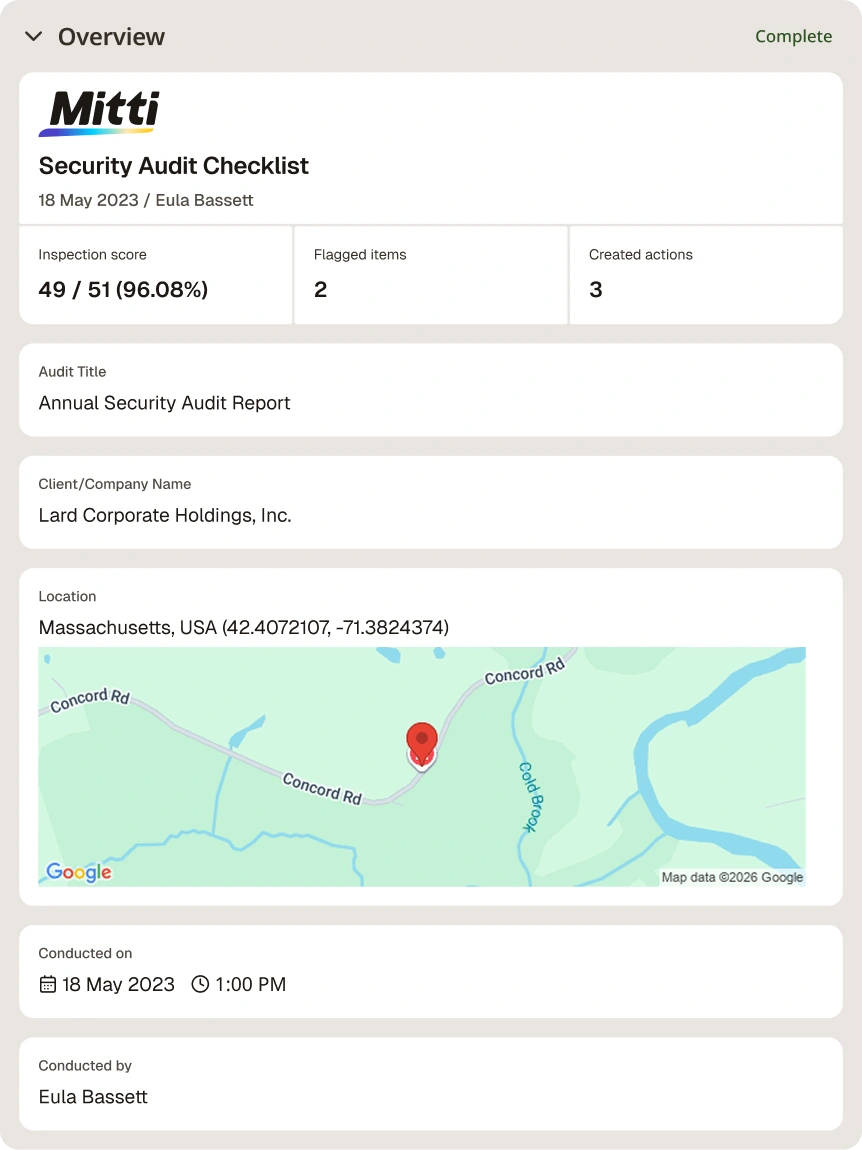
Security Audit Checklist Sample Report

Security Audit Checklist Download PDF Report | Mitti (by SafetyCulture)

Content library templates

Still looking for a checklist?

Search, filter, and customize 60,000+ templates across industries and use cases.

Browse Library

FAQs About Security Audit Checklists

PG

Article by

Patricia Guevara

Mitti (by SafetyCulture) Content Specialist

View author profile

Related resources you might like

Templates

Powered by

Network Security Audit Checklist

Use this free network security audit checklist to assess the security and integrity of organizational networks proactively. IT managers and network security teams can maximize this digitized checklist to help uncover threats to network security protocols.

View template in library

Powered by

Facility Security Audit Checklist

Use this free facility security audit checklist to provide an overview of the physical security posture of the organization’s facilities. Conduct inspections on the facilities’ exterior and interior, alarm systems, and security processes.

View template in library

Powered by

Information Security Risk Assessment Checklist

Use this checklist to determine the current state of information security in your organization. Determine if an item is High, Medium, Low, or No Risk and assign actions for time-sensitive issues found during the assessment on organizational and company practices related to information security.

View template in library

Powered by

Cyber Security Checklist

Use this checklist as a tool for IT professionals to evaluate and document the effectiveness of cybersecurity measures in the organization. Its primary purpose is to fortify the workplace against potential threats that could disrupt operations.

View template in library

Powered by

ISO 27001 Checklist

This ISO 27001 checklist can be used to assess the organization’s readiness for ISO 27001 certification. Help discover process gaps and review your organization’s ISMS based on the ISO 27001:2013 standard by filling this checklist out.

View template in library

Powered by

IT Risk Assessment Template

Use this IT risk assessment template to perform security risk and IT vulnerability assessments across IT systems and equipment.

View template in library

Articles

REACH Compliance Software

Explore 7 of the best REACH compliance software to enhance regulatory adherence and chemical management for businesses.

Learn more

A Comprehensive Guide to Creating a Risk Treatment Plan

Learn how to write a risk treatment plan, align it with ISO 27001 and 31000, and monitor it over time with practical steps and examples.

Learn more

ISO 17025 Checklist

Use this free ISO 17025 checklist template to help your lab meet accreditation requirements and digitize preparations for certification.

Learn more