What is a site waste management plan?
A Site Waste Management Plan (SWMP) is a document that provides information on how construction waste is managed during a construction project. SWMP aims to mitigate the impact of waste on the environment while helping contractors save money by managing construction waste more efficiently through reuse, recycling, and recovery.
Why is a site waste management plan important?
A site waste management plan or a construction waste management plan plays an essential role in effectively and responsibly handling construction site waste. The plan outlines the protocols on how to handle construction wastes efficiently so that site personnel can spend less time thinking of ways to remove waste and focus more on completing the project. By using a comprehensive checklist, site managers can easily identify and streamline waste management process and benefit from the following :
Improve productivity and reduce costs
Stay compliant to regulatory standards for waste disposal
Reuse/recycle materials
Promote safety in the workplace
Streamline project timeline
How to write a construction waste management plan
Drafting an SWMP can take a considerable amount of time and effort but can bring significant gains to your environmental performance. Luckily, this process can be streamlined with the help of a site waste management plan template.
To help you get started, here are the steps for creating SWMP for your project :
1. Outline the contents of the plan.
Start your writing process by laying out the structure of your SWMP. Preparing this ahead of time provides you with a framework to discuss all necessary items without missing anything. A site waste management plan should contain the following:
Planning and preparation
Allocating responsibilities
Identifying waste
Managing waste
Disposing of waste
Organizing materials and waste
Communicating and training
Measuring and monitoring waste
Reviewing the success and learning lessons for the future
Completion
2. Identify the key details and persons in the project.
The next step is to add details to your plan framework. Begin with the basic information about the construction project, such as its name, location, and point person. At this stage, it’s also important to consider and determine the following matters:
Construction management, methods, and materials
Previous waste reduction activities and decisions
Declaration from the client and principal contractor
3. Map out the waste management strategy.
After filling out the basic project details, the next thing to do is to figure out your strategy for handling construction site waste. Planning these details allows for a more efficient, timely, and cost-effective waste management procedure once the project begins.
This process starts by identifying the types of waste produced at each stage of the construction project, along with the quantities, processes, and people involved. After this, establish targets and measures for properly managing, organizing, and disposing of these waste products.
4. Develop the communication and training approach.
Staff competency is integral to the success of site waste management, as these people will carry out the plan during the construction phase. They must understand how waste protocols and procedures will work on the field and what their role will be in the process.
For this reason, it’s important to communicate these details to the site staff, contractors, and subcontractors at all stages. Thus, an SWMP must establish communication channels and training programs for the teams involved.
5. Establish benchmarks for monitoring.
Before setting the SWMP in motion, it’s essential to set milestones and metrics for measuring its success. While the project is underway, there must be monitoring mechanisms to make sure everything goes as planned. Some actions to include in the SWMP template are as follows:
Regularly checking and updating the SWMP
Tracking the progress of SWMP against the agreed targets
Routinely monitoring the agreed waste management procedures
Producing periodic reports on waste quantities, treatment or disposal routes, and costs?
Documenting problems and corrective actions taken
6. Define the review process.
An SWMP should also include how you will review your waste management performance based on the set goals. This process will help you determine if the SWMP has been successfully carried out, what strategies went right, and what didn’t go as expected.
In this section, you can also include any changes to the SWMP, the issues encountered in the field, and their implications for future projects.
7. Sign off the SWMP template.
Lastly, an SWMP isn’t complete without the completion section. Wrap up the SWMP with notes, recommendations, and the signature of the authorized person. This will serve as not only proof of completion but also a statement of accountability from the project leaders.
What is a site waste management plan template?
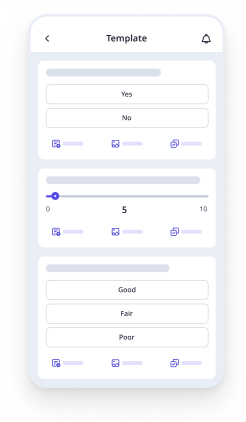
A site waste management plan template is a premade or pre-formatted document that helps users outline the steps they will take to manage waste at a construction or demolition site. The template can be repurposed multiple times to create a plan for any size site and can be customized to meet the specific needs of the project.
Sample plans are available online, and there are many software programs that can help users create the plan such as auditing software, checklist software, and more.
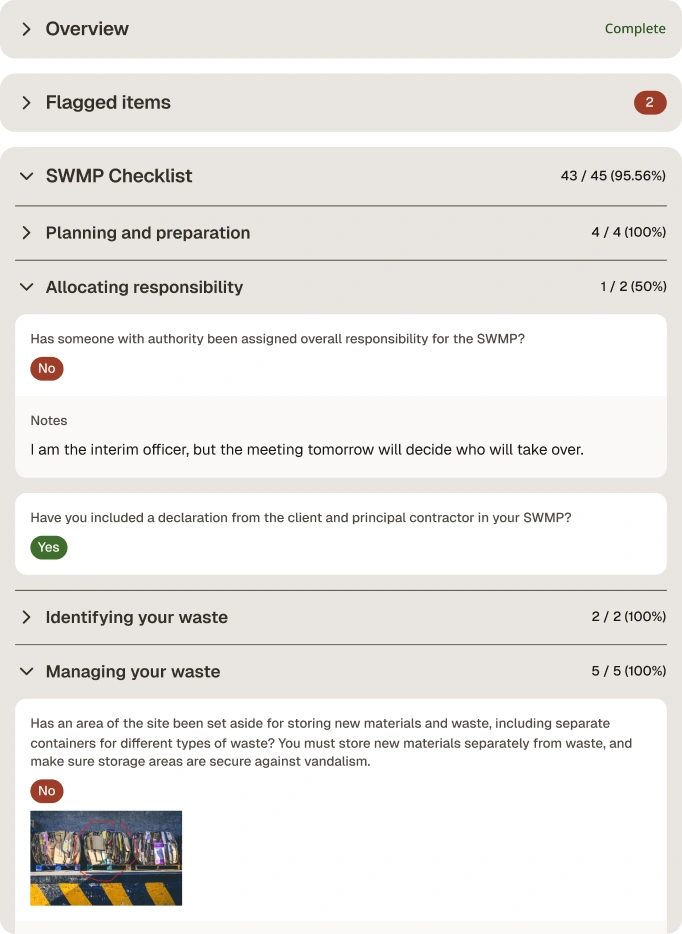
Site waste management plan example
To better understand how things work, here’s an example that illustrates a site waste management plan when completed using a digital platform.

Preview site waste management plan PDF report
Tips on implementing an effective site waste management plan
Try these helpful tips on carrying out a legally-compliant SWMP:
1. Create a comprehensive plan.
Make the creation of the SWMP part of the construction project planning stage. This helps identify sources of wastes early on, and helps you plan efficient management procedures.
2. Oversee the SWMP.
Implementing the SWMP will involve the collaboration of the client, principal contractor, and subcontractors. But in most cases, it is typically the principal contractor who will be responsible for updating it once construction work begins.
3. Manage construction waste.
The materials used at the construction site can help determine what type and quantity of construction waste can be reused, recycled, or needs disposal of. Make sure to document every time the waste is being moved or processed and update the SWMP.
4. Communicate and train.
Inform the subcontractors and all staff at the site about the SWMP and where it can be accessed. Discuss the plan during employee training, induction, and toolbox talks to ensure everyone complies.
5. Monitor and review for continuous improvement.
Review your documentation on how waste is handled so you can find ways to improve waste management. This helps you adapt to changing site conditions when needed.

Still looking for a checklist?
Search, filter, and customize 60,000+ templates across industries and use cases.