What is Solid Waste Management?
Solid waste management is the systematic handling of solid waste materials. It aims to eliminate the potential hazards associated with solid waste, including environmental pollution, pathogenic diseases, and toxic chemical reactions. Proper implementation of solid waste management can:
improve environmental safety;
prevent serious health hazards associated with the respiratory system,
as well as skin asthma, allergies, and more; and
help conserve energy;
What is a Solid Waste Management Checklist?
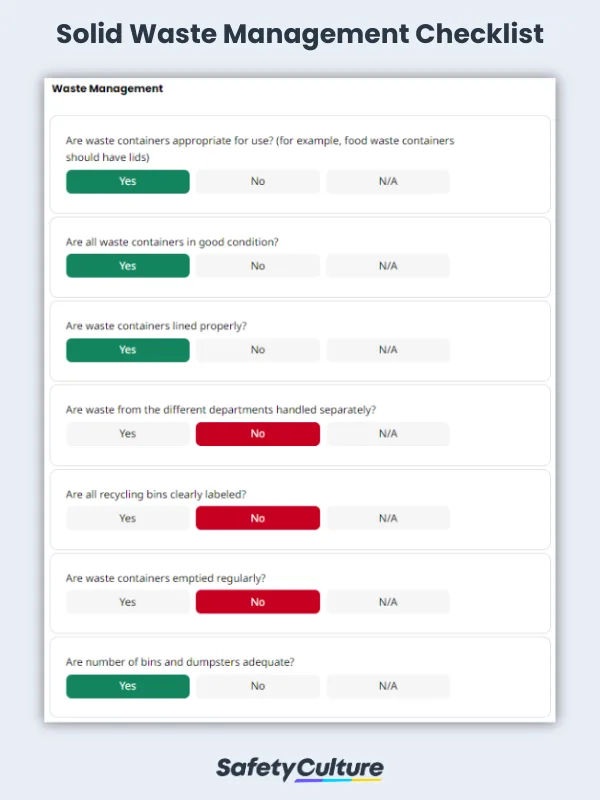
A solid waste management checklist is a tool used by facility teams to ensure adherence to waste management regulatory standards. It helps in evaluating if the processes of waste segregation and disposal are properly implemented and followed by the organization. A solid waste management checklist helps prevent environmental issues and regulatory penalties.
Types of Solid Waste
Solid wastes refer to anything that is abandoned and discarded but is not limited to physically solid materials. They can also include liquid, semi-solid, or contained gaseous material. Depending on the source of solid waste, it can be classified into different types:
Municipal solid wastes
Municipal solid wastes are generated from residential and commercial complexes. It often includes food wastes, plastics, demolition and construction debris (that can be present during post-construction cleaning), metals, and small quantities of hazardous waste such as electric light bulbs, batteries, and automotive parts. Unmonitored and unsegregated Municipal solid waste can cause severe environmental pollution if left unmonitored and unsegregated.
Infectious wastes
Hospitals and healthcare facilities are the most prevalent source of infectious wastes due to the nature of their work. Infectious wastes usually include used sharps, expired pharmaceuticals, and radioactive items. Unmanaged infectious waste disposal can cause negative ramifications like serious health risks and disease transmission.
Hazardous wastes
Hazardous wastes are classified based on their physical or chemical properties, which may contain any of the following characteristics: a) reactivity, b) ignitability, c) toxicity and d) corrosivity. Commonly, hazardous waste includes pesticides, gun powder, gasoline, alcohol, paint, and poisonous acids. Inappropriate disposal can cause an acute or immediate effect on public health and safety.
Industrial wastes
Industrial wastes are toxic materials produced by manufacturing industries. These wastes are generated during the processing of metal, paper, pesticide, plastic, rubber, and more. Neglected residues can cause air pollution and direct exposure to chemicals can be fatal.
Basic Solid Waste Disposal Methods
Controlling and implementing proper disposal protocols for solid wastes can eliminate unsanitary conditions, pollution, and other environmental issues. Businesses can apply any of the following methods to properly dispose of solid wastes:
Recycling Recycling is the most popular method of waste disposal. It uses processing technologies to convert waste into new and useful products. This method helps reduce energy usage and environmental pollution.
Composting Composting is one of the oldest forms of waste disposal. It is a biological process in which micro-organisms convert degradable organic waste into a humus-like substance. It uses an equal mix of nitrogen and carbon-rich waste to produce organic fertilizers.
Incineration The incineration method is suited for crowded cities where a landfill is not available. This method involves the combustion of organic substances found in waste materials, converting them into ash, flue gas, and heat.
Solid waste sanitary landfills Solid waste sanitary landfills are sites where waste is isolated from the environment. For most landfills, a deep trench with a depth of 3-5m is excavated and used as a dumpsite for wastes. It is then compressed with specialized equipment so that microorganisms can act on the organic matter and degrade wastes. It is also covered with layers of clay and topsoil to prevent foul smell, air contamination, and pests.
Mismanaged wastes and improper disposal can contribute additional threats to the environment. In the long-term, these solid wastes can leak and pollute groundwater and other neighboring environmental habitats and give off potentially unsafe gases, making waste management very difficult. To prevent this from occurring, businesses should establish proper waste management practices and conduct regular inspections to catch issues at an early stage.
How to Build a Solid Waste Management Program
A solid waste management system helps ensure solid wastes are properly handled, managed, and disposed of to protect the environment and secure public health. It is used in minimizing the amount of solid waste produced and improves the efficiency of managing solid waste. The following procedure will help in building a good foundation for a solid waste management program.
Conduct a survey Review the existing solid waste management processes and determine lapses and improvement needs. Identify development needs including budget, estimated waste composition, current diversion, and waste generation.
Design a new solid waste management program Using the gathered information in the survey stage, identify and establish realistic goals for solid waste diversion and reduction. Analyze the data, determine the needed resources, assign a point person, and prepare the timeline for the project.
Implement the solid waste management program Implement the new solid waste management programs and make it operational. Provide the needed resources including people, vehicles, containers, and signages.
Maintain the new solid waste management program Monitor the efficiency of the established solid waste management program. Keep track of improvement needs and document the progress of the implemented change.