
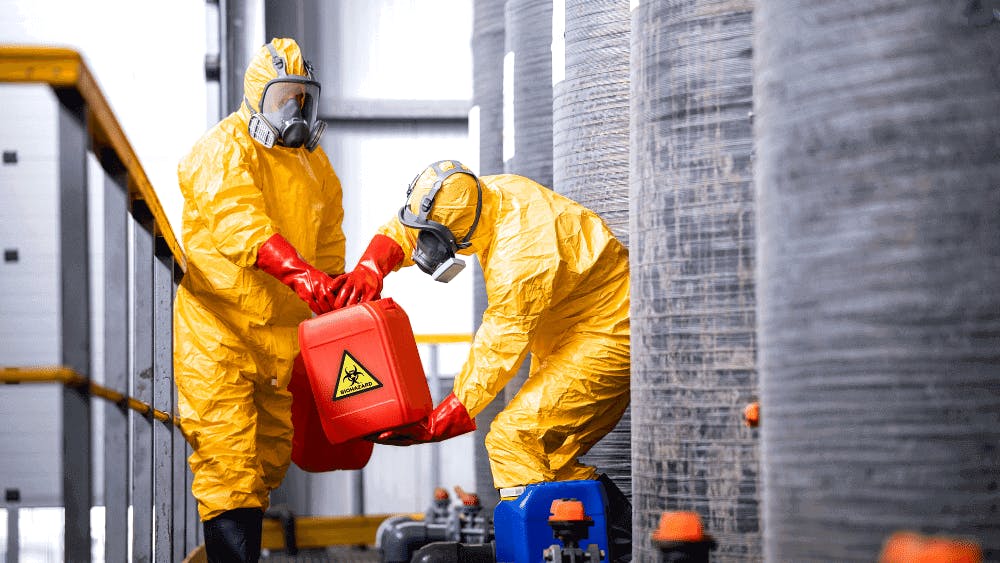







Chemical handling can sound daunting and intimidating. Make safety your team’s second nature by arming them with the knowledge and skills to feel confident and equipped to handle chemicals safely. Here, we’ve done the work for you by curating this top 10 list of chemical handling training courses.
Chemicals are woven into our everyday lives, whether we realize it or not. For teams in industries that deal with them, chemicals are at the heart of what they do and shape the way that they work.
This is where chemical handling becomes essential. It guarantees safe and effective management of chemicals from production to disposal. There are distinct ways of handling chemicals depending on the type, so teams need to understand the properties and safety requirements necessary for the specific chemical that they’re exposed to.
With effective chemical handling, you’re not only keeping your teams and their families safe. You’re also doing your part in taking care of the environment.
What is chemical handling training?
Chemical handling training helps your teams work with tricky chemicals like a pro. It goes beyond learning how to read labels and putting on gloves and goggles. It’s also vital that workers have a deep understanding of the purpose of this safety training.
Like other material handling courses, some fundamental topics in chemical safety training include using personal protective equipment, dealing with emergencies, and understanding the potential risks of exposure.
Keep your crew one step ahead of potential risks by letting them know why safety protocols matter and how these apply to their workplace routines. This is important to keep in mind when you're picking out which training to give your teams.
What are the main types of chemical hazards?
Many different types of chemical hazards can be found in workplaces. Here’s a list of the main classifications that you should be aware of and watch out for:
Carcinogens - These cancer-causing chemicals lurk in a lot of things we use every day like cleaning products. Cadmium and vinyl chloride are some known carcinogens.
Flammable - This type of chemicals include acetone and butane, and can easily ignite upon exposure to oxygen.
Irritants - These chemicals irritate or inflame the skin, eyes, or other body parts upon contact or inhalation.
Corrosion - This refers to chemicals that may cause burns or tissue damage upon contact.
Hazardous to the environment - From the name itself, these chemicals can damage the environment when improperly handled or disposed of.
Toxic - Toxic chemicals can cause DNA mutations or severe health damage even with very little exposure.
Gear up for safety with top-notch chemical handling training
Lack of chemical handling training can cause lasting damage to your team’s health and your business’s reputation. Uphold your commitment to creating a safe workplace and a clean environment by choosing a chemical safety training that’s interactive, engaging, and informative!
Start making a difference by empowering your teams to handle chemicals safely and smartly. Train with Mitti (by SafetyCulture) today!