
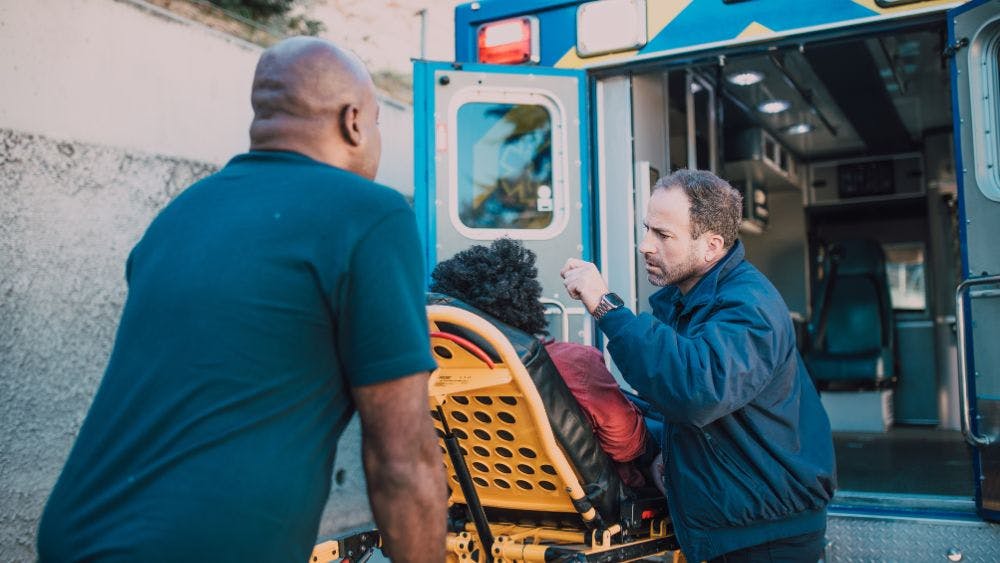





Train your team to think fast during a crisis. A few minutes can extend the life of a patient in critical condition. With proper guidance and support, your workers can reduce the number of casualties onsite. Discover our list of the 10 best training for first responders to empower them to save lives and maintain safe workplace operations.
Often overlooked and undervalued, first responders are those who have received specialized training to offer immediate assistance in the event of an emergency. From police officers to firefighters and EMS members, first responders help bring down casualties each year, extending the victims’ lifeline until professional help arrives.
Jumpstart this by investing in first aid training and basic life support for your team. Training for first responders teaches employees to prioritize safety by looking out for potential hazards. As most accidents happen unexpectedly, giving your team the knowledge and skills to perform effective first aid reduces workplace incidents and protects your business in the long run.
What is first responder training?
First responder training is a special form of education that teaches learners to administer life-saving interventions, stabilize patients, and work alongside medical professionals as necessary. They’re the first people to arrive and assess potential injuries and trauma. Proper training allows your team to stay calm and act quickly in a life-threatening environment.
Commonly, first responders receive training for the following:
Applying bandages
Performing CPR
Handling exterior wounds
Controlling severe bleeding
Stabilizing patients
Assisting in transporting critical patients to the nearest hospital
Investing in first responder training courses prevents further injuries, promotes safety awareness, boosts employee morale, and satisfies regulations. The next section discusses the steps to becoming a first responder.
How to become a first responder
Now that you’ve developed a working knowledge of the topics covered in training, this section lists in detail the necessary steps to becoming a first responder:
1. Earn a high school diploma
The first step to becoming a first responder is to complete your high school education. Subjects in math, science, and English will equip your team with the basic knowledge they need in the future.
Another option is passing the General Education (GED) program. While it is equivalent to a high school diploma, the test only takes about 7 hours. You must pass all four subjects covering mathematical reasoning and reasoning through language arts, social studies, and science. The GED program also offers insight into first responder procedures like first aid.
2. Enroll in a training program
Up next is to enroll in training. Most community colleges, vocational schools, and technical academies offer three levels of first responder training: EMT basic, EMT paramedic, and EMT intermediate. They tackle a range of topics on trauma, cardiac arrest, how to use defibrillators, basic pharmacology, and advanced patient assessment.
3. Secure certification and a license
Every state in the U.S. requires a license. While the specifics of certification change from state to state, most require one from the National Registry of Emergency Medical Technicians (NREMT). For eligibility, you must be at least 18 years old and have undergone an approved EMT basic, intermediate, or paramedic training program.
4. Obtain a job
Now that you’ve obtained the essential training and certification, the next step is to get a job. This allows you to apply and improve your skills. There are many openings in local hospitals, government agencies, and some outpatient facilities.
5. Grow experience
The last step is to gain experience by enrolling in additional training. Depending on the level of initial training you’ve received, you can always go one step further to advance your career. Some paths available are nurses, physicians, instructors, paramedics, or dispatchers.
Reduce workplace accidents with first responder training
A few minutes of training each day could save countless lives in the future. Promote proactiveness among your team by investing in first responder training.
This is guaranteed to reduce the number of casualties in the workplace, as each worker is equipped with the skills to offer emergency care and rescue to injured coworkers.
Foster proactive teams with first responder training. Sign up for Mitti (by SafetyCulture) today.