What is a Facility Maintenance Checklist?
A facility maintenance checklist is a tool you use to inspect your building's safety, functionality, and efficiency in one structured pass. It sets out what to check during a maintenance round and gives you a consistent process to follow each time, whether you're covering electrical systems, HVAC, or fire safety. With it, you and your team can catch hazards early instead of finding them after something breaks.
Importance
Facility maintenance covers a wide range of tasks: inspecting, repairing, and replacing equipment, plus ongoing cleaning and upkeep. Skip it, and you risk downtime, lost productivity, or accidents that turn into costly repairs and legal issues.
A facility maintenance checklist keeps this manageable. It makes sure every required task gets done and every part of the facility gets checked on a regular schedule, so nothing slips through simply because someone forgot — including the tasks that are easiest to deprioritize when a facility is short-staffed, like preventive maintenance rounds and electrical maintenance checks.
Here's what a checklist gives you:
Improved safety - recording risks per facility makes it easier to build a plan to address them
Improved efficiency - regular equipment checks reduce downtime, extend equipment life, and cut replacement costs
Compliance - the OSHA general duty clause and standards from bodies like ASHRAE require most facilities to maintain specific safety and building system conditions, and a checklist helps you track that ongoing compliance
Peace of mind - regular inspections mean you know your facility is safe and running at full capacity, not just hoping it is
What to include in a facility maintenance checklist
Facility maintenance checklists take different forms. Some cover your whole facility at a glance; others sort tasks by function, room, building, or maintenance schedule.
Here are the key elements to include:
Previous inspections: the date and findings from your last inspection, used as a reference point for anything new
Electrical systems: wiring, outlets, switches, and lighting, checked regularly for safe and correct operation
HVAC systems: filters, ducts, and components need regular cleaning and maintenance to keep temperature and air quality where they should be
Plumbing systems: pipes, drains, toilets, and sinks, checked to prevent leaks, clogs, and water damage before they start
Fire safety systems: alarms, sprinklers, and extinguishers, tested to confirm they'll work when you need them
Security systems: alarms and cameras, checked to make sure they're covering what they're supposed to
Outdoor areas: parking lots, sidewalks, and landscaping, checked to prevent accidents and keep the property looking the way it should
Sign-off: every inspector signs off at the end, so anyone following up knows exactly who to ask
How often should you run each check?
Frequency | What to cover |
|---|---|
Daily | Cleanliness, visible hazards, basic security checks, urgent safety issues |
Weekly | Fire safety equipment, HVAC filters, plumbing fixtures |
Monthly | Electrical systems, security system functionality, outdoor area conditions |
Annually | Full system audits, HVAC servicing, compliance reviews against current codes |
Paper checklists work, but a digital one tends to hold up better long-term:
Improved accessibility - pull up your checklist from anywhere, on any device
More secure storage - your data lives in the cloud, not in a folder that can go missing
More well-rounded inspections - connect your checklist to other software, including training programs, for a fuller view of facility operations
How to implement and use this checklist
Run this checklist before and after your facilities get used. A pre-use check catches hazards before anyone's exposed to them. A post-use check flags anything that happened during use, so the next person isn't walking into a problem.
Here's how to put it into practice:
Get your team up to speed - walk your maintenance team through the checklist so everyone understands what each task involves and why timing matters
Assign tasks clearly - give each task to a specific person or team, so nothing falls into a gap between roles
Build a schedule - map out daily, weekly, monthly, and annual tasks using a digital scheduling tool that syncs with your checklist
Keep an eye on progress - set up alerts for overdue tasks or missed deadlines, so nothing sits unnoticed
Track your data - keep records of past checks and look for patterns worth acting on
Review the checklist itself - revisit it periodically and update it as codes, equipment, or your facility's needs change
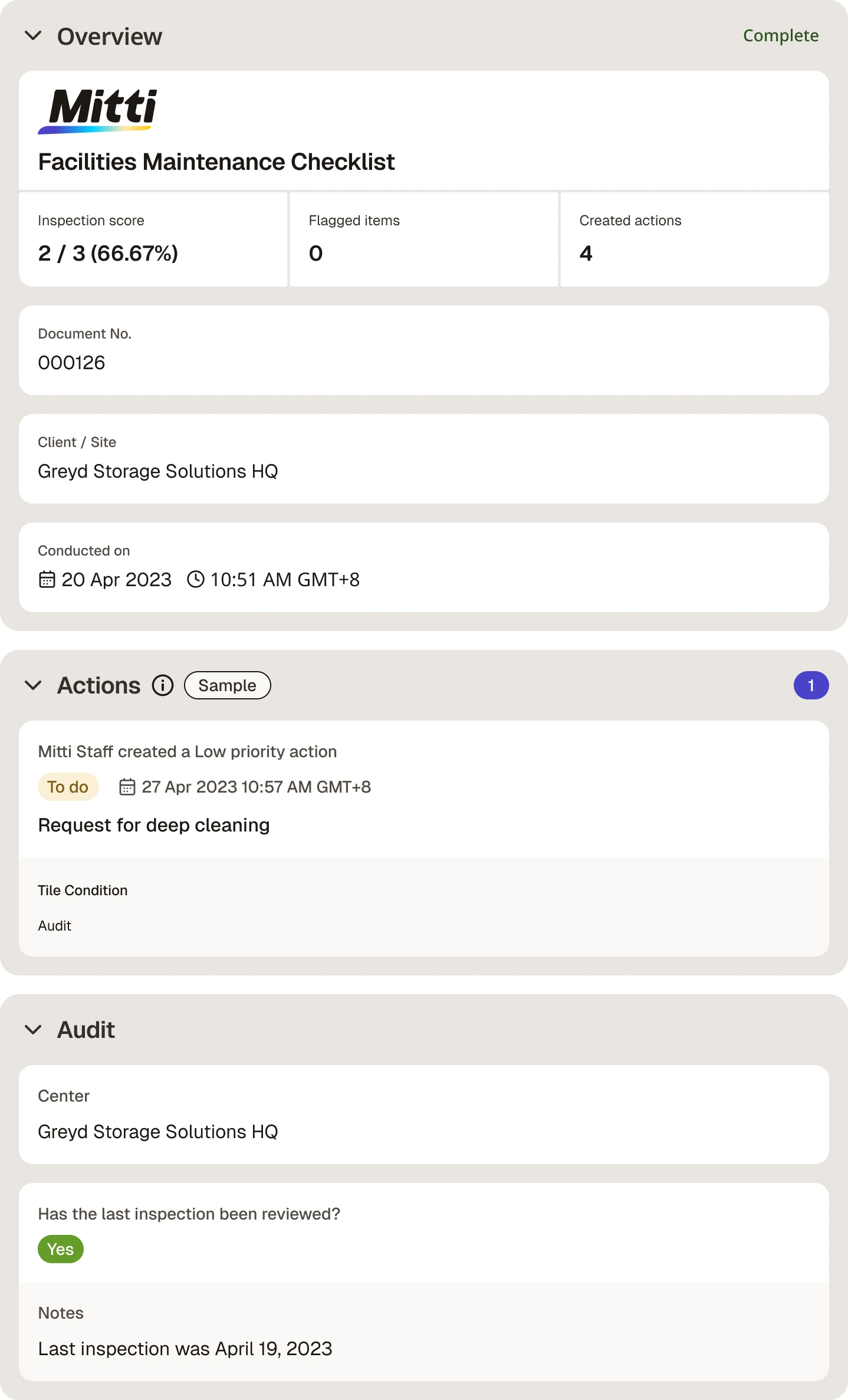
Here is a sample report showing a facility maintenance checklist in use:
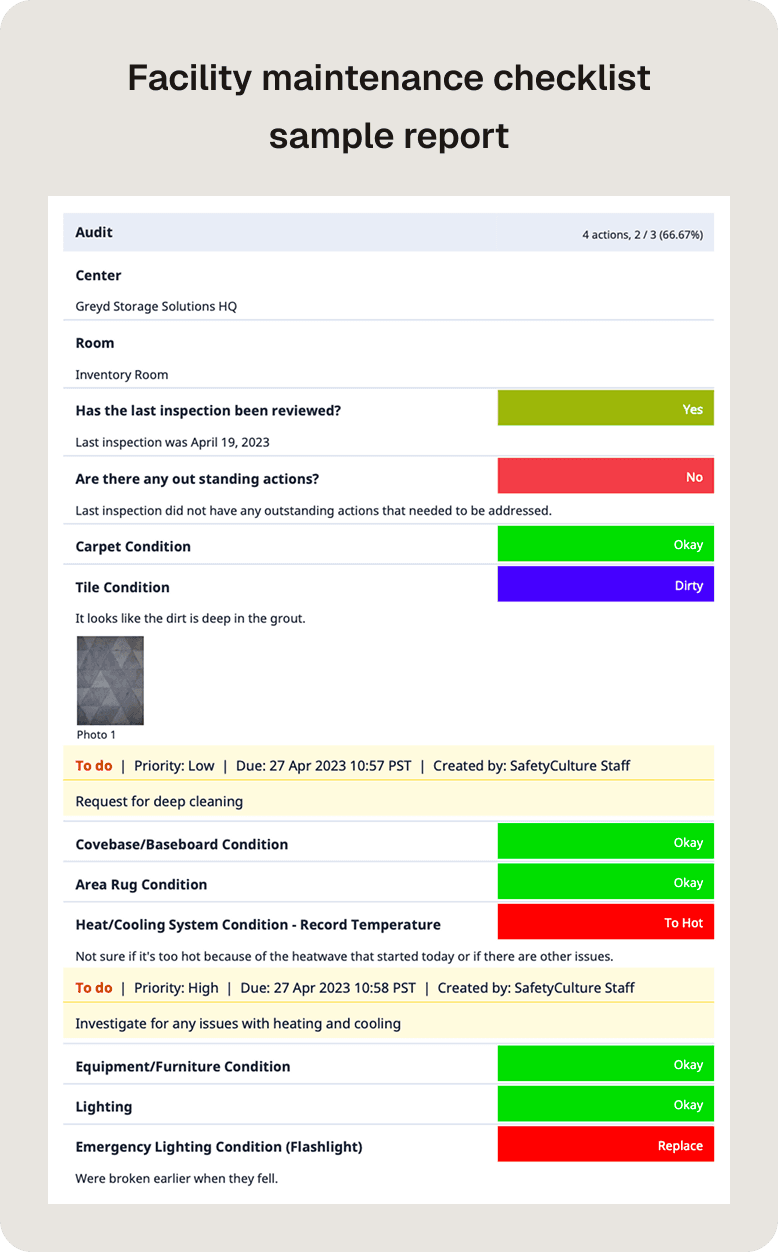
Facility Maintenance Checklist Sample Report | Mitti (by SafetyCulture)

Still looking for a checklist?
Search, filter, and customize 60,000+ templates across industries and use cases.