What is a compliance audit?
A compliance audit is a formal review of how well your organization follows the rules that apply to it, whether those come from government regulators, industry standards, or your own internal policies. An audit team works through each requirement, compares what your teams actually do against what the rule says, and records where the two don’t match.
The point isn’t the paperwork. A compliance audit shows you your problem areas while you still have time to fix them, rather than during a regulator’s visit.
What types of compliance audits are there?
Which audits apply to you depends on your industry, the data you hold, and where you operate. Most organizations deal with some mix of the following:
Health Insurance Portability and Accountability Act (HIPAA)
HIPAA compliance applies to healthcare providers, health insurers, medical equipment providers, and any business that handles or transmits patient data. A HIPAA audit checks how you store, share, and secure that information.
The US Department of Health and Human Services publishes the Privacy, Security, and Breach Notification rules that these audits test against, so build your checklist from the source rather than a template you found online.
International Organization for Standardization (ISO)
ISO compliance means meeting the requirements of an internationally agreed standard. Common ones in compliance audits include ISO 9000, ISO 45001, ISO 37301, and ISO 31000, among others.
ISO 37301 is the standard written specifically for compliance management systems, and it sets out what auditors expect to see in policy, controls, and evidence.
General Data Protection Regulation (GDPR)
GDPR compliance is a business’s adherence to the European Union’s data privacy and security law. It runs as a four-step cycle: planning, gap analysis, remediation of gaps, and assessment of the new processes you put in place.
Those four steps map onto the accountability obligations set out in the GDPR compliance framework. Done properly, the audit improves data security, which in turn builds customer trust.
Beyond these three, most compliance audit checklists draw on one or more of the following:
SOX for financial reporting controls in US public companies
OSHA for workplace health and safety, covering PPE requirements, hazard communication, and recordkeeping
PCI DSS for any business that stores or processes card payments
HR and employment law, covering hiring records, wage and hour rules, and mandatory training
Environmental permits and reporting under the EPA or your local equivalent
Regulations move. Rebuild your checklist against the current published standard each year rather than carrying last year’s version forward.
Why perform compliance audits?
Regular compliance audits give you:
A safe working environment: Hazards get found on a schedule instead of after an incident
Less downtime: The same walkthrough that catches compliance gaps catches equipment and process problems
Fewer penalties: Fix findings on your own timeline rather than a regulator’s
Credibility with customers and insurers: Both increasingly ask for audit evidence before signing
Continuity: Serious noncompliance can halt operations entirely
What is a compliance audit checklist?
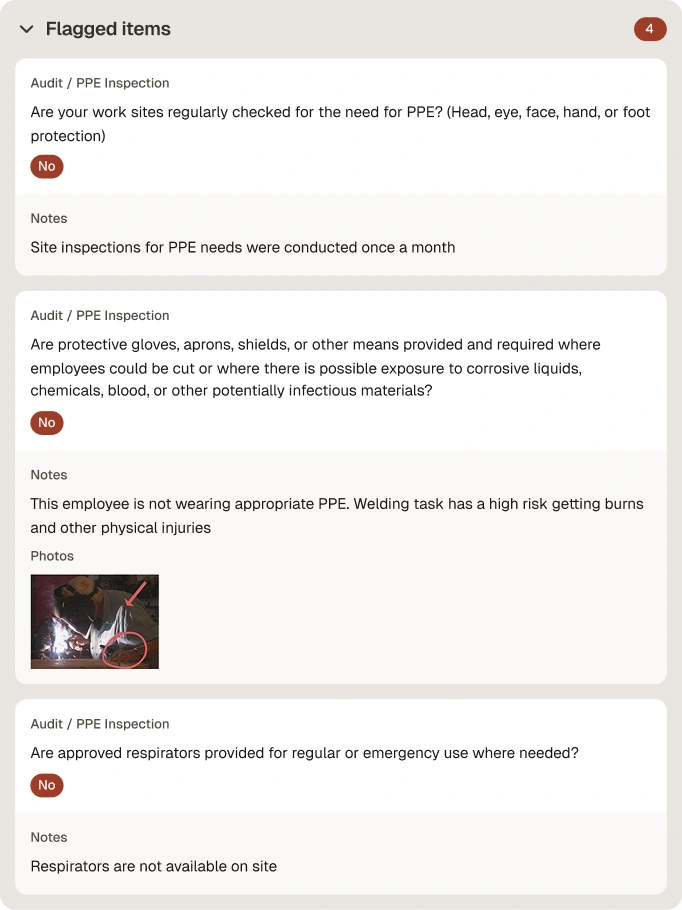
A compliance audit checklist is the working document your auditor carries: one line per requirement, with space to record what they found and what evidence backs it up. It turns a broad regulation into specific things a person can actually go and check.
A workable checklist covers:
Policies and procedures, and whether the current version is the one in use
Training records and certifications, with expiry dates
Physical and operational controls, checked on site rather than on paper
Records and documentation, tested for completeness and retention period
Previous audit findings and whether corrective actions actually closed
Third-party and vendor obligations you’ve passed down in contracts
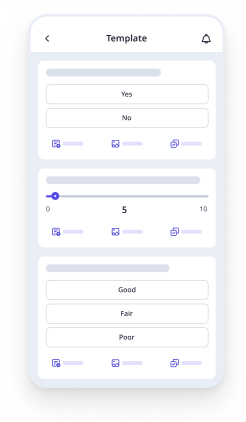
Each line should be answerable yes, no, or not applicable. If an item needs a paragraph to answer, it’s really several items.
Ongoing compliance monitoring between audits keeps your checklists from drifting out of date, and dedicated compliance software can schedule the recurrence for you.
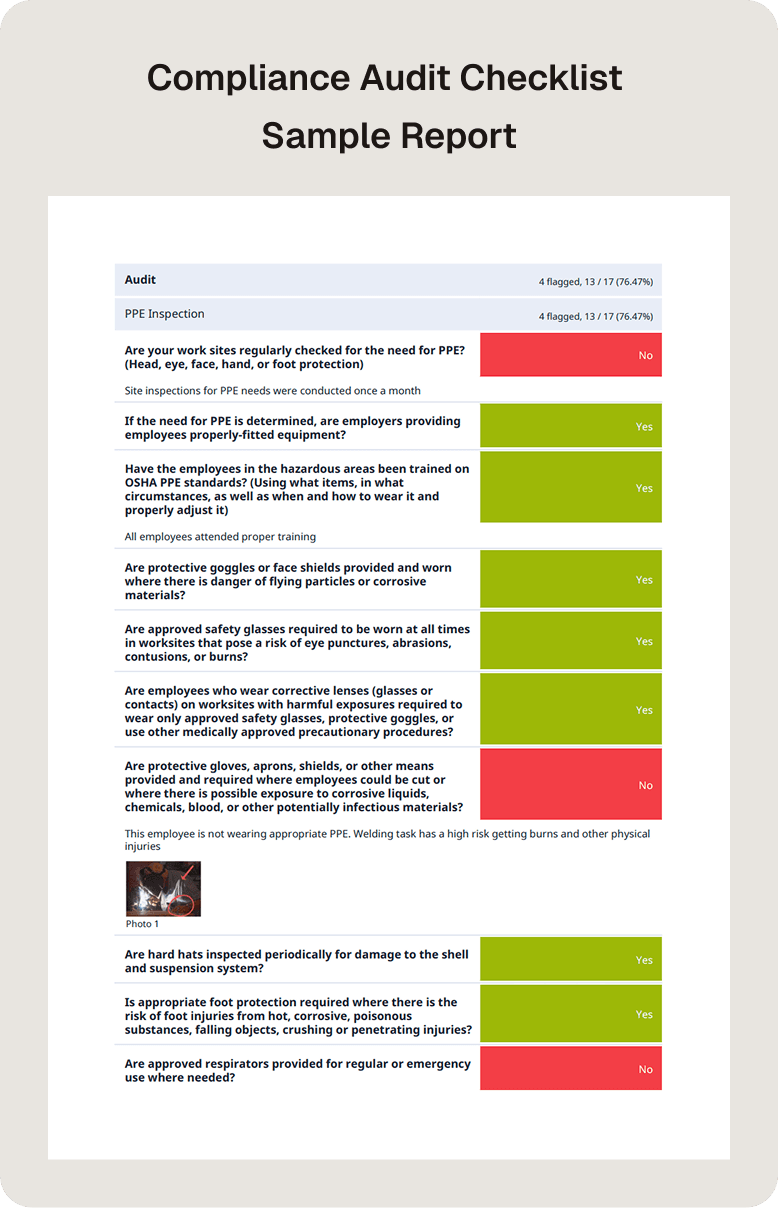
Preview OSHA compliance audit checklist (PPE) PDF report
How do you conduct a compliance audit?
Below is a step-by-step guide on how to run a compliance audit using a compliance audit checklist:
Prepare before you start: Confirm which regulations apply to the scope you’ve chosen, pull the current published version of each standard, and give the teams being audited advance notice of what you’ll ask for. The international guidance on running any management system audit, ISO 19011, sets out this same sequence: plan the scope, gather evidence, report findings, then follow up on corrective actions.
Decide who will conduct the audit: Appoint someone in your organization to perform the audit. It may be a compliance manager, compliance officer, or someone from a third-party vendor. Establishing this from the start helps ensure a smooth compliance audit process.
Identify your goals before starting the audit: Specify what you want to address. If there are previous compliance audits of the same process, note any significant results and use them as a guide when creating the audit plans.
Meet the team leads whose work is being audited: Talk to them before you start. Set out the scope, limitations, and guidelines so the auditing process stays standardized and efficient.
Analyze existing processes: Evaluate current practices and examine your internal controls against the standards that apply. Locate problem areas or procedures that aren’t meeting regulatory requirements.
Rank and prioritize risks: Assess the levels of recognized risks and determine your company’s appetite for each. Prioritize the ones that would significantly impact your organization if not addressed, then work through the rest.
Implement process changes: Push through with the changes you identified. Monitor them to ensure they’re being observed across the organization, in certain business units, or by a specific set of employees.
Once you’ve built the checklist, the work shifts to keeping it running. Platforms like Mitti (by SafetyCulture) turn a checklist into a scheduled inspection that assigns corrective actions automatically, keeps training records and certifications against each worker, and stores signed evidence in one place.

Still looking for a checklist?
Search, filter, and customize 60,000+ templates across industries and use cases.