Mitti by SafetyCulture
Pricing
Log inSign up for free
  1. Home
  2. Checklist guides
  3. Safety
  1. Home
  2. Checklist guides
  3. Safety
Mitti by SafetyCulture

The way the world works

Follow us

App Store
Google Play

Product

  • Pricing
  • Book a demo
  • Product updates
  • Mitti (by SafetyCulture)

Support

  • Help center
  • Contact us
  • API developer documentation
  • Digitize your checklist

Resources

  • Content library
  • App & software guides
  • Checklist guides
  • Topic guides
  • eBooks
  • Blog

Company

  • About
  • Careers
  • News room
  • Meet the leadership team
  • Events & webinars
Copyright © 2026 Mitti
StatusLegalPrivacyTerms & ConditionsSecurity

SafetyCulture has a new name. Say hello to Mitti. Learn More.

Powered by

CDM Risk Assessment

Prevent safety oversights and ensure employee welfare with a mobile app solution

Rated 4.6/5 stars on Capterra | 3k+ app store reviews
Use templatePreview template
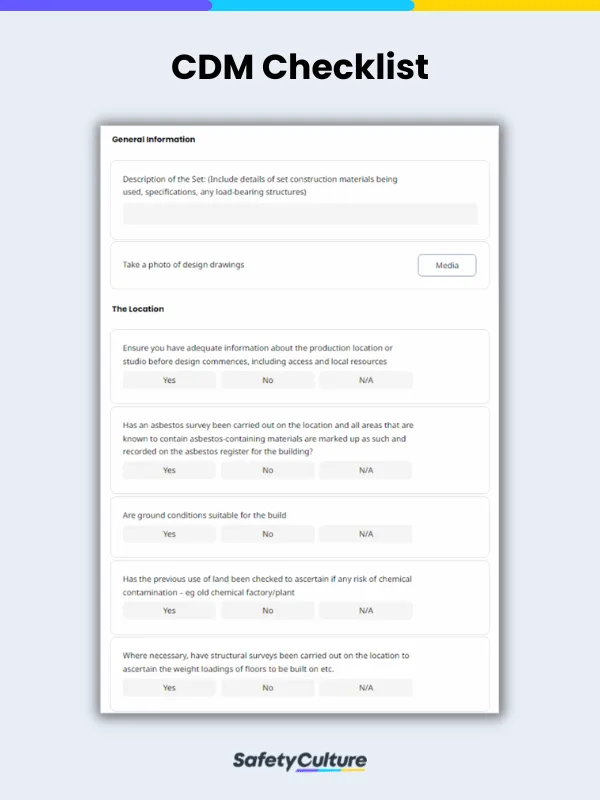
CDM Checklist
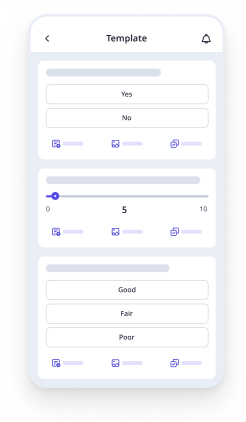
Mobile Preview
See the template in action (opens in new tab)

A CDM checklist is used by designers and architects to evaluate the hazards and risk associated with construction design, plan, and sites. This template helps construction personnel:

  1. Evaluate the location for construction risks and hazards;

  2. Capture photo of design drawings;

  3. Take notes to better explain the details of the project;

  4. Assign corrective actions for follow ups;

  5. Add recommendations and observations; and

  6. Sign off with a digital signature to validate the CDM risk assessment.

CDM Checklist
Mobile Preview
See the template in action (opens in new tab)

Why Mitti digital checklists?

  • Free to use for up to 10 users

  • Eliminate paperwork with digital checklists

  • Generate reports from completed checklists

Use template
  • What is CDM 2015?
  • Importance of CDM Regulations
  • What is CDM Risk Assessment?
  • Construction Design and Management Requirements Based on Personnel Duties
  • Consequences of Non-Compliance with CDM Regulations

In this article

  • What is CDM 2015?
  • Importance of CDM Regulations
  • What is CDM Risk Assessment?
  • Construction Design and Management Requirements Based on Personnel Duties
  • Consequences of Non-Compliance with CDM Regulations

Eliminate paperwork with digital checklists

Skip the setup and get to work in seconds.

Use template

Article by

Jona Tarlengco

|

4 min read

|

26 Feb 2024

What is CDM 2015?

Construction Design and Management (CDM) 2015, generally known as CDM regulations, is an HSE regulatory standard enforced last April 2015. It aims to improve health and safety across the construction industry and ensure construction projects and plans take worker safety into consideration so injuries and fatalities can be avoided. CDM regulations protect the physical well-being of employees as well as define their responsibilities according to their job roles.

Importance of CDM Regulations

The 2020 Health and Safety Executive (HSE) key statistics reported that at least 81,000 workers suffered from work-related illnesses to construction sector workers from 2018 to 2019 in Great Britain alone. These incidents can be avoided beginning in the early stages of project development through compliance with CDM regulations. Proper implementation of CDM regulations can:

  • help identify and manage construction risks concerning the project;

  • pick qualified workers for the required jobs; and

  • coordinate and communicate risks with personnel involved in the project.

What is CDM Risk Assessment?

A CDM risk assessment is performed to minimize the likelihood of risks as construction work progresses. It evaluates whether identified risks are avoidable or unavoidable so the appropriate controls can be applied to bolster safety.; A good CDM risk assessment reduces the risk of accidents, near misses, and fatalities during construction work.

This article will feature: 1) CDM requirements based on personnel duties; 2) consequences of non-compliance with CDM regulations; 3) tool used to streamline CDM risk assessments; and 4) free downloadable CDM risk assessment templates you can customize and use.

Construction Design and Management Requirements Based on Personnel Duties

CDM regulations are applied to different roles in construction work. Listed below are the responsibilities of the most common work roles in the construction industry:

  1. Commercial clients are organizations or individuals who employ the services of construction professionals to complete construction projects. They are responsible for ensuring that the principal architects, engineers, and contractors perform their work duties in a responsible and safe manner. They also have crucial influence over the health and welfare management of workers during the construction phase.

  2. Designers/Architects are professionals who are responsible for creating and/or modifying designs for construction projects. They assess the plausibility of design proposals, ensuring that they are structurally sound to ensure the safety of the workers and the building’s future tenants.

  3. Contractors are responsible for comprehending the blueprint presented and approved by the designer/architect and performing the actual construction work. They are liable for monitoring and managing workers by ensuring they are adequately trained to perform their duties, and that they are aware of site safety practices through toolbox talks.

  4. Workers are individuals who execute manual labor. They are responsible for complying with construction site rules and procedures, including incident reporting protocols for identified risks during construction work.

Consequences of Non-Compliance with CDM Regulations

Construction personnel are expected to comply with CDM regulations to avoid legal and ethical repercussions. Failure to adhere to CDM regulations can lead to the following:

Increased construction risks

Safety is paramount across the construction industry. Overlooked construction risks increase the likelihood of accidents from happening. CDM regulations aim to protect employees from construction risks such as accidental falls, being struck by an object, accidental electrocutions, and being caught between objects and machines.

Cost blowout

Failure to adhere to CDM regulations during the planning and construction stages of a project may lead to “budget blowouts” due to the inefficiencies and technical difficulties the construction team may encounter during the course of work. Adhering to CDM regulations help make the scope of work clear so work can be completed faster with fewer hindrances.

Increased penalties

Noncompliance with HSE and CDM regulations may result in substantial fines and criminal liabilities. Construction personnel and key project stakeholders can avoid this by assessing and monitoring risks from the beginning until the completion of a project.

Content library templates

Still looking for a checklist?

Search, filter, and customize 60,000+ templates across industries and use cases.

Browse Library
JT

Article by

Jona Tarlengco

Mitti (by SafetyCulture) Content Specialist

View author profile

Related resources you might like

Templates

Powered by

CDM Site Audit Checklist

This CDM site audit checklist was converted for Millers Vanguard using Mitti (by SafetyCulture). Miller’s Vanguard specializes in innovative design, manufacture, and service supply within the global foodservice market. This template has been built to verify if health and safety control management was implemented at the construction site.

View template in library

Powered by

CDM Compliance Checklist

A CDM compliance checklist is used to ensure construction projects have sensible plans and designs to avoid risks.

View template in library

Articles

Safety Audit Software

Discover the most outstanding safety audit software of 2026 and validate your organization’s safety processes with your number one choice.

Learn more

50+ Safety messages of the day

Discover 50+ safety message of the day examples and tips for offices, construction sites, and labs to help keep your workplace safe daily.

Learn more

5×5 Risk Matrix Template

Download free 5x5 risk matrix templates today. Learn how it works and how it can help systematically assess and plan strategies for workplace risks.

Learn more