For organizations involved in using chemicals in their facilities and everyday operations, it is vital to perform chemical risk assessments. Doing so provides organizations the opportunity to be proactive instead of reactive in handling chemical hazards. Discovering potential risks and hazards allows organizations to set up a health and safety plan to prevent causing harm to employees and damage to company property or equipment.
Types of chemical hazards
Chemical hazards can vary depending on what kind of harm or damage they can cause and the way they can cause them. Knowing its types can help in building an effective health and safety plan. Below are 6 types of chemical hazards that industries may encounter:
Flammable liquids – One of the most common hazardous chemicals. Flammable liquids are those that easily burn or ignite. Examples: gasoline, acetone, toluene, diethyl ether, diesel fuel, etc.
Corrosives – These are materials that can cause visible destruction at their point of contact with body tissues or even other materials such as metal. Examples: sulfuric acid, hydrochloric acid, acetic acid, sodium hydroxide, etc.
Reactive chemicals – This refers to chemicals liable to explode or react violently upon contact with other substances or upon exposure to external factors such as heat and toxic gases. Examples: benzoyl peroxide, hydrogen peroxide solutions, nitric acid, etc.
Toxic – These refer to chemicals or substances that cause harm if inhaled, ingested, or absorbed through the skin. Examples: carcinogens, mutagens, poisons, mercury, etc.
Irritant – Substances that cause harm by irritation, inflammation, or other discomforts to the body. Examples: chlorine, lye, asbestos, etc.
Environmental hazard – These are materials containing toxic chemicals that can cause harm to the environment at large. Examples: arsenic, asbestos, mercury, oil, lead, etc.
Top 5 hazards to spot in a chemical risk assessment
Here are the top 5 hazards that workplace safety officers need to be aware of when conducting a chemical risk assessment and some tips on how to prevent them.
1. Improper storage of chemicals
Improper storage of hazardous chemicals can lead to explosions, fires, burns, and toxic gas releases. Hazardous chemicals must be carefully stored in appropriate containers and locations according to instruction labeling and regulatory requirements.
An August 2018 chemical leak into the Gulf of Mexico was caused by storing 70 gallons of emulsion breaker in a broken tank.
2. Incorrect labeling of containers
Incorrect labeling of containers can also cause explosions, acid burns, and the release of toxic fumes. According to the Occupational Safety and Health Administration (OSHA), all chemical labels should have pictograms, a signal word, hazard and precautionary statements, the product identifier, and supplier identification.
A UC Berkeley researcher experienced acid burns after pouring isopropanol into a container for unwanted or excess chemicals labeled “isopropanol.” It was later discovered that the container had been holding concentrated nitric acid which caused an explosive acid spray.
3. Prolonged exposure to toxic chemicals
Long-term exposure to hazardous chemicals can lead to the development of illnesses and some types of cancer. Employers should take the initiative to limit or eliminate their employee’s exposure to toxic chemicals by implementing process changes if possible, and providing protective gear
A nuclear facility worker developed serious lung issues due to being exposed to chemical radiation for over 20 years.
4. Lack of proper training to handle chemicals
The lack of training for workers can lead to chemical injuries. Adequate training must be provided to workers who handle or work around hazardous substances to minimize the risk of injury or illness.
A study by the National Institute for Occupational Safety and Health (NIOSH) discovered that more than 12,000 health care workers were often untrained on the hazards of surgical smoke, which can cause both acute and chronic health problems.
5. Poorly maintained equipment
Poorly maintained equipment can malfunction and mishandle chemical substances, or cause flammable chemicals to ignite. Regular equipment maintenance by qualified persons will help reduce the risk of malfunctions.
A chemical risk assessment should consist of the following steps:
Hazard characterization: This process involves determining the relationship between levels of dose and response. Dose pertains to the pathogen consumed while response entails the development and severity of illnesses and other health-related effects.
Exposure assessment: In this phase, the extent to which exposure occurs is identified, estimated, or measured.
Risk characterization: The conclusion phase. This is when data from hazards characterization and exposure assessment are combined to determine the risk nature and magnitude, and necessary risk management protocols.
What is a chemical risk assessment template?
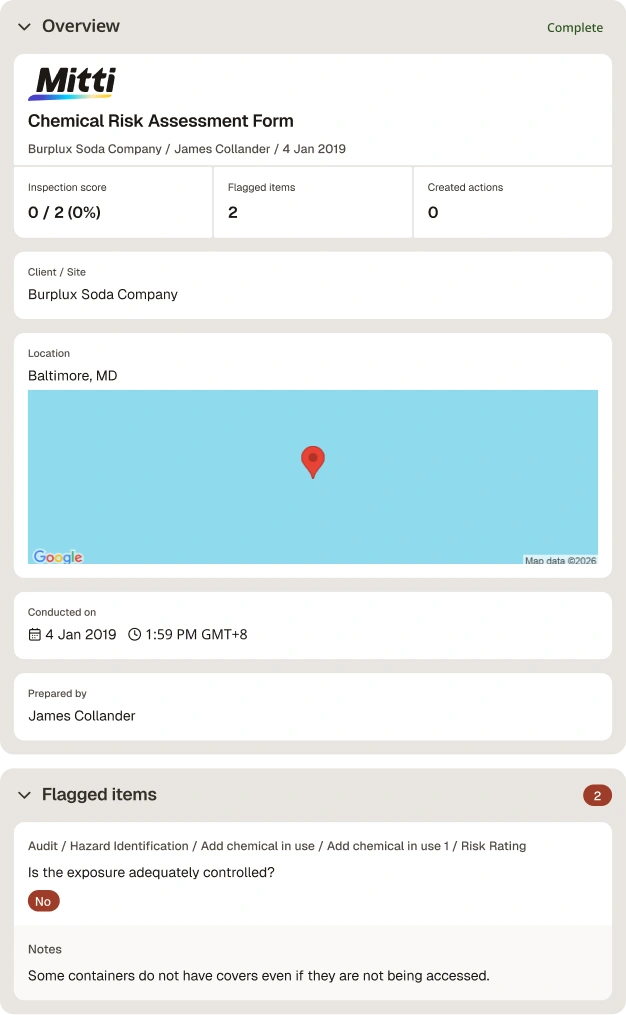
A chemical risk assessment template is used by a safety officer to determine and assess potential chemical hazards and risks associated with tasks that involve the use of hazardous substances in the workplace. This template also helps record and document safety protocols and measures to minimize exposure and harm to workers.
To see how this looks in practice, check out this sample chemical risk assessment template report, which shows how findings, risk ratings, and control measures are typically structured and documented:
Preview Sample Chemical Risk Assessment PDF Report