What is a Cooking and Hot Holding Temperature Checklist ?
A cooking and hot holding temperature checklist is a structured document that helps ensure food is heated, served, and stored at safe temperatures to prevent bacterial growth. This kind of checklist is designed to verify that employees are able to monitor and observe food temperatures during and after the cooking process.
Importance
A cooking and hot holding temperature checklist focuses on preventing bacterial growth by providing a structured way to consistently monitor food temperatures. Having this checklist also provides several key benefits:
Reinforces food quality: Appropriate food temperatures recorded in the checklist are essential for assessing the freshness and quality of food, including its taste, nutritional value, and texture.
Compliance with relevant food safety standards: The checklist can help food establishments meet compliance standards of HACCP, USDA, and FDA regulations. Regularly recording inspections is mandatory in many regions, including the USA, to demonstrate proof of compliance during safety inspections and audits.
Reduces food waste: Maintaining food freshness by consistently monitoring and checking temperatures prevents spoilage and reduces waste.
Prevents foodborne illnesses: Regular checklist monitoring helps prevent contamination from harmful bacteria such as salmonella, E. coli, and staphylococcus aureus.
Key Components of a Cooking and Hot Holding Temperature Checklist
A checklist for cooking and hot holding temperatures is crucial to ensure food remains safe to consume. By accurately recording temperatures, organizations can improve food handling practices. It is important to include key components such as:
Food item name and details
This section specifies the name and details of the food item being tested. It should also include elements such as:
Classification of food: It focuses on Time/Temperature Control for Safety (TCS) foods, including poultry, meat, seafood, dairy products, eggs, and egg products, and prepared or mixed dishes.
Stage of food: This indicates whether the food is for cooking, reheating, or hot holding.
Temperature reading and control
This section is focused on recording food temperature and maintaining the appropriate temperature to prevent bacterial growth. Some of these include:
Food temperature measurement: Indicates the temperature reading using a thermometer and is displayed in Celsius or Fahrenheit It also indicates the date and time when the food was measured.
Food temperature standards: Checks whether the food temperature meets the required standards. This includes making sure that hot food is not in the temperature danger zone, ranging from 40°F - 140°F (4°C to 60°C), where bacteria grows and multiplies.
Equipment
This section discusses the right equipment to accurately measure food temperature. It typically includes:
Thermometers: There are two types of thermometers used to measure food temperature. Probe thermometers indicate the internal temperature of food, while infrared thermometers measure only the surface temperature.
Calibration: The calibration process used for thermometers is also checked to ensure accuracy. This includes the ice-point method, in which a thermometer is submerged in a glass of ice water, and the boiling-point method, in which it is submerged in boiling water.
Digital technologies: This includes tools that provide continuous, real-time temperature tracking, such as temperature-monitoring sensors.
Best practices and safety tips
This section presents strategies to improve cooking and hot holding temperature recording. Some of these include:
Hot holding temperature chart: Provides a reference to check the safe temperature ranges to keep food hot and prevent bacterial growth.
Corrective actions: It provides procedures for when the temperature is out of range, such as reheating or discarding.
How to Use this Checklist
Follow these steps to create an effective cooking and holding temperature checklist that prevents bacterial growth in food:
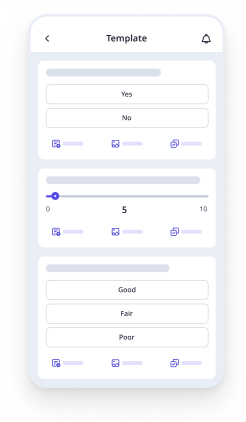
Provide the necessary details on the title page. This usually includes the inspector's name, the date, and the inspection site.
Verify and document the food temperature of each item, including its categories and stages. Validate whether each recorded value meets the established food temperature standards.
Confirm the thermometer used to record food temperatures.
Attach any media annotations and notes to provide details on any issues or corrective actions for cooking and hot holding food.
Complete the cooking and hot holding temperature checklist with a sign-off.
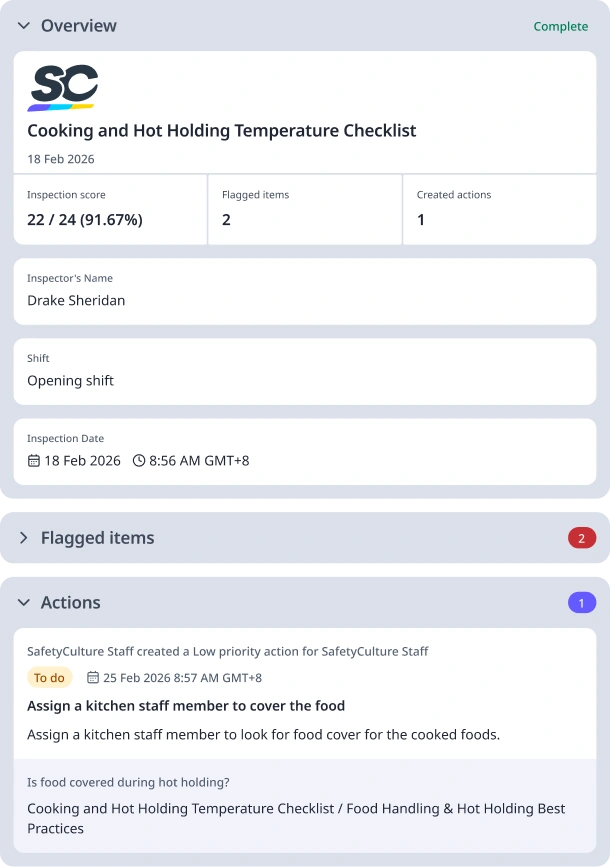
Sample Cooking and Hot Holding Temperature Report
For reference, here is a completed cooking and hot holding temperature checklist report:

Preview Cooking and Hot Holding Temperature Checklist Report
Ensuring Food Safety Compliance at Tablo Kitchen x Cafe

“With the SC platform, branch managers are empowered to make sure that protocols are implemented up to the branch levels. We’re also able to highlight their compliance in terms of food safety practices since most of the checklists are integrated with the best food safety practices.”

Still looking for a checklist?
Search, filter, and customize 60,000+ templates across industries and use cases.