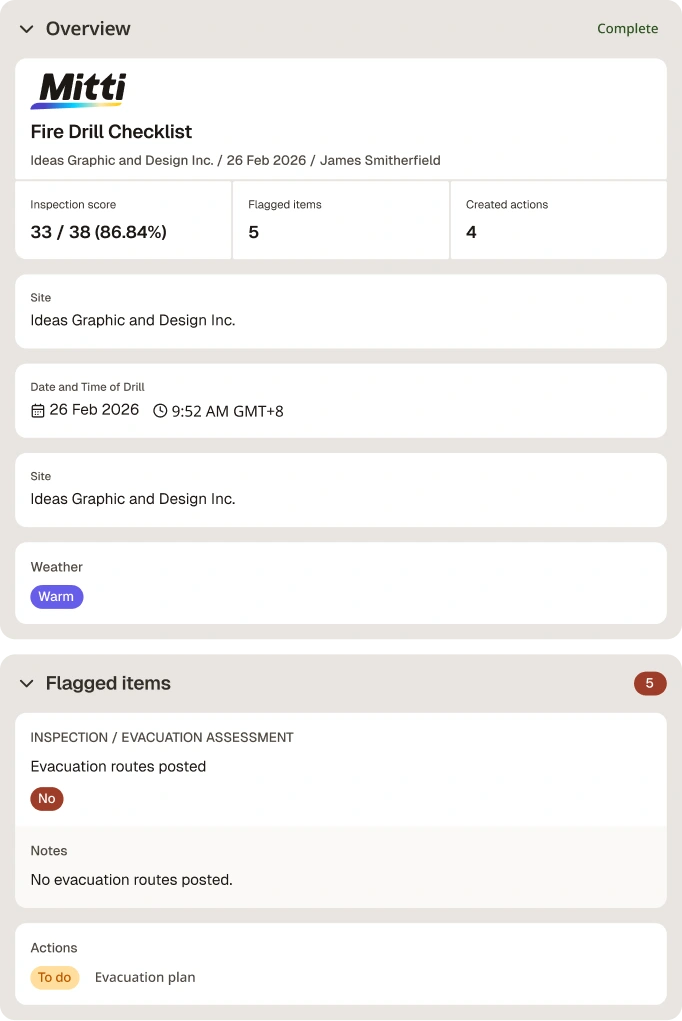
What is a fire drill checklist?
A fire drill checklist is used by safety coordinators to ensure that emergency evacuation procedures are established and prepared before the scheduled drill. It helps streamline emergency procedures and business contingency plans, while also evaluating equipment readiness.
Are fire evacuation drills a legal requirement?
Fire evacuation drills are conducted in the UK in compliance with the Regulatory Reform (Fire Safety) Order 2005. Regular drills keep evacuation knowledge fresh and cut the risk of injury or death in a real fire.
In the US, the emergency action plan standard (29 CFR 1910.38) requires written evacuation procedures, exit route assignments, a way to account for everyone after evacuation, and a distinctive employee alarm system. The standard sets no drill frequency of its own. That comes from the Life Safety Code, which sets intervals by occupancy type, so a school runs far more drills than a warehouse.
Australian workplaces plan drills under national emergency plan guidance, which expects the plan to be tested and reviewed regularly. Whichever market you operate in, the drill record is what an inspector asks to see, which makes fire safety documentation as important as the drill itself.
3 reasons your establishment needs a fire drill log
Fire drills and the paperwork that follows can feel tedious. They are still one of the few ways to rehearse a worst-case scenario. The US Fire Administration estimates these annual averages for nonresidential building fires between 2017 and 2019:
108,500 reported fires
90 deaths
1,125 injuries
$2.8 billion in property loss
Given the damage these fires cause to people and property, here is why your establishment needs a fire drill log:
P repares personnel for swift action
Scheduling regular fire drills helps workers, students, and anyone else who occupies the building know what to do in a fire. Fire drill logs let safety officers document what went well and what needs work in the emergency SOPs. Pairing drills with structured training turns those findings into something the team actually practices.
H elps ensure all personnel are safely evacuated
One of the most important parts of a fire drill log is the count of occupants evacuated. It confirms nobody is left behind and everyone is accounted for. It also covers building guests and anyone with a disability who needs assistance to get out.
Ensures the right data is gathered
Fire drill logs also stop safety officers missing details that matter in a real emergency. Was the drill pre-announced? Were evacuation signs legible? Were exits clearly marked and lit? Were alarms loud enough to be heard across the building? Small details like these decide whether a real evacuation works. A recent alarm inspection record answers the last one before the drill even starts.
Top 3 tips for creating an effective fire drill
Preparation decides how a crisis plays out. Personnel need both the knowledge and the ability to evacuate safely. Before you run the drill, take these three steps to make it worth the disruption.
Consult a local fire emergency expert
Before drawing up the official fire drill procedure, get in touch with a local fire marshal for a walkthrough inspection of the building. The marshal can flag hazards you have stopped noticing and recommend changes that make the drill more realistic.
Establish a point person for each department
A single safety officer cannot track every evacuee during a drill, let alone a real emergency. Assign a point person to each department to confirm their team gets out safely. Everyone should know the exit points, but point persons carry the added job of enforcing them.
Introduce different scenarios to test flexibility
Emergencies rarely follow the script, so protocols work better as guidelines than as step-by-step manuals. Block a main stairwell, run the drill after dark, or simulate a warden being absent. Varying the scenario shows you where the current protocol breaks.
5 essential steps to do before and after a fire evacuation drill
Fire evacuation drills get neglected, and it shows when something goes wrong. Poorly run drills lead to panic, chaos, and miscommunication. People end up unsure where to assemble, what safety equipment is available, and how to use it.
Every business should run fire evacuation drills as part of its emergency procedure. Here are five essential steps for safety officers and coordinators.
Step 1: Coordinate with all relevant parties
Fire evacuation drills should be scheduled, planned, and calibrated by all relevant parties, including the fire department, building or property owners, and tenants. Send a notification with specific details to clarify what to do during the drill.
Step 2: Establish fire emergency procedures
Gather employees and coordinate what to expect during the drill. Divide the group into small teams and assign a trained fire warden to observe and help if unexpected issues occur. State the evacuation plan clearly, cover the do's and don'ts, and point out the assembly area.
Step 3: Secure your team
Make a list of all attending participants and make sure everybody knows the point of registry. Flag anyone with a disability and any visitors who need special attention. You can organize these groups using tables on a digital checklist to keep the information consistent and structured.
Step 4: Assess the fire evacuation process
Evaluate the whole evacuation process and identify areas for improvement. Assign immediate actions for any noncompliance observed, then create a report to meet legal requirements.
Step 5: Use technology to help ensure fire evacuation safety
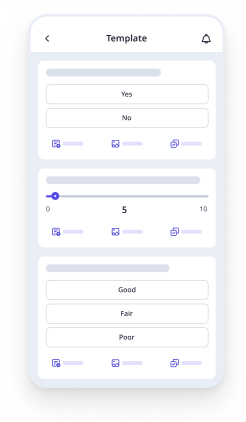
A paper fire evacuation drill checklist is easy to damage or misplace mid-drill. Recording visual inspections on pen and paper also eats time you do not have. With Mitti (by SafetyCulture), a workplace operations platform, your team can:
Spot blocked exits and faulty signage before the drill starts, straight from your phone.
Show the hazard instead of describing it, with photos attached to the exact checklist item.
Pull up any past drill record when a fire authority inspection lands.
Send the drill report to building management the moment the drill wraps up.
Training keeps warden certifications current, and Assets tracks the service history of alarms and extinguishers, so the pre-drill check starts from a record rather than a guess.
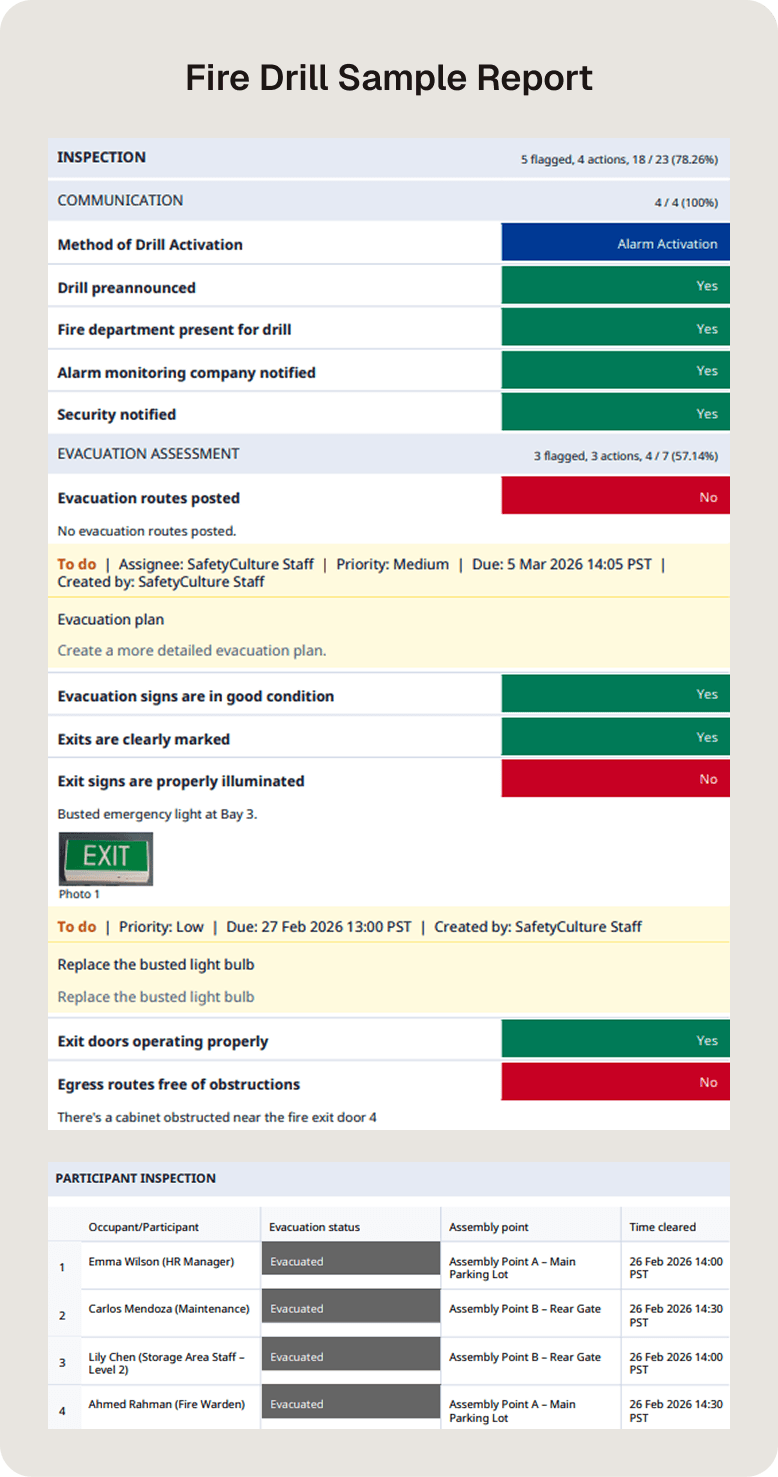
Sample fire drill inspection report
For reference, here is what a completed fire drill template report looks like:

Still looking for a checklist?
Search, filter, and customize 60,000+ templates across industries and use cases.