The Importance of Using a Food Safety Checklist
According to the World Health Organization, there are almost a million cases of deaths every year that can be attributed to food and water contamination. Although policies and regulations were implemented among food businesses and supplies, incidents involving foodborne diseases and food poisoning are still rampant and remain a global health issue. Conducting regular and thorough safety inspections can help prevent more serious health problems.
A food safety checklist is a simple yet powerful tool that helps food safety and quality personnel to ensure that food quality standards are being met and complied with. Doing so will also be beneficial to identify food safety threats and risks, and set needed actions to mitigate them. Scheduling food safety inspections is also important to promote and improve the safety culture. Risks associated with poor food safety are caused by the following factors:
Improper food handling and preparation practices – this could happen when food is stored inappropriately, stale and low-quality food are purchased, a large amount of food is prepared and cooked even if the preparation area is not sufficient, raw food is stored together with the cooked ones, and food is cooked using the wrong methods.
Poor personal hygiene of food handlers – this involves not restricting food handlers who have illnesses and did not go any medical checks. Also when food handlers have poor personal hygiene and do not adhere to wearing the proper clothing during the food preparation.
Unsanitized kitchen and equipment facilities – this entails using equipment such as dirty chopping boards, rusty knives, unwashed containers, and the like that are in regular contact with the entire food-making process.
What to Include in a Food Safety Checklist?
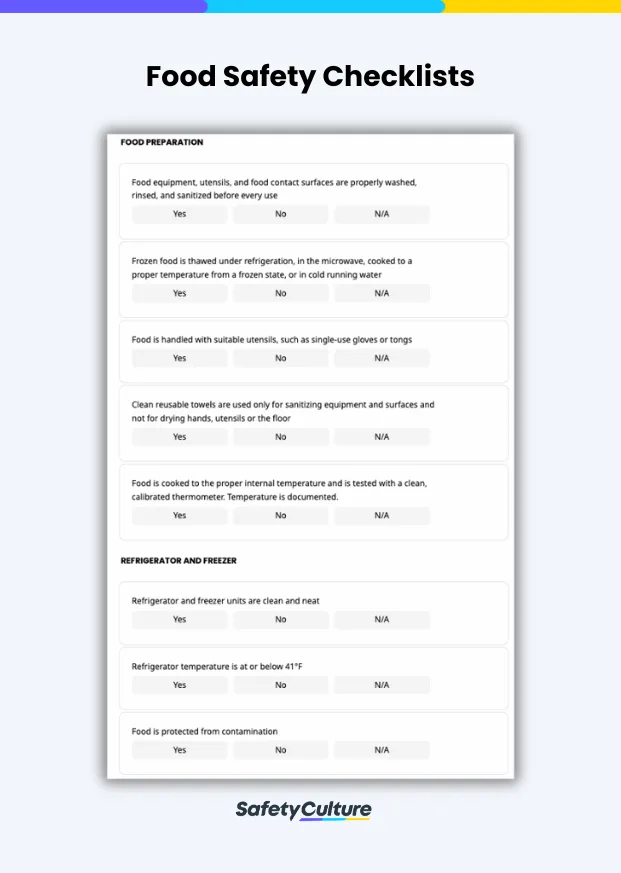
A comprehensive food safety checklist should detail the steps to ensure safe food handling and proper sanitation of the food service establishment. Here are the key components that should be included in the checklist :
Personal Hygiene – All food handlers must wash their hands thoroughly with soap and water before handling food. Clean uniforms or aprons should be worn at all times, and personal protective equipment like gloves and hairnets should be used to avoid unwanted debris on food products.
Food Preparation – To prevent cross-contamination, its important to separate utensils and storage areas for raw meats and ready-to-eat foods. Food must be cooked to the proper internal temperature to ensure it is safe to eat.
Refrigerator & Freezer – Refrigerators should be kept at or below 40°F (4°C), and freezers should be at 0°F (-18°C) to prevent bacterial growth. Regular cleaning of these appliances is essential to maintain longevity. Using the “first in, first out” (FIFO) method in storing food items helps ensure that older items are used first.
Food Storage – Dry food items should be stored in cool, dry, and pest-free environments to prevent spoilage. Ensure that these food items are in an airtight, sealed containers to protect from contamination, and all food should be clearly labeled with legible purchase dates and expiration dates.
Utensils and Equipment – All kitchen utensils, cutting boards, and equipment must be kept clean and in good working condition to prevent foodborne contamination. Utensils should be stored in a sanitary manner, such as hanging knives properly and storing others in clean drawers.
Garbage & Pest Control – Trash should be disposed of regularly in covered, clean bins to prevent odors and contamination. Waste areas must be kept clean, and pest control measures should be implemented on a regular basis.
A sample completed checklist report should look similar to this :
Food Safety Checklist Sample Report | Mitti (by SafetyCulture)
How Do You Practice Sanitation in the Kitchen to Maintain Food Safety?
The commercial kitchen is one of the most important areas in the hospitality industry. It should be well maintained, cleaned, and sanitized to meet the requirements of the Department of Health. Kitchen sanitation should be conducted daily after each shift to ensure the kitchens’ readiness for the next user. Below are some guidelines that could help maintain kitchen cleanliness.
Preparation
Kitchen sanitation requires appropriate disinfection chemicals to ensure food safety. All kitchen staff should be trained on the appropriate use of cleaning and disinfection chemicals including the proper use of personal protective equipment (PPE).
Kitchen Safety and Sanitation
It is important to clean and sanitize common kitchen areas regularly to reduce the risk of spreading viruses or bacteria buildup that can cause food cross-contamination or health diseases. Here are some of the important procedures that employees must practice in the kitchen :
Disinfect high touched surfaces including preparation tables, kitchen sink, refrigerator shelves, light switches, and faucet handles.
Employees must wash, rinse, and sanitize all food contact surfaces, equipment, and utensils before each use. Clean the floor immediately when there is spillage to prevent trips and falls.
Apply Hazard Analysis Critical Control Point (HACCP) principles in food receiving, preparation, cooking, and storing.
Defrost the refrigerator once a week and wipe it with a clean cloth. Toss out everything and check for expiry dates.
After Kitchen Sanitation
After conducting the kitchen sanitation it is important to do dispose of the kitchen waste every after shift. All used chemicals should be labeled accordingly before keeping in storage. PPE should be removed carefully and dispose of properly to avoid bacteria contamination.