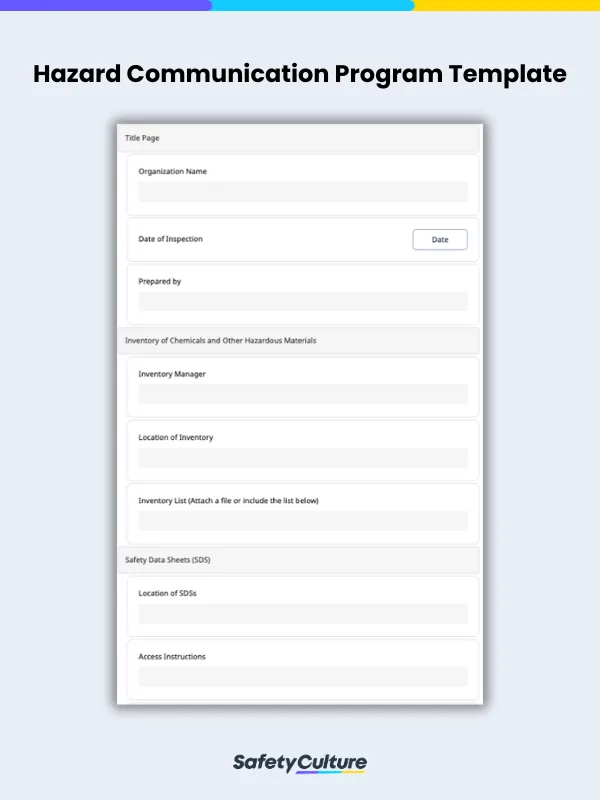
What is a Hazard Communication Program Template?
A hazard communication program template is a structured tool designed to help organizations effectively communicate information about hazardous materials in the workplace. This template typically includes sections for identifying hazardous chemicals, detailing labeling requirements, outlining SDS management, and providing guidelines for employee training.
A hazard communication plan template not only helps in organizing and presenting hazard-related information but also ensures that all employees have access to essential safety data. By adopting this template, companies can improve hazard awareness and ensure that safety protocols are clearly communicated and followed across the organization, thereby reducing the risk of accidents.
What is the Purpose of a Hazard Communication Program Template?
The purpose of a hazard communication program template is to streamline the process of managing chemical hazards, ensuring that all employees are informed and equipped to handle dangerous substances safely.
By providing a standardized framework, the template helps organizations efficiently organize and communicate essential safety information, from labeling requirements to emergency procedures. This not only enhances workplace safety but also ensures compliance with industry regulations (including those from the US Occupational Safety and Health Administration or OSHA), reducing the risk of fines and liability.
What are the 5 Required Elements of a Hazard Communication Program Template?
A hazard communication program template serves as a foundational tool for businesses seeking to foster a culture of safety and compliance by simplifying the creation and implementation of a comprehensive HazCom program. To hit your goals, ensure that the following 5 required elements of hazard communication program are included in your template:
Inventory of chemicals and other hazardous substances
Chemical labels and warning signs
Training programs
Written hazard communication
For a clear idea of how these elements are used in a HazCom template, here’s a filled-out sample report:

Sample Hazard Communication Program Template | Mitti (by SafetyCulture)
How to Create a HazCom Program Template
By using a well-organized template, businesses can ensure compliance with the OSHA Hazard Communication Standard (HCS), thereby reducing workplace risks and enhancing overall safety. With all the 5 elements of a hazard communication program, below are the steps in creating an effective HazCom template:
1. Identify hazardous chemicals.
Start by compiling a comprehensive list of all hazardous chemicals present in your workplace. This includes substances used in production, maintenance, cleaning, and other operational processes.
Ensure you gather SDS) for each chemical, as these documents provide critical information on handling, storage, and emergency procedures.
2. Develop labeling requirements.
Establish a labeling system that complies with the OSHA HCS. Labels should clearly indicate the chemical’s identity, hazard warnings, and manufacturer information. Consider including safety signs and signal words to ensure universal understanding. This step ensures that all containers, including secondary ones, are appropriately labeled.
3. Create an SDS management system,
Organize and maintain SDS in a centralized location, either digitally or physically, where employees can easily access them. Develop a procedure for updating SDSs regularly and ensure that new or revised documents are promptly integrated into the system. This ensures that employees have access to up-to-date safety information.
4. Outline employee training programs.
Create a list of training courses that will educate employees on the hazards associated with chemicals in the workplace. This training should cover how to read labels and SDSs, proper handling and storage practices, and emergency response procedures. Document the training process, including schedules and attendance records, to demonstrate compliance.
5. Develop communication procedures.
Establish clear communication channels for disseminating hazard information to employees, contractors, and visitors. This includes regular safety meetings, postings in common areas, and digital communications. Ensure that the information is conveyed in a language and format that all employees can understand, catering to diverse literacy levels.
6. Review and update the program regularly.
Periodically review your hazard communication program to ensure its effectiveness and compliance with regulatory changes. Update the program as needed, especially when new chemicals are introduced or when there are changes in OSHA regulations. Conduct regular audits to identify areas for improvement and ensure ongoing protection for employees.
7. Create a user-friendly HazCom template layout.
Include headings that correspond to the 5 required elements of hazard communication program to avoid cluttering your template. Not only do they make your template more appealing, but they also facilitate efficient inspections that can guarantee the success of your HazCom program.
You can also incorporate easy-to-use fields and features such as media file attachments and job assignments to responsible personnel to implement clearer communication and swift actions within your organization.

Still looking for a checklist?
Search, filter, and customize 60,000+ templates across industries and use cases.