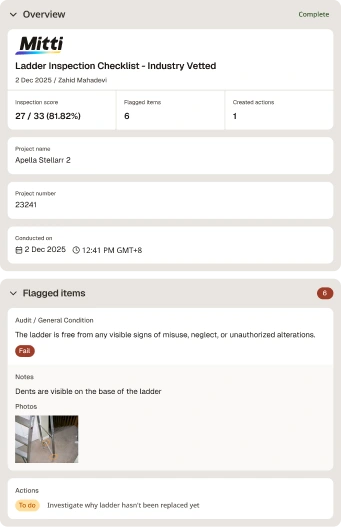
What is ladder inspection?
Ladder inspection is the process of inspecting ladders for safety and to ensure that they are in good working condition. Maintaining the safety of ladders through regular inspections is important to help prevent ladder-related incidents and comply with regulations mandating the safe use of ladders in the workplace.
What is a ladder inspection checklist?
A ladder inspection checklist is a tool guide used to assess the working condition of a ladder. It helps ensure that a ladder passes safety and quality standards before use and that it is being used correctly by trained workers. Using a ladder inspection checklist can help proactively catch issues that could lead to work-related injuries.
What to include in a ladder inspection checklist?
As part of the overall construction safety inspections, ladder inspection checklists should provide an easy-to-follow guide on which areas to check to not miss anything before, during, and after using an industrial ladder. See below some of the sample questions you can consider including in your checklist:
General information
First, you need to be clear about the characteristics of the ladder to be inspected and used.
What is the type of the specific ladder to be used?
What material is used for the ladder?
What is the length of the ladder?
What is the classification of the ladder (light duty, medium duty, heavy duty, etc.)?
What is the maximum weight supported by the ladder?
Ladder inspection
It is ideal to ask very specific questions that would enable any inspector and all users to inspect ladders. These questions can be like:
Do the feet of the ladder work properly and have slip-resistant pads?
Are the rung locks and spreader braces working?
Are bolts and rivets secured?
Are steps and rungs free from oil, grease, and other materials?
Is the ladder stored properly and well-maintained when not in use?
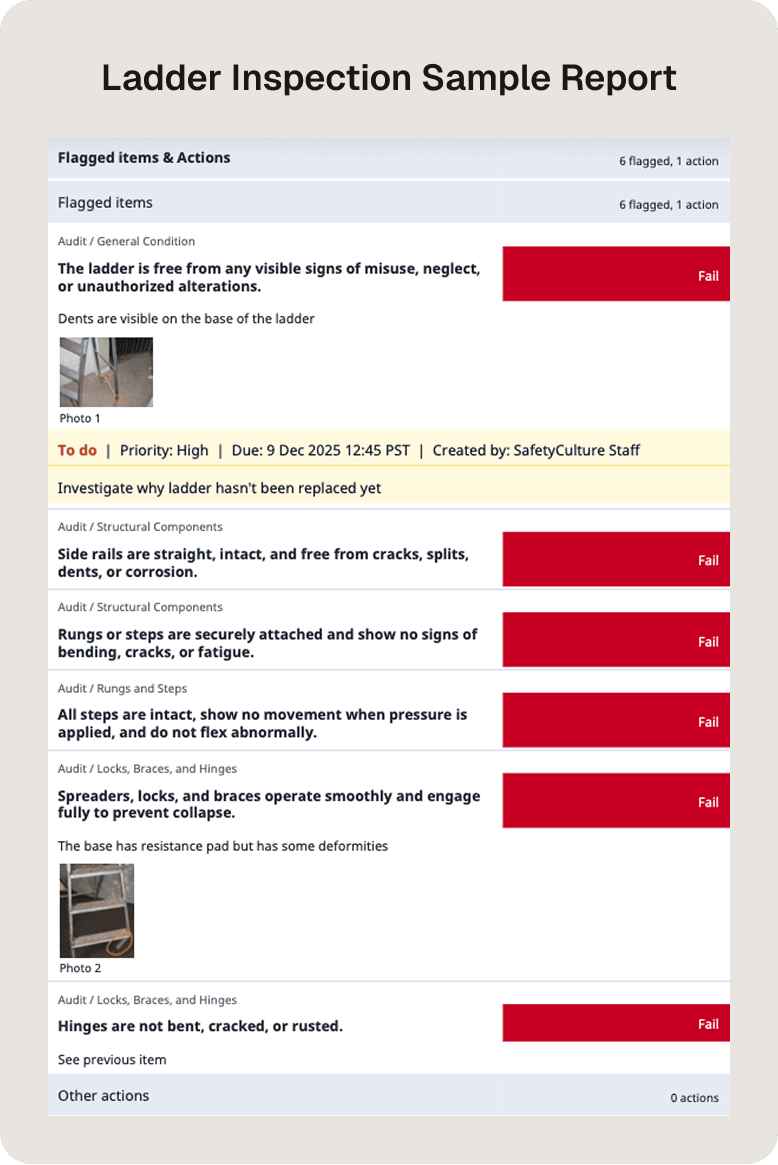
Sample ladder inspection checklist report
Check here a preview of a completed safety observation report in PDF format:
How often should ladders be inspected?
Ladders should be inspected before initial use in each shift, and more often if the job demands it. Under 29 CFR 1926.1053, the US Occupational Safety and Health Administration (OSHA) requires this to be done by a competent person, checking for visible defects on a periodic basis and after any occurrence that could affect the ladder's safe use. In the UK, HSE guidance calls for inspection at the start of each working day.
Either way, make sure to also inspect a ladder:
After any incident, like a fall
Whenever damage looks likely or apparent
Regularly, before and after use
What should be inspected?
If using a ladder cannot be avoided, it’s important to inspect the following before proceeding with the task:
Label and manufacturer’s instructions: To find out if the ladder was designed to be used for the task at hand and if there is a specific inspection procedure for the ladder. OSHA requires portable ladders to support at least four times their maximum intended load, so checking the duty rating against the job is part of a compliant inspection.
Tag: To find out if the ladder was inspected before and if the previous inspection revealed that the ladder was safe to use.
Fall protection or fall arrest systems: Required for work performed at 2 meters or above (working at height) and includes safety harnesses and landing areas
Condition and cleanliness: All parts of the ladder should have no signs of damage or defect and should be free from debris, dirt, oil, and grease
A ladder should be taken out of service immediately if any of the following are found:
Cracked, bent, or broken rails, rungs, or steps
Missing or damaged non-slip feet or pads
Corrosion, rot, splinters, or other structural decay
Loose, missing, or damaged rivets, bolts, or fasteners
Spreaders, locks, or braces that don't fully engage
Frayed or damaged ropes and pulleys on extension ladders
In this case, tag the ladder and remove it from use until it's repaired or replaced. Catching a failed item on paper is one thing; a digital checklist can flag it instantly and trigger a corrective action before the ladder gets used again.
How do you perform a ladder inspection with a checklist?
While ladder inspections are the employer’s responsibility, all workers should be trained on how to inspect and safely use a ladder. A thorough inspection catches the small defects that lead to falls before anyone steps on the ladder. Here's how to check a portable or fixed ladder step by step:
Portable ladder inspection
Lay the ladder flat on the ground.
Start at the base of the ladder and inspect the feet, foot pads, and shoes.
Inspect the ladder rails and rungs for any damage, such as dents or cracks.
Check if the connections of the rungs to the rails are secure.
Inspect the spreader and see if it opens and closes smoothly.
For extension ladders, inspect the locks and flippers of the lock.
For extension ladders, bring the ladder up from the ground and rest it against the structure it will be used on. Don't climb it to inspect it.
For extension ladders, check that the rope is properly secured to the fly section and moves easily through the pulley system.
Fixed ladder inspection
Inspect for corrosion, rot, splinters or protruding pieces, and loose components.
Start at the bottom of the ladder and check the supports, fasteners, and anchors.
Visually inspect the clearances of the ladder for obstructions, and confirm climbing up and down can be done easily with minimal chance of falling.
Go up the ladder and, using three points of contact, inspect the side rails, grab bars, and side rail extension anchors.
Inspect any hatches and their opening arms.

Still looking for a checklist?
Search, filter, and customize 60,000+ templates across industries and use cases.