
What is a safety checklist?
A safety checklist is a simple tool that outlines a set of specific steps, items, or procedures to follow in order to ensure the safety and well-being of individuals or the proper functioning of equipment and systems. It’s used by frontline workers to identify hazards, mitigate risks, and apply control measures before performing tasks. Safety officers also use it to perform routine site checks and assess employees’ safety behavior. From construction and manufacturing to hospitality and offices, every industry should take advantage of mobile-ready safety checklists that can be customized and downloaded.
What is the importance of a safety checklist?
Safety checklists make it easy for organizations to conduct workplace inspections, which are beneficial to promoting safety in the workplace. In fact, a yearly estimate of 2.3 million women and men are affected by work-related accidents or diseases brought by poor working conditions. This is where the use of health and safety checklists can help in reducing or removing risks that can cause incidents, injuries, and illnesses.
Also, a safety checklist assists assigned safety inspectors in identifying risks and hazards in the workplace and monitoring if safe work practices and standards are being followed. Apart from those, organizations can achieve the following benefits with the use of standardized safety checklists:
Compliance with regulations
Improved accountability on safety responsibilities
How do you create a safety checklist?
Following a structured process to ensure a safety checklist addresses specific safety concerns in the workplace is recommended to tailor it to the requirements of your organization.
Hence, you may use this guide to help you create an effective one:
Determine the specific purpose of the safety checklist and define the scope by outlining the boundaries of what the checklist will encompass.
Involve relevant stakeholders, including employees, safety officers, supervisors, and managers, in the checklist development process by gathering input on potential hazards, safety concerns, and best practices related to the tasks or areas.
Research relevant safety regulations, industry standards, and legal requirements to ensure that your checklist aligns with them.
Include a space for inspectors to add notes or comments about the condition or compliance of each item and record findings, observations, or actions taken.
Review and finalize the checklist, incorporating any necessary changes or improvements.
What to include in a general safety checklist
A comprehensive risk assessment checklist should include the following key elements:
Identification of hazards: List all potential hazards related to the work process, environment, equipment, chemicals, and activities. This includes routine and non-routine tasks, maintenance, emergency situations, and conditions that could cause harm.
Description of hazards: For each identified hazard, describe how and when the injury or damage could occur, specifying the nature of the risk.
Assessment of risks: Evaluate the likelihood of harm occurring and the severity of potential consequences. Use a risk matrix or similar tool to assign a risk rating (e.g., low, medium, high, immediate danger).
Control measures: Determine and document the existing and proposed controls to eliminate or reduce risks, following the hierarchy of controls (elimination, substitution, engineering controls, administrative controls, PPE).
Risk assessment team: Include competent persons such as management, supervisors, health and safety representatives, and workers familiar with the tasks under review.
Work process breakdown: Divide the job or process into key steps or tasks to ensure hazards are identified at each stage, including preparation, execution, and cleanup.
Documentation: Keep a formal record of the risk assessment process, findings, risk ratings, and control measures implemented.
How to use one in your organization
Using a safety checklist based on its intended purpose and goals is key to identifying and managing potential hazards and risks. Here’s how you can integrate this tool into your safety management processes:
Train employees and relevant personnel on how to use the checklist effectively. Familiarize them with the purpose, importance, and proper completion of the assessment.
Establish a schedule for conducting and reviewing safety assessments based on factors like task frequency, changes in processes, or regulatory requirements to ensure they remain up to date.
Use the checklist to systematically list, assess, and document all potential hazards and risks associated with the identified tasks or areas. Also, assess the severity and likelihood of each hazard and calculate the overall risk level.
Identify control measures and safeguards to mitigate or eliminate identified hazards. Make sure to allocate resources and set timelines for implementing control measures.
Maintain thorough records of the assessments for regulatory compliance purposes and ensure they’re easily accessible and well-organized.
Communicate the assessment findings and recommended control measures to all relevant employees.
Regularly review and update the checklist to align with changing safety regulations and standards.
To give you a visual overview, here’s how a safety risk assessment checklist can be used and turned into a report:
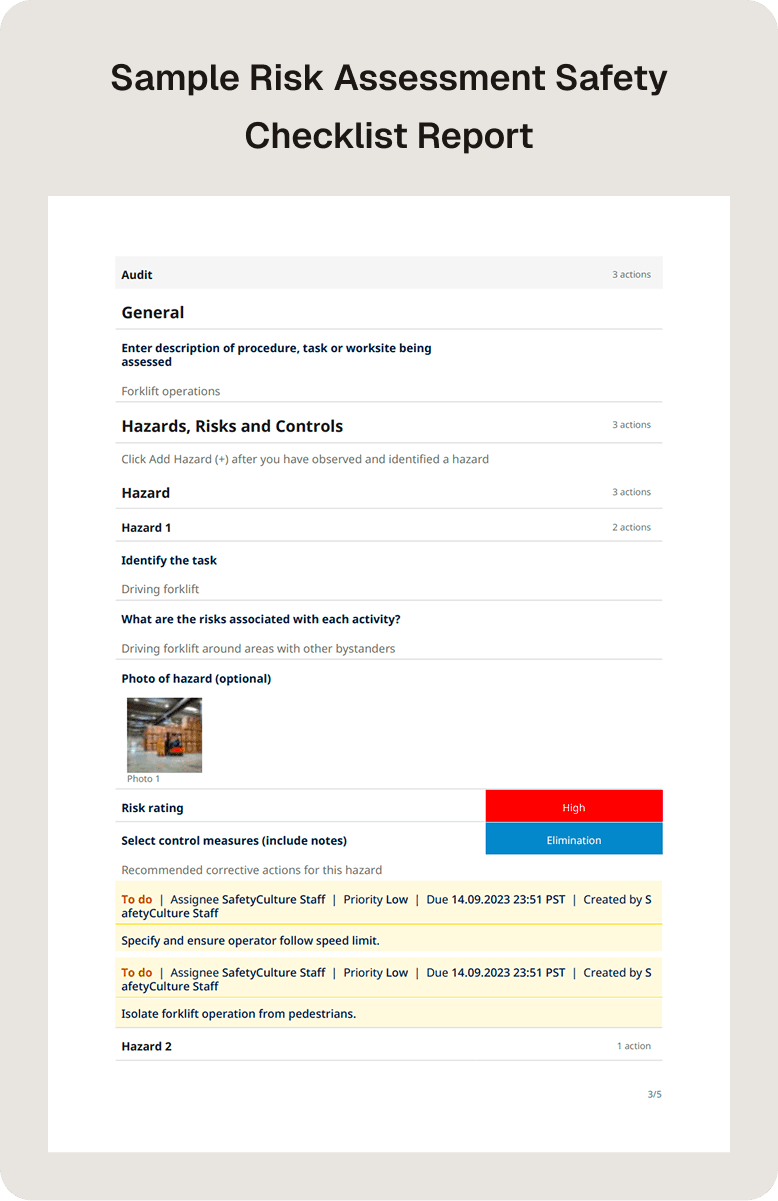
Preview safety checklist PDF report
Commonly used safety checklists
Here are some examples of safety checklists in different use cases and nature of work:
General workplace safety checklist – used to inspect the workplace for potential hazards, unsafe conditions, and safety compliance
General fire safety checklist – aids in verifying the presence and functionality of fire safety equipment, such as fire extinguishers, alarms, sprinklers, and emergency exits
Radiation safety checklist – aims to inspect safety measures for handling and working around radiation sources, including protective shielding and radiation monitoring
Ladder safety checklist – helps when checking if ladders are safe for use, covering aspects like ladder condition, setup, and proper use
Agricultural safety inspection checklist – addresses safety concerns in agricultural settings, including areas like equipment operation, pesticide handling, and animal handling

Still looking for a checklist?
Search, filter, and customize 60,000+ templates across industries and use cases.