What is an automotive workshop safety checklist?
An automotive workshop safety checklist is a tool designed to assist safety officers in the performance of safety audits. It is a set of instructions and reminders aimed to ensure that no safety checks, tasks, and other activities are missed or neglected, so the safety of the auto shop remains uncompromised. It is typically printed on paper and accomplished by safety officers on a daily, weekly, or monthly basis depending on what is being audited.
Common automotive workshop injuries and how to prevent them
Heavy machinery, toxic chemicals, and power tools are elements constantly present in automotive workshops. They are also elements capable of causing serious bodily injury to both workers and customers when handled improperly and irresponsibly. Listed below are some of the most common automotive workshop injuries that occur during daily operations:
Musculoskeletal injuries
Mechanics and technicians spend most of their week working with their hands. They often work in a fixed position for long stretches of time, in addition to the physical demands of lifting and using heavy equipment and other tools. All of these factors combined result in musculoskeletal injuries over time.
Solution Before starting a shift, mechanics and technicians should perform warm-up exercises and stretches in order to minimize the risk of musculoskeletal injuries. Standing up to stretch for every hour or so of work or whenever possible can also help prevent ergonomic injuries. Finally, make use of simple equipment such as carts and steel trolleys in order to transport heavy tools and equipment with minimal strain.
Accidental slips and trips
Some chemicals and liquids commonly used in auto shops such as oil, grease, gas, and even water can cause accidental slips for workers and customers. Workshop clutter where unused tools and equipment are left to lie around floors and other areas can cause accidental trips.
Solution Mechanics and technicians should wear non-slip, close-toed footwear, and workers should make sure to clean slippery chemicals and liquids as soon as they are spotted in order to avoid accidental slips. Auto shops should also make use of warning signs and cones to section off slippery areas if they cannot be cleaned right away. Equipment and tools that are not in use should also be kept in proper storage areas to avoid accidental trips.
Eye and face injuries
Welding, grinding materials, and working with small auto parts and toxic chemicals can cause serious eye and face injuries without the proper training, PPEs, and control measures.
Solution Automotive shops need to provide workers with high-quality safety goggles, gloves, and face shields that fit comfortably so the eyes and face of mechanics are protected from sparks, chips, debris, and other foreign materials that can cause injury. Mechanics, technicians, and even customers who enter areas where the risk of eye and face injuries are present should always wear the appropriate PPEs.
Accidental amputation
Using power tools and equipment without the proper training, machine guarding, and PPEs could result in severe physical injury, including accidental amputation of limbs or digits. Loose clothing, jewelry, and other dangling accessories can also get caught in machines and tools.
Solution Ensure that mechanics and technicians receive adequate training and are fit to operate power tools and other heavy machinery. Auto shop owners also need to provide workers with the appropriate PPEs that pass quality standards set by OSHA. Mechanics and technicians should avoid wearing loose clothing and dangling accessories to avoid catching. Power tools and equipment should also be kept in their proper storage areas when not in use, and should be regularly maintained to avoid malfunctions.
Chemical injuries
Hazardous and flammable materials pose chemical risks and fire hazards if handled improperly.
Solution Do routine checks to ensure that all hazardous chemicals and flammable materials are properly stored. Container lids must close securely, are undamaged, and are leak and spill-proof. Containers must also be properly labeled in accordance with OSHA’s quick card Hazard Communication Standard Labels.
Top 5 benefits of using a digital automotive workshop safety checklist
Making your auto shop safer for your employees and customers could be as simple as using a checklist. Even better, using a digital checklist instead of a pen-and-paper one provides additional benefits that make safety easier to achieve. Below are the top benefits of using a digital checklist for auto shop safety:
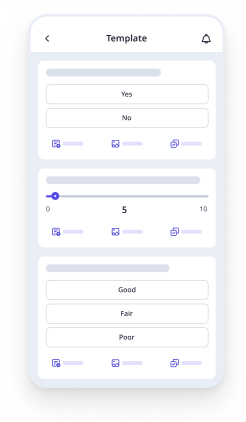
Go paperless and reduce workshop clutter Paper checklists require two hands to fill in, are susceptible to damage, loss, and unauthorized access. They also tend to eat up a lot of space over time. A digital checklist on your mobile device, however, can be accomplished with one hand as you do your inspection rounds. Your inspection data is also safer from unwanted access if it is on your mobile device compared to a sheet of paper.
Immediately rollout template and report updates to the entire team Updating templates and reports printed on sheets of paper can be costly, time-consuming, and expensive. When old templates have to be phased out, new templates need to be printed out and distributed; this contributes to avoidable time and resource expenses. Similarly, revisions that need to be made on paper forms can be messy and downright impossible when the form is no longer in your hands.A digital platform allows real-time template and report updates so you can be sure that your team is always updated with the latest information. Proper communication, especially when it concerns safety, is crucial in keeping a safe work environment.
Automatic data documentation No need to manually organize paper documents when you are using a digital checklist. All of your inspection data are automatically documented and accessible wherever you are as long as your mobile device is connected to the internet.
Get mobile alerts and updates so you never miss an inspection Another advantage you gain by using a digital checklist are automatic mobile alerts, reminders, and updates. Get push notifications on your mobile device whenever you have upcoming scheduled inspections, or whenever inspections are completed. Protect your compliance with internal and external safety standards with a digital checklist.
Save time, money, and space Making the switch from pen-and-paper checklists and templates to a digital solution can help you cut costs, save time, and reduce clutter in the workshop. All of these add up to a safer, and more productive work environment for your people.
Automotive workshop safety checklist example
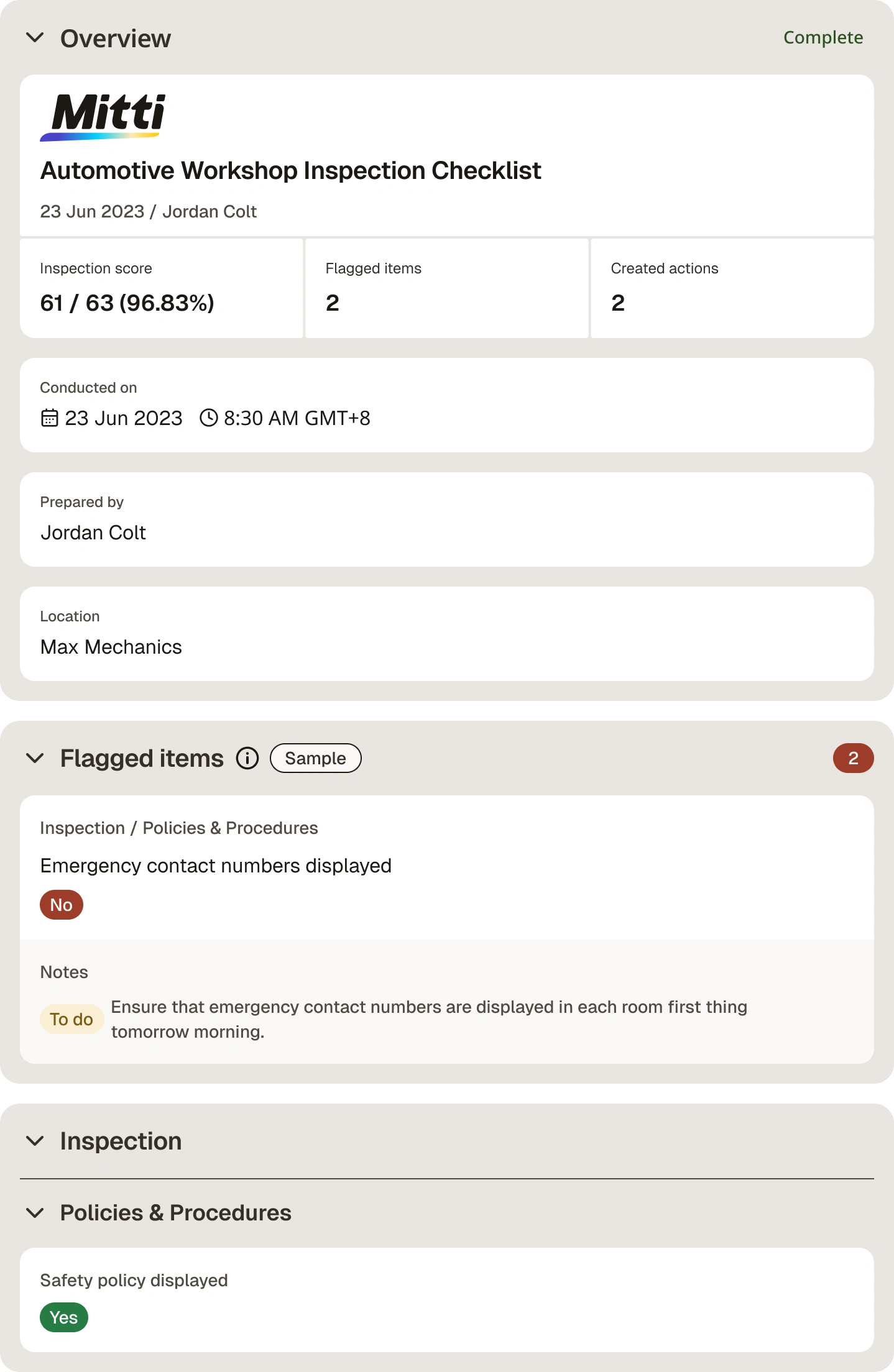
Here’s what a complete automotive workshop safety checklist report looks like:
Automotive workshop safety checklist sample report | Mitti (by SafetyCulture)