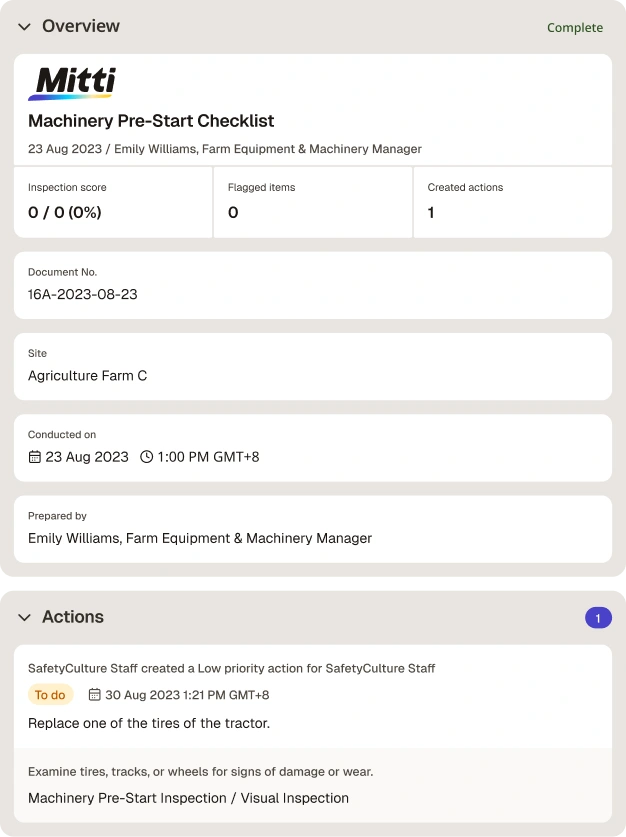
What is a machinery pre start checklist?
A machinery pre-start checklist is a systematic and comprehensive tool that lists a range of tasks and items that encompass safety measures, operational components, fluid levels, and visual inspections. These need to be checked and verified by operators, inspectors, and maintenance personnel before starting and operating any machinery to ensure that it’s in proper working condition and complies with safety standards.
Importance of a pre start checklist for machinery safety
In industries where machinery plays a pivotal role, the safety of both operators and bystanders is of paramount importance. This is where the significance of pre-start checklists comes into play. Pre-start checklists serve as a vital safeguard, ensuring that machinery is not only functional but also adheres to stringent safety standards.
Hence, using one for machinery pre-start checks helps you perform and achieve the following:
Proactively catch issues
Going through the items on a pre-start checklist helps operators and maintenance personnel catch potential issues before they become bigger problems. This proactive approach helps prevent injury, protects the people nearby, and cuts down on unexpected downtime.
Also, detecting issues at an early stage is pivotal in preventing minor problems from escalating into major malfunctions. Pre-start checklists prompt operators and maintenance personnel to assess machinery thoroughly, identifying any signs of wear, loose parts, or irregularities that might impact performance and safety.
Ensure emergency preparedness
Machinery pre-start checklists can cover items such as inspecting emergency stop buttons, ensuring protective guards are in place, verifying proper fluid levels (such as fuel, oil, and coolant), examining tires or tracks, and checking for any visible wear and tear or loose components. This way, mishaps that could lead to injuries or even fatalities can be avoided. OSHA's machine guarding standards require these safeguards to be verified before machinery is put into operation.
On another note, industries governed by strict safety regulations require adherence to specific standards. Pre-start checklists ensure that machinery meets these regulatory requirements, shielding companies from legal liabilities and penalties while fostering a culture of responsibility. In Australia, Safe Work Australia's plant and equipment guidance sets out these pre-operational inspection obligations for employers.
Improve machinery inspection process
Machinery pre-start checklists cultivate a standardized approach to safety. They help ensure that all operators follow the same set of safety measures and protocols, irrespective of their experience levels, reducing the likelihood of human error.
Another important thing to note is that well-executed machinery pre-start inspections using checklists improve operators’ confidence in the safety and reliability of their machinery. This leads to better task accomplishment and overall job performance. Platforms like Mitti (by SafetyCulture), a workplace operations platform used across construction, mining, and manufacturing, help standardize this process across shifts and sites.
What should be included in a machinery pre start checklist
Since a machinery pre-start checklist aims to ensure the safety, functionality, and efficiency of the equipment, it should cover a range of critical items and tasks that need to be inspected and verified before initiating the operation of the machinery. These include the following:
Structural and mechanical inspection
Initial Checks (Documentation, Start-Up Test, Test Movement)
Attachments and Implements
Brakes and Parking Mechanism
Operator’s Cabin
Safety controls and warning systems
Safety Checks
Safety Equipment
Battery and Electrical Systems
Fluid levels, tyres and ground engagement
Fluid Levels
Operating Systems
Lubrication
Fluid Contamination
Best practices for machinery pre start checklist implementation
Standardizing and implementing the use of a machinery pre-start checklist in an organization requires careful planning, consistent execution, and a commitment to safety and maintenance.
To help you make this possible, heed these best practices to ensure the successful implementation of pre-start checklists for machinery inspections and operation:
Develop clear and comprehensive checklists.
Involve relevant stakeholders.
Provide clear instructions.
Prioritize safety checks.
Schedule regular check-ups.
Include visual inspections.
Consider using digital tools or software to create, manage, and share checklists and streamline recordkeeping.
Train operators and maintenance personnel on how to use the checklist effectively.
Maintain a record of completed pre-start checklists that will serve as valuable documentation for audits, inspections, and maintenance history.
Foster a culture of continuous improvement by seeking input from personnel and regularly evaluating the effectiveness of the checklist process.
Establish a routine schedule for completing pre-start checklists. Ideally, they should be completed before every use of the machinery.


Still looking for a checklist?
Search, filter, and customize 60,000+ templates across industries and use cases.